
Your skincare routine order follows one rule: apply products from thinnest to thickest. Cleanser first, then toner, serums, eye cream, and moisturizer. In the morning, sunscreen is always last. At night, swap sunscreen for a retinoid or treatment, and finish with a richer moisturizer or a face oil.
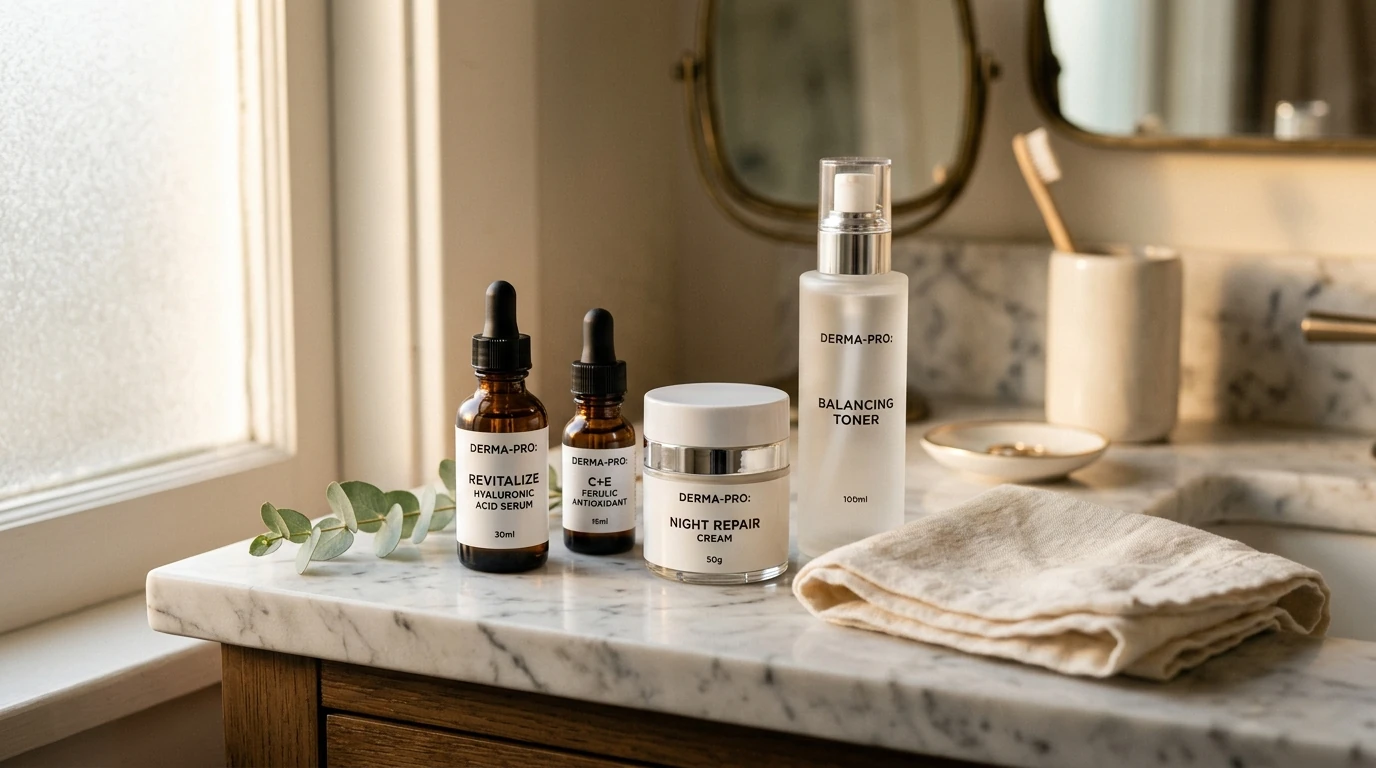
The right skincare routine order matters more than the number of products you own.
Most people own more skincare products than they know what to do with. A serum here, a random exfoliant there, a retinol collecting dust because someone online said it clashes with vitamin C. The confusion costs money, and sometimes it costs you your skin barrier. Here is exactly what goes where in a skin care routine, morning and night.
The Short Version
- Morning: cleanser → toner → antioxidant serum → eye cream → moisturizer → SPF 30 or higher
- Night: cleanser (double cleanse if you wore SPF or makeup) → exfoliant or toner → treatment serum or retinoid → eye cream → moisturizer or night cream → face oil
- The rule behind the rule: thinnest to thickest, water-based before oil-based, so nothing blocks what comes next
- The exception: prescription treatments go on right after cleansing, ahead of texture order
- The floor: cleanser, moisturizer, and sunscreen is already a complete basic skincare routine
Why the Order of Your Skincare Routine Changes Everything
Skincare products are formulated at specific molecular weights and pH levels. Layer them in the right sequence and each one absorbs before the next goes on. Put a heavy cream on first and your lightweight antioxidant serum sits on top of it, doing very little.
Think of getting dressed. You wouldn’t put a coat on before your shirt. Thinner, water-based products go first because they absorb quickly. Thicker, oil-based products go last because they form a film on the skin’s surface that seals everything underneath.
How Layering Affects Absorption and Efficacy
pH is the part people miss. Vitamin C is the clearest example. A 2017 review of topical vitamin C put the stability threshold for L-ascorbic acid at a pH below 3.5, with a concentration above 8% needed before it does anything measurable in the skin. That’s why it belongs on bare, freshly cleansed skin rather than buffered under other products.
Order also decides which ingredients get a chance to work. A 2024 consensus on anti-aging skin care rated broad-spectrum sunscreen, niacinamide, and topical antioxidants as appropriate for every age, skin type, and Fitzpatrick phototype the panel reviewed. Those three are the non-negotiables. Everything else in your lineup is a decision about your specific skin concerns.
The Basic Skincare Routine: How Many Products Do You Actually Need?
Three. A basic skincare routine is a facial cleanser, a moisturizer, and a daily sunscreen, and those cover the three jobs skin care has to do: clear away excess oil, sweat, and the day’s grime; support the skin’s moisture barrier; and block the UV exposure behind most visible skin aging, sun damage, and dark spots. Cosmetic brands and dermatology groups land on the same three products, which says a lot about how much of a ten-step routine is optional.
| Product | What it does | When |
|---|---|---|
| Facial cleanser | Removes makeup, sunscreen, excess oil, and the dead skin cells sitting on the surface | Morning and night |
| Moisturizer | Replenishes water and lipids so the skin barrier stays intact | Morning and night |
| Sunscreen | Blocks the UVA and UVB exposure behind sun damage, dark spots, and skin cancer | Every morning, reapplied outdoors |
Everything after that is targeted. You add a serum because you have a specific skin concern, whether that’s dark spots, fine lines, or breakouts, not because a routine is supposed to have one. Starting out, or starting over? Run those three for a month before you add anything. A consistent skincare routine of three products beats an inconsistent one of nine.
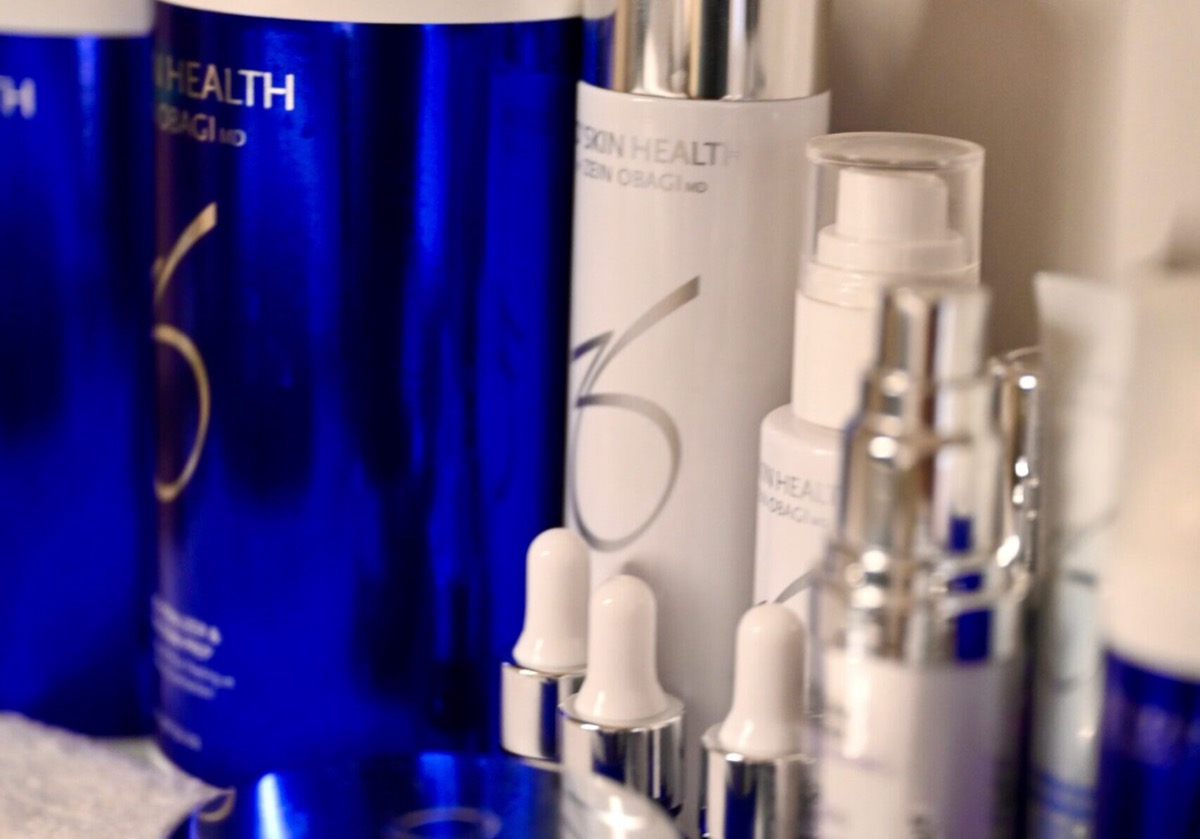
Medical-grade versions of the three basic steps: ZO Skin Health products in Jacksonville.
Morning Skincare Routine Order

The morning sequence, laid out in the order it goes on: cleanser first, sunscreen last.
Your morning skincare routine is defense. You’re shielding skin from UV, pollution, and the other environmental factors that age it. Keep it lean. Most people need five or six steps in a morning skin care routine, and it takes under five minutes once the order is automatic.
| Step | Product | Why it sits here |
|---|---|---|
| 1 | Cleanser | Clears overnight oil so actives reach skin |
| 2 | Toner (optional) | Rehydrates and preps the surface |
| 3 | Antioxidant serum | Needs low pH and bare skin |
| 4 | Eye cream | Lighter than face cream, thinner skin |
| 5 | Moisturizer | Seals in the actives above it |
| 6 | Sunscreen | Must form an unbroken film on top |
Step 1: Facial Cleanser
A gentle, hydrating facial cleanser removes overnight oil and product residue. Nothing aggressive is needed in the morning. Use a gentle formula without alcohol, lukewarm water, and no scrubbing, per dermatologist face-washing guidance, because scrubbing irritates the skin. If your skin runs dry, water alone is a legitimate morning cleanse.
Step 2: Toner
Toner is optional. A good one rebalances the skin’s pH after cleansing and adds hydration that helps everything else absorb. Layering hydrating ingredients this way is central to getting glass skin. Look for hyaluronic acid or centella. Skip anything with alcohol high in the ingredient list.
Step 3: Antioxidant Serum
Vitamin C is the workhorse of the morning. Beyond neutralizing free radicals, it supports collagen production, and the evidence on topical vitamin C also shows protection against photoaging and UV-induced immune suppression. Apply it to bare or freshly toned skin.
If it stings, niacinamide is the easier swap. You still get antioxidant support without the low-pH irritation, and green tea or resveratrol serums are gentler options for more sensitive skin.
Step 4: Eye Cream
The skin around your eyes is thinner than the rest of your face, and most full-face serums are too much for it. Pat a rice-grain amount along the orbital bone with your ring finger, which applies the least pressure. Caffeine helps with morning puffiness.
Step 5: Moisturizer
Moisturizer locks in what you just applied and supports the skin barrier. Oily skin needs it too. A lightweight gel works for oily skin, a rich moisturizer for dry skin.
Step 6: Sunscreen
SPF is last, every morning, no exceptions. Standard sunscreen application guidance is broad-spectrum SPF 30 or higher on all exposed skin, reapplied every two hours outdoors or immediately after swimming or sweating. Adults need roughly a shot glass for full body coverage and at least a teaspoon for the face. A mineral-based sunscreen built on zinc oxide is the gentler pick for sensitive skin and for anything freshly treated. Daily SPF is also what keeps treated pigment from returning, which is why it anchors every plan for fading sunspots on the face.
Sunscreen goes on after moisturizer because it needs to form a uniform film. Mixing it into your moisturizer dilutes it and breaks that film.
Nighttime Skincare Routine Order
Night is repair time. A nighttime skincare routine can be more intensive because nothing is going over it, and you can use stronger actives without sun exposure working against you. Retinol is the classic example, and the benefits of retinol only show up if you start it slowly enough to keep your barrier intact.
| Step | Product | Why it sits here |
|---|---|---|
| 1 | Cleanser (double cleanse if needed) | One wash rarely removes SPF fully |
| 2 | Exfoliant or hydrating toner | Acids need direct contact, 2 to 3 nights weekly |
| 3 | Treatment serum or retinoid | The night’s active step, on dry skin |
| 4 | Eye cream | Richer than the AM version |
| 5 | Moisturizer or night cream | Seals the treatment underneath |
| 6 | Face oil (optional) | Occlusive, so nothing penetrates past it |
Step 1: Cleanse, Double If You Wore SPF or Makeup
Makeup removal comes first: a cleansing oil, balm, or micellar water removes makeup and dissolves sunscreen, then your regular water-based cleanser follows. A single wash rarely removes makeup and SPF completely, and the leftover film and oil sit on the skin overnight, where they clog pores. On a bare-faced day, one gentle cleanse is fine.
Step 2: Exfoliant or Toner
Exfoliants belong here, after cleansing and before serums, because they need contact with clean skin to lift dead skin cells. Chemical exfoliants, meaning AHAs like glycolic acid and lactic acid and BHAs like salicylic acid (the oil-soluble one that can clear pores from the inside), dissolve the bonds holding dead skin cells to the skin’s surface, which is how they even out skin tone and skin texture over a few weeks. Physical exfoliants, the scrubs and cleansing brushes, remove dead skin cells mechanically and are much easier to overdo. Cap exfoliation at two or three nights a week, whichever type you use. On the other nights use a hydrating toner.
Step 3: Treatment Serum or Retinoid
Retinoids are the best-evidenced anti-aging actives available over the counter, and they speed the turnover of skin cells enough to soften fine lines and fade dark spots over a few months. Apply to dry skin once your toner or exfoliant has absorbed. A slow ramp-up matters more than the strength you buy, and starting retinol without irritation takes about eight weeks of stepping up frequency.
Other treatment serums, peptides or a hydrating serum, layer under a retinoid or on alternating nights. Thinnest first, working toward thicker.
Where Prescription Treatments Go
This is the one place the thinnest-to-thickest rule breaks. If you’ve been prescribed tretinoin, hydroquinone, azelaic acid, or a topical antibiotic, it goes on directly after cleansing, before anything else, regardless of its texture. Prescription actives are dosed for direct contact with skin, and buffering them under a serum changes how much gets absorbed.
Follow whatever sequence your prescriber gave you. If they didn’t specify, ask rather than guessing from a texture rule written for over-the-counter products.
Where Spot Treatments Go
A spot treatment goes on after your serum step and before moisturizer, applied only to the spot. Benzoyl peroxide, sulfur, and salicylic acid all work by staying put. Applying moisturizer first and then dabbing the spot treatment on top means most of it never reaches the blemish.
Step 4: Eye Cream
Night eye creams run richer and focus on repair. Look for peptides, or a retinoid formulated specifically for the eye area. A standard-strength retinol serum is too aggressive for under-eye skin.
Step 5: Moisturizer or Night Cream
Night creams are usually thicker and built around overnight repair ingredients like ceramides and fatty acids that replenish skin lipids. This step seals in your treatment.
Step 6: Face Oil
Face oil always goes last. Oils are occlusive, and nothing applied after them penetrates through. A few drops of squalane or rosehip pressed into skin is enough. In Jacksonville humidity, most people can skip this step entirely.
Where Face Masks and Face Oils Fit
Masks and oils are the two products people most often put in the wrong slot of a nighttime routine. Where a mask goes depends on its type. A wash-off mask, whether clay, enzyme, or peel-off, is an exfoliation or deep-cleaning step, so it goes right after cleansing and before serums, one or two nights a week in place of your exfoliant. A sheet mask or overnight sleeping mask is a hydration step, so it goes after serums and stands in for moisturizer that night. Either way, a mask never goes over a retinoid; give the actives that night off.
Oils split by weight. A lightweight oil like squalane can sit before night cream on very dry skin, where it behaves like a serum. A heavier oil, rosehip or marula, is the last layer, after moisturizer, because nothing gets through it. In humid weather most skin types do better skipping oil altogether and letting a rich moisturizer do the sealing.
How to Layer Active Ingredients Without Wrecking Your Skin
This is where routines fall apart. Some actives undercut each other, and stacking the wrong pair produces redness, peeling, or no result at all.
Combinations to Separate
Retinoid plus AHA or BHA. Both accelerate the turnover of skin cells and both stress the skin barrier. Use acids some nights and your retinoid on others. Don’t stack them in one routine.
Retinoid plus vitamin C. These want different pH environments. Antioxidant serum in the morning, retinoid at night, and you get both without the irritation.
Benzoyl peroxide plus a retinoid. Benzoyl peroxide oxidizes most retinoids on contact, which reduces what the retinoid can do. Separate them by time of day. Adapalene is the exception, since it stays stable alongside benzoyl peroxide.
Physical exfoliants plus anything strong. A scrub on the same night as an acid or a retinoid is how a mild routine turns into a raw one. Scrub on an off night, if at all.
Combinations That Work
Niacinamide is the most cooperative active in skincare. It sits comfortably alongside hyaluronic acid, vitamin C, retinoids, and peptides, and it helps reduce redness and excess oil while it’s there. If you want one serum that won’t create conflicts, that’s it.
Layering multiple serums is fine as long as they go thinnest to thickest and only one of them is a strong active. Hyaluronic acid layers well after your antioxidant serum in the morning: the antioxidant first, since it’s thinner and needs the low pH, then the hydrating serum to pull in more water.
Do You Need to Wait Between Layers?
Usually not. Thirty to sixty seconds is enough for most products when applying skincare in sequence. The exception is pH-dependent actives like L-ascorbic acid and exfoliating acids, where a full minute before the next layer lets them work before anything buffers them.
If you see pilling, small rolled-up flakes as you apply the next layer, you’re using too much product or layering too fast. Use less, press rather than rub, and drop one leave-on step at a time until it stops.
How to Store Actives So They Stay Effective
Storage is the quiet reason a routine stops working. Keep serums and retinoids tightly closed, away from heat, humidity, and light. A cool drawer beats a bathroom counter, which matters more in Florida than most places. If an antioxidant serum darkens noticeably or the texture changes, it has oxidized, and a retinol left in a steamy bathroom loses potency long before the bottle is empty.
Adjusting Your Routine Order by Skin Type
The core sequence of a skin care routine doesn’t change with skin type. What changes is which skincare products fill each slot and which optional steps you drop, because everyone’s skin handles the same actives differently.
| Skin type | Cleanser | Serum priority | Moisturizer | Skip |
|---|---|---|---|---|
| Oily | Gel or foaming | Niacinamide, salicylic acid | Lightweight gel | Face oil |
| Dry | Cream or balm | Hyaluronic acid, ceramides | Rich cream | Nothing, add oil at night |
| Sensitive | Gentle, fragrance-free | Centella, niacinamide | Barrier cream | Acids, high-strength retinoids |
| Combination | Gentle gel | Niacinamide | Gel on T-zone, cream on cheeks | Nothing, zone your products |
| Acne-prone | Salicylic or gentle gel | Retinoid, benzoyl peroxide | Non-comedogenic | Heavy oils, occlusives |
Sensitive skin does better with fewer steps. Introduce actives one at a time with two weeks between additions so you can identify what triggers a reaction, and lean on soothing hydrating ingredients like centella, aloe vera, and ceramides in the meantime. After a treatment like dermaplaning, keep the routine minimal until skin recovers.
One caveat on Florida specifically: the layered, occlusive routines that suit dry skin in dry climates behave differently in year-round humidity. Face oils and slugging tend to trap sweat and sebum here. Lighter textures, more frequent sunscreen reapplication, and fewer occlusive layers usually work better in Jacksonville’s climate.
Not sure which row you’re in? Skin type is easier to read in a consultation than in a bathroom mirror, and a board-certified dermatologist or an aesthetician can tell combination skin from dehydrated oily skin in about a minute.

A consultation settles the skin-type question in minutes. Book a complimentary skin assessment.
Skincare Routine Order for Acne-Prone Skin
Acne-prone skin keeps the same order with three substitutions. The cleanser becomes a gentle gel or a salicylic acid facial cleanser that helps unclog pores without stripping; the morning serum becomes niacinamide, to reduce redness and control excess oil; and the night treatment becomes a retinoid or benzoyl peroxide, never both in one routine. Moisturizer stays, in a non-comedogenic gel, because skipping it pushes oily skin to produce more oil. Sunscreen stays too, since most acne treatments raise sun sensitivity, and post-acne dark spots darken with every unprotected day.
Spot treatments sit between serum and moisturizer, on the blemish only. Anything heavier than that is a job for the treatment room: professional extractions during an acne facial in Jacksonville clear the congestion a home routine can’t reach, without the scarring that comes from squeezing.
Skincare Routine Order With Retinol
Retinol goes in the night treatment slot, and everything else in the nighttime skincare routine bends around it. Cleanse, let skin dry completely, apply a pea-sized amount to the whole face, wait a few minutes, then moisturize. Chemical exfoliants and physical exfoliants both move to the nights you’re not using it. In the morning, an antioxidant serum and sunscreen are non-negotiable, because retinol makes skin more sun-sensitive while it speeds up the shedding of dead skin cells.
Expect six to twelve weeks before fine lines, dark spots, and uneven skin tone start to change, and a few weeks of dryness before that. Sensitive skin, and deeper skin tones prone to post-inflammatory marks, do better starting at the lowest strength two nights a week, or with a buffered application over moisturizer.
How to Add a New Active Without Wrecking Your Barrier
Order matters, but so does pace. Most irritation people blame on layering is a new active introduced too fast. Patch test on the inner forearm or behind the ear for a few days first, then follow this schedule, which works for retinoids and translates to most other actives. Keep everything else in your routine unchanged while you do it, so you can identify the culprit if irritation shows up.
| Week | Frequency | What to watch for |
|---|---|---|
| 1 to 2 | 2 nights per week | Mild dryness is expected, stinging is not |
| 3 to 4 | 3 nights per week | Some flaking around the mouth and nose |
| 5 to 8 | Every other night | Purging, small breakouts that resolve |
| 9 and beyond | Nightly if tolerated | Persistent redness means back off a rung |
Buffering helps if you’re struggling. Apply moisturizer first, then the active on top, which slows absorption without eliminating the benefit. Give any routine six to eight weeks before judging results on skin tone, skin texture, or fine lines. Change course sooner only for persistent burning, swelling, or breakouts that don’t settle within a couple of weeks. A purge resolves; a reaction keeps going.
Sequencing Your Routine Around Professional Treatments
Active ingredients have to pause around in-office procedures, then come back in a specific order. Skipping that step is how people accidentally undo an expensive treatment.
| Treatment | Pause actives before | Resume after | What is safe during healing |
|---|---|---|---|
| Light chemical peel | 3 to 5 days | 5 to 7 days | Gentle cleanser, bland moisturizer, mineral SPF |
| Medium or deep peel | 7 days | 2 to 4 weeks | Provider-directed ointment and SPF only |
| Microneedling | 3 to 5 days | 5 to 7 days | Hyaluronic acid, growth-factor or exosome serums |
| Laser resurfacing | 7 days | Per provider | Provider-directed only |
| Dermaplaning | 3 days | 2 to 3 days | Hydrating serum, moisturizer, SPF |
| Facial waxing | 5 to 7 days | 3 to 5 days | Gentle cleanser and moisturizer |
These are typical windows, not rules. Your provider sets the exact timing based on depth and how your skin responds, so follow their instructions over any chart. Standard chemical peel preparation stops retinoids and acids up to a week ahead, and standard chemical peel aftercare brings them back only after the peeling finishes. Freshly treated skin is markedly more photosensitive, so sunscreen becomes the one step you never skip.

Actives pause for about a week on either side of SkinPen microneedling in Jacksonville.
Coming back, reintroduce in order: moisturizer and SPF first, then hydrating serums, then your retinoid, then acids last. Adding everything back at once is the most common reason skin flares a week after a treatment that went perfectly.
Medical-Grade vs Over-the-Counter
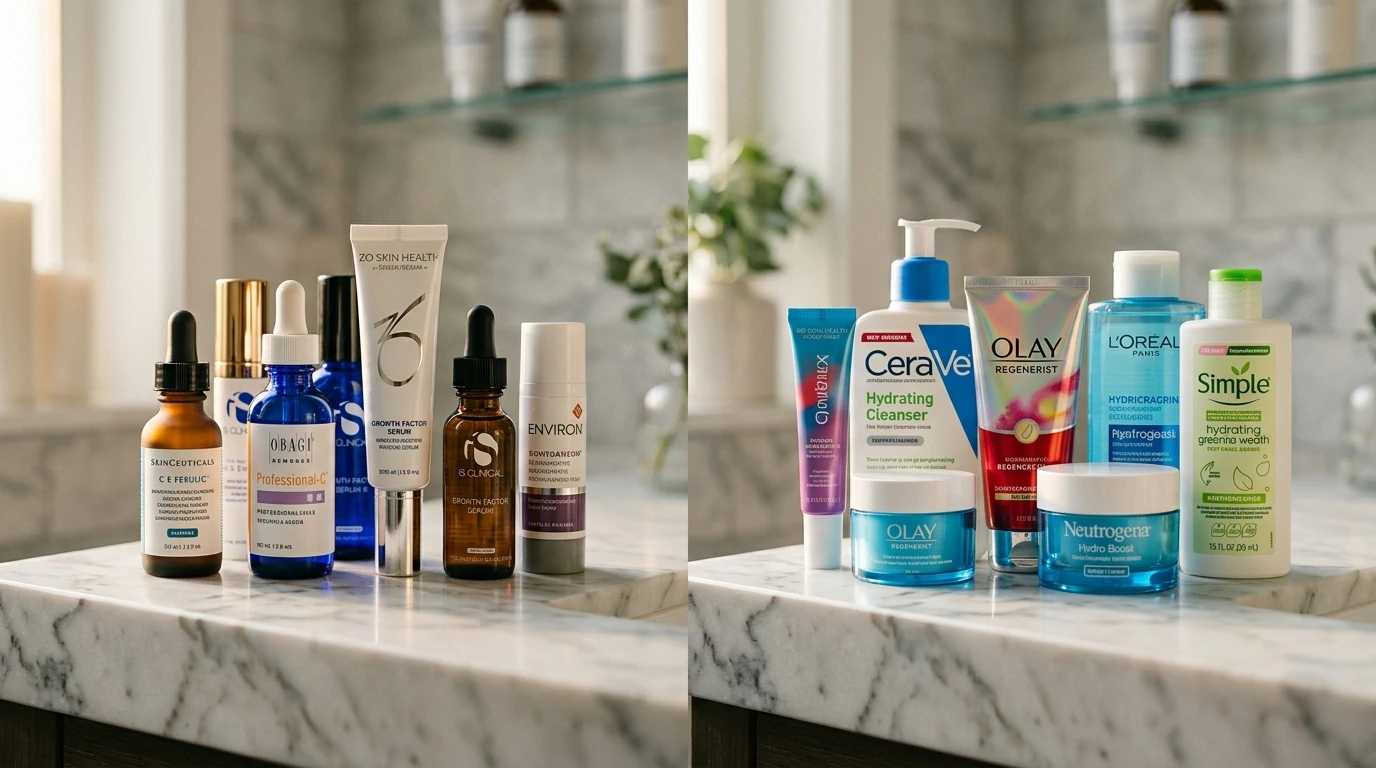
The same active at a different concentration and delivery system produces a different result.
Over-the-counter skincare products work for maintenance. They’re formulated at lower active concentrations to be safe without supervision, which is the right trade-off for a mass market. Medical-grade lines use higher concentrations and more bioavailable forms, which is exactly why they come with professional guidance.
| Factor | Over-the-counter | Medical-grade |
|---|---|---|
| Active concentration | Lower, mass-market safe | Higher, requires guidance |
| Form of active | Often more stable, less potent | More bioavailable forms |
| Delivery system | Surface-level | Encapsulation, deeper delivery |
| Oversight | None | Dispensed and monitored |
| Irritation risk | Lower | Higher if misused |
The difference between two products both labeled “vitamin C serum” comes down to the form of the active, the concentration, and the delivery system. Those three factors are what separate medical-grade skincare from the drugstore version, and they’re the same reason the pH and concentration thresholds in the research matter.
The practical conclusion is counterintuitive: medical-grade usually means fewer steps, not more. Stronger, better-delivered actives do more work per layer.
A Framework Instead of a Step Count
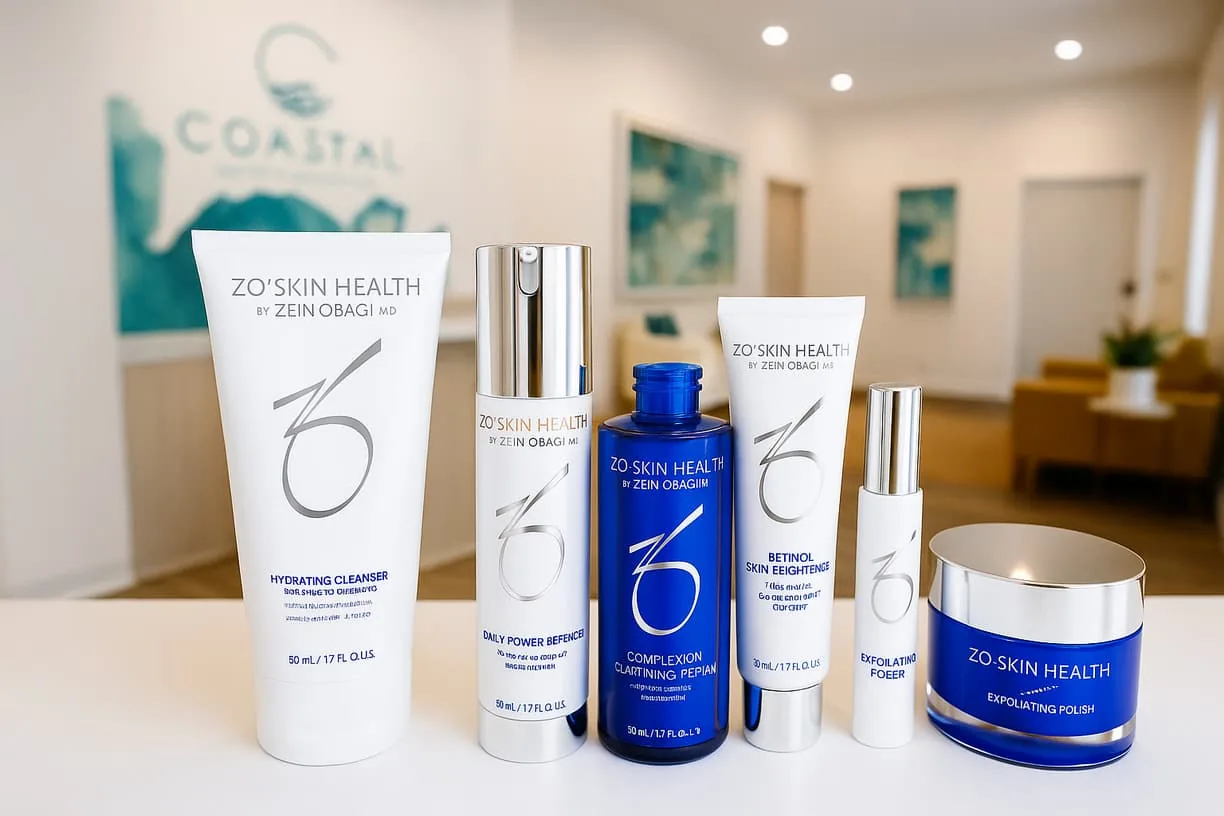
ZO Skin Health regimens are built in stages rather than as a fixed number of steps. Browse the ZO Skin Health line.
Provider-dispensed lines tend to organize by function rather than product count. ZO Skin Health structures regimens in three stages: getting skin ready with cleansing, exfoliation, and toning; preventing and correcting with targeted actives for specific skin concerns; then protecting with sunscreen. The order is the same logic as thinnest-to-thickest, framed around what each stage is for.
That framing is useful because it tells you what to cut when a routine gets bloated. If a product isn’t preparing, correcting, or protecting, it’s probably optional.
Professional Regimens That Take the Guesswork Out
At Coastal Health & Medical Spa in Jacksonville, Danielle Hancock, Licensed Aesthetician and ZO Skin Health Expert Certified, builds custom regimens around individual skin concerns. The practice stocks ZO Skin Health regimens in Jacksonville, Plated Skin Science exosome skincare, and SkinBetter Science.
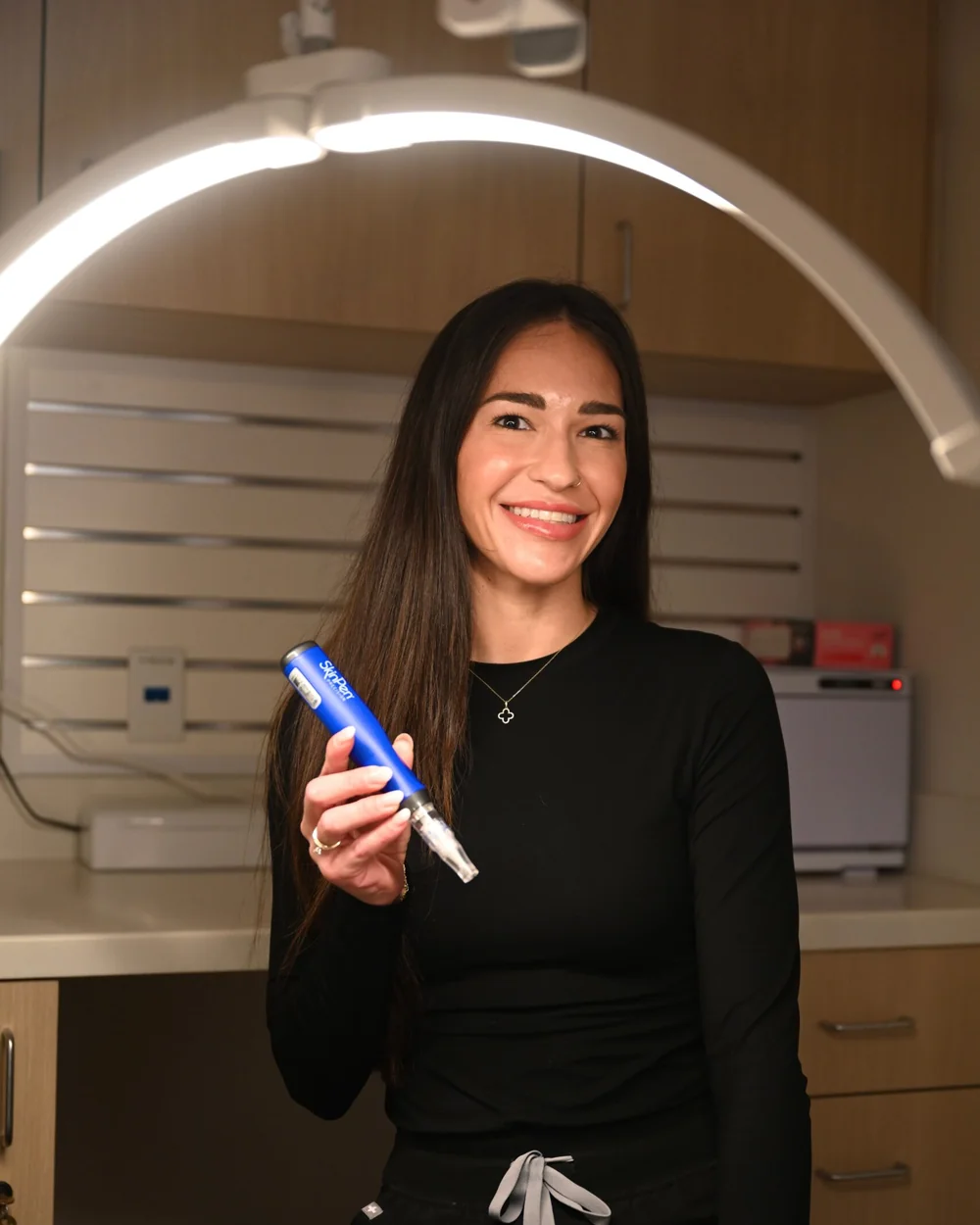
Danielle Hancock in the treatment room, where every regimen gets a checkpoint at Danielle’s custom facials.
Danielle evaluates skin type, current routine, and goals before recommending products and the order to use them. Pairing a regimen with custom facials in Jacksonville also gives you a checkpoint, since what’s happening at the skin’s surface tells an aesthetician whether the home routine is working.
Medical-grade products can deliver more, and they can also irritate more if used wrong. Professional guidance is a safety measure, not a sales step.
Common Skincare Routine Order Mistakes
- Sunscreen mixed into moisturizer. It dilutes the film and you lose protection you think you have.
- Antioxidant serum after a heavier serum. Buffered under other products, it can’t do its job.
- Retinoid on damp skin. Water increases penetration and irritation. Dry skin only.
- Exfoliating acids every night. Two to three nights is the ceiling for most skin.
- Scrubbing on retinoid nights. Physical exfoliants and retinoids together strip the barrier faster than it can rebuild.
- Adding three products at once. When something reacts, you can’t tell which one did it.
- Skipping moisturizer because skin is oily. A compromised barrier makes oiliness worse, not better.
- Resuming everything at once after a treatment. Reintroduce in order, over days.
Frequently Asked Questions
What are the 7 steps of skincare?
The commonly cited seven are cleanser, toner, serum, eye cream, moisturizer, sunscreen in the morning, and a treatment such as a retinoid or exfoliant at night. You don’t need all seven. Cleanser, moisturizer, and sunscreen is a complete routine, and the other steps are additions for specific skin concerns.
Which two serums cannot be used together?
Vitamin C and a retinoid are the pair most often flagged, because they work best at different pH levels. Use the antioxidant in the morning and the retinoid at night. Retinoids also shouldn’t be layered with AHA or BHA exfoliants in the same routine, and benzoyl peroxide oxidizes most retinoids on contact, so those go at different times of day.
What is the 4 2 4 rule in skincare?
It’s a double-cleansing method: massage a cleansing oil for four minutes, emulsify with water for two minutes, then rinse with splashes of water for four minutes. It comes from Korean skincare and is aimed at fully removing sunscreen and makeup. It’s optional. A thorough oil cleanse followed by a water-based cleanser does the same job in less time.
What is the 7 skin care routine?
It usually means the seven-step order above: cleanser, toner, serum, eye cream, moisturizer, sunscreen by day, and a treatment step at night. Some people mean the Korean “7 skin method” instead, which layers a watery hydrating toner up to seven times after cleansing. Both are templates. Most skin types get the same result from four or five well-chosen steps.
What is a basic skincare routine for beginners?
A gentle cleanser, a moisturizer matched to your skin type, and a broad-spectrum SPF 30 every morning. Run those three for about a month. Then add one product at a time for a specific skin concern, such as niacinamide for oil control or a low-strength retinol for fine lines, and give each addition six to eight weeks before judging it.
When should you put retinol on in a skincare routine?
At night, in the treatment slot: after cleansing and after any toner has fully absorbed, on dry skin, and before moisturizer. Start with two nights a week and build up over about eight weeks. Prescription tretinoin is the exception and goes on directly after cleansing. Every morning after, sunscreen is required, because retinol raises sun sensitivity.
What should you never mix with retinol?
In the same application: AHA or BHA exfoliants, physical scrubs, benzoyl peroxide (adapalene is the one retinoid that tolerates it), and low-pH L-ascorbic acid serums. Move the acids and scrubs to your off nights, keep the antioxidant serum in the morning, and use benzoyl peroxide at a different time of day. Pairing retinol with a plain moisturizer is always fine.
Build a Routine That Actually Works for Your Skin

Coastal Health & Medical Spa in Jacksonville, where Danielle builds regimens in person. Book a consultation.
Getting your skincare routine order right is the foundation. What fills each slot matters just as much. The sequence here, cleanser through sunscreen in the morning and cleanser through oil at night, holds for every skin type and is the shortest path to healthy-looking skin. Your skin type and goals decide which actives to prioritize and which steps to drop, and a good skincare routine is a daily routine you’ll keep.
If you’ve been layering products for months without seeing change, that’s usually a product or pacing problem rather than an order problem, and it’s hard to diagnose from the inside. Book a skincare consultation with Danielle Hancock at Coastal Health & Medical Spa in Jacksonville to get a regimen built around your skin.
