How often should you get a facial? Most people should get one every 4 to 6 weeks, roughly monthly, because that matches how long skin takes to push new skin cells to the surface. Go every 2 to 3 weeks for a short stretch if you’re actively treating acne or clogged pores, and every other month if you have sensitive skin, your skin is already stable, or your budget is tight.
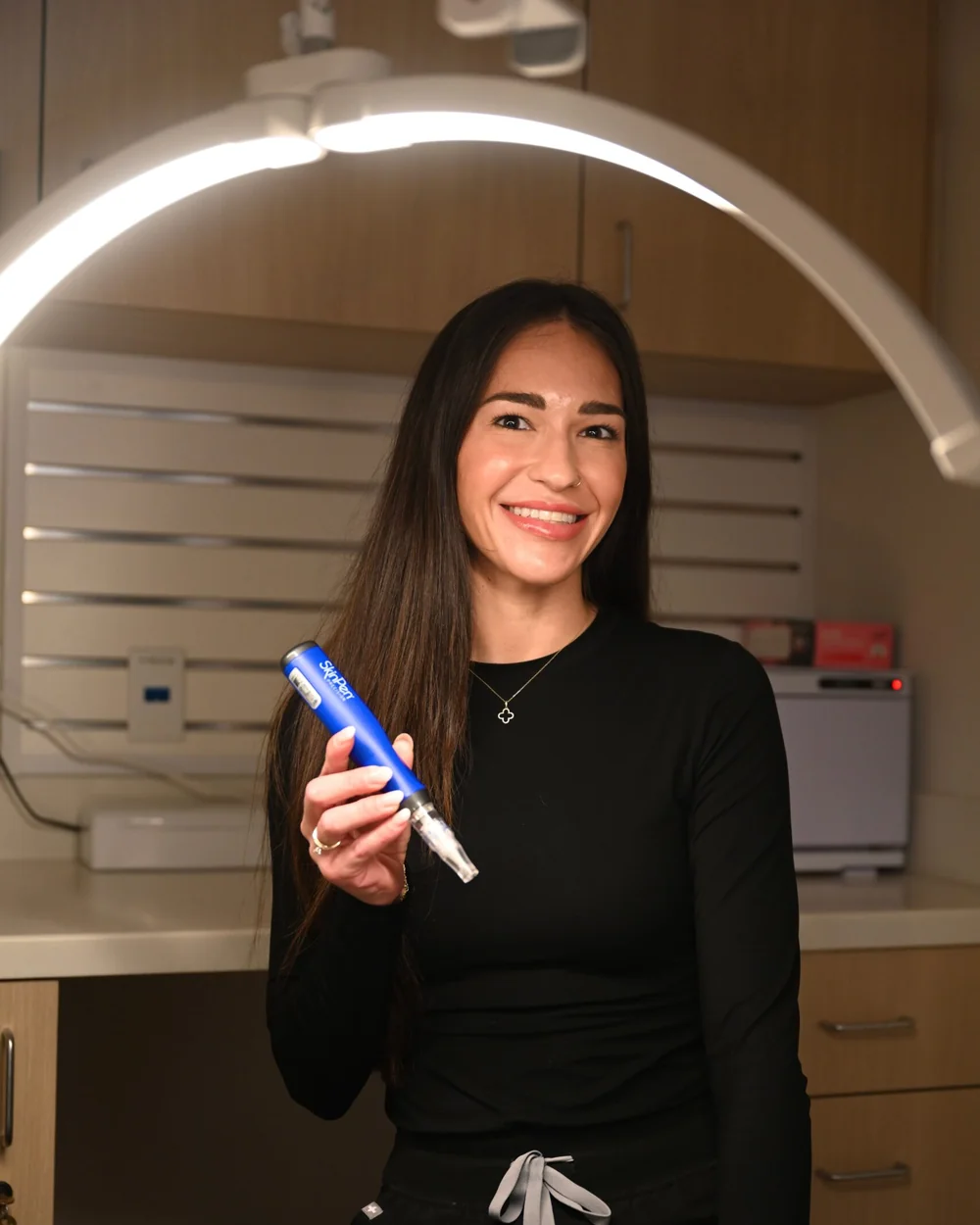
Danielle in the room where every cadence starts with a skin analysis. See Coastal’s custom facials in Jacksonville.
How Often Should You Get a Facial? Frequency at a Glance
| Skin type or concern | Frequency | Why this interval | Best Coastal option | Adjust if… |
|---|---|---|---|---|
| Normal or combination skin | Every 4 to 6 weeks | Matches one cell turnover cycle | Custom facial | Seasons shift oil production |
| Oily, acne active | Twice a month | Oil and buildup return fast | Acne facial | Skin feels tight or flushed |
| Oily, acne controlled | Monthly | Maintenance, not correction | HydraFacial | Blemishes return |
| Dry or dehydrated | Monthly | Skin barrier needs rebuild time | Hydrating or glass skin facial | Flaking persists, add hydration |
| Sensitive or rosacea-prone | Every other month | Overstimulation sets you back | Gentle calming facial | Redness lingers, extend further |
| Dull, chasing glow | Monthly | Exfoliation benefit fades by week 4 | Glass Skin Facial | Event coming, book 1 to 3 days out |
| Hyperpigmentation | About monthly, then taper | Pigment needs a series to shift | Brightening facial series | Irritation appears |
| Fine lines, mature skin | Monthly | Turnover slows with age | Anti-aging facial | Recovery slows, stretch it |
| Rough texture, peach fuzz | Every 3 to 4 weeks | Surface layer rebuilds in about 21 days | Dermaplane facial | Never closer than 21 days |
| Event prep | Start 6 months out | Correct, then settle | Series, then one 1 to 3 days prior | Nothing new within 14 days of the date |
The 4-to-6-week interval comes from cell turnover. New skin cells take about 28 days to reach the surface, per a study of keratinocyte migration, but total epidermal turnover, which counts the time dead skin cells sit on top before they shed, runs 47 to 48 days. That spread is why professionals quote a range instead of one number (anyone promising your skin “completely renews every 28 days” is oversimplifying), and why the ideal frequency stretches with age: turnover slows, and recovery slows with it. Too far apart and you lose momentum. Too close and you’re treating skin that hasn’t finished recovering.
One visit feels great. Your skin looks bright for a few days, then drifts back to baseline. Holding that glow between visits is the point of a glass skin routine at home, and the payoff comes from consistency rather than one appointment and hope.
Are Facials Worth It?
A facial won’t replace your daily routine and won’t fix anything for good. Sunscreen and a consistent skincare regimen do more for your skin over a decade than any appointment schedule. What a professional facial adds is the part you can’t do yourself: safe extraction of clogged pores, professional-strength exfoliation, and an esthetician’s trained eye on your skin concerns every month.
So the recommendation is conditional. If you’re correcting active acne, blackheads, pigmentation, or roughness, regular facials speed up results. If your skin is stable, quarterly is defensible. Monthly facials with no goal attached are where people overspend, so name the outcome first. “Clear my jawline congestion” has an endpoint where you can taper, while “better skin” turns into a standing appointment. Pick the concern, agree on a series with your esthetician, and reassess when it ends.
What Happens in a Professional Facial

The analysis step is where your next appointment’s timing should come from.
A standard professional facial runs 50 to 75 minutes: cleanse, analysis under a magnifying lamp, exfoliation to lift dead skin cells, extractions, a mask or serum step matched to the concerns the analysis found, sometimes LED light therapy or a short massage, and finishing products with SPF. Your esthetician (spelled aesthetician on our site, same license and same job) sets the interval from that read of your unique skin type, and refers you to a dermatologist when a rash or persistent breakout needs a diagnosis rather than an appointment. Ask for the findings out loud before you leave.
Two steps determine the timing: exfoliation and extraction. Both need recovery time before they’re worth repeating, which is the logic behind every interval below.
How Often by Facial Type

Resurfacing runs on a longer interval than a standard visit because recovery is part of the process.
What you book matters as much as your skin type. Hydrating facials, which exfoliate lightly and hydrate, can run more often than chemical peels, which sit on a longer interval because shedding is the point. Microdermabrasion, where offered, follows the lighter of those intervals.
| Treatment | Frequency | Limiting factor |
|---|---|---|
| HydraFacial | Monthly | Extraction benefit lasts about a month |
| Custom facial | Every 4 to 6 weeks | Cell turnover cycle |
| Acne facial | Every 2 to 4 weeks while active | Breakout cycle, then taper to monthly |
| Dermaplane facial | Every 3 to 4 weeks | Surface layer needs about 21 days to rebuild |
| Glass Skin Facial | Monthly | Hydration and radiance fade by week 4 |
| Anti-aging facial | Monthly | Collagen support is cumulative |
| Light chemical peel | About monthly | Skin barrier recovery |
| Medium or deep resurfacing | Every 2 to 3 months | Depth of resurfacing and healing time |
The more aggressive the exfoliation, the less often it should be repeated, and over-exfoliating leaves skin red and irritated. That principle, laid out in dermatologist guidance on safe exfoliation, is the whole logic of the table. Pregnant or nursing clients keep the same cadence with different ingredients: the Mama Glow pregnancy facial uses no harsh acids or retinoids, so say so at booking and the treatment is built around that from the start.
How Often Should You Get Facial Extractions?
Every 4 to 6 weeks for clogged, blackhead-prone skin, and only in a treatment room. Facial extractions clear the plugs of oil and dead skin inside pores, and those plugs refill on roughly a monthly cycle no matter what you use at home, so an extraction facial booked closer than 21 days apart mostly re-irritates skin that hasn’t settled. Squeezing at home pushes the contents deeper and raises the odds of scarring, per dermatologist guidance on acne extraction. Over-extracting has its own cost: broken capillaries, a flush that lingers, and dark marks that outlast the blackhead, so a good esthetician skips extractions on skin that’s inflamed or freshly treated. At Coastal, targeted extractions are one step of the acne facial in Jacksonville, alongside a ZO Enzymatic Peel and LED light therapy. If your acne-prone skin seems to need facial extractions more often than monthly, the fix is usually the home routine, not more appointments.
How Often by Decade
| Age | Typical cadence | What changes |
|---|---|---|
| 20s | Monthly, or as needed | Usually clogged pores and breakouts, not aging |
| 30s | Every 4 to 6 weeks | First tone and smoothness changes, and prevention starts mattering |
| 40s | Monthly | Turnover slows, collagen support becomes the focus |
| 50s and beyond | Monthly, or every other month | Slower turnover argues for consistency, slower recovery argues against crowding |
Slower turnover after 40 doesn’t mean you should go more often, since recovery slows too. The cadence stays similar while routine facials get gentler and more targeted: anti-aging facials that stimulate collagen production, hydration over aggressive exfoliation, and a youthful appearance that comes from consistency rather than intensity. If you’re seeing new spots, redness that never settles, or blemishes a series hasn’t touched, a dermatologist visit belongs on the calendar before the next appointment does.
How Often You Should Get a Facial by Goal
Maintenance. You like your skin and want to keep it. Monthly to quarterly routine facials, paired with a solid home routine, hold the line.
Correcting a concern. Ongoing blemishes, sun damage, uneven tone, or roughness need an aggressive initial phase. Expect twice a month for the first two to three months, then taper to monthly once results stabilize. The taper is the part people skip, and it’s where the savings are.
Event prep. Start at least six months out, to correct and then settle. Our bridal facial timeline maps the whole run-up. The one hard rule: nothing new within 14 days of the date.
How Long Do Facial Results Last?
The immediate glow lasts about five to seven days, smoothness and plumpness hold for roughly 14 days, and the extraction benefit lasts about a month, because sebaceous filaments refill on that cycle. Tone and texture improvements build across a series of regular facials and persist as long as you maintain them. By week three or four the measurable benefits of the last visit have faded, which is when the next one compounds rather than overlaps.
Signs It Is Time for a Facial
- Bumps you can feel but not see. Bumps along the jawline and forehead mean trapped oil and dead skin cells home care can’t reach.
- Overall dullness despite sleeping well and staying hydrated.
- Rough texture. Run your fingers across your cheek. Gritty or uneven means turnover needs help.
- Products stopped working. Serums sitting on the surface instead of absorbing usually means a layer of dead skin is in the way.
Can You Get Facials Too Often?

More treatment is not better treatment. Over-exfoliation undoes the results you paid for.
Yes, and among people who love skincare as self care it’s more common than under-treating. Frequent facials strip the skin barrier, and the result is redness, stinging, new sensitivity, and sometimes worse breakouts than you started with.
You are overdoing it if:
- Skin feels tight for more than a few minutes after cleansing
- Products that never stung now sting
- You flush easily or the flush lingers for days
- You have new small breakouts in areas that were clear
If that describes you: stop all professional treatment for four to six weeks. Wash gently, use a moisturizer with ceramides, and wear sunscreen. No acids, no retinoids, no scrubs. Reintroduce one thing at a time once skin stops reacting. That’s a reset, not a slower schedule.
At Coastal Health & Medical Spa in Jacksonville, Danielle Hancock, Licensed Aesthetician and ZO Skin Health Expert Certified, evaluates your skin condition at every visit and adjusts both the treatment and the timing, which is what prevents over-treatment from a fixed plan.
Sequencing Facials With Other Treatments
If you get injectables, chemical peels, or microneedling, the order matters.
| Other treatment | Facial timing |
|---|---|
| Neurotoxin or filler | Facial before, or wait 14 days after. Pressure and massage can affect settling. |
| Microneedling | Wait 14 days before booking. No extractions on healing skin. |
| Superficial resurfacing | Wait 14 to 28 days. It’s already that month’s exfoliation. |
| Laser resurfacing | Per provider, typically a month or more. |
| Waxing or threading | Not the same day. Space by 3 to 5 days either direction. |
The rule: a facial shouldn’t interrupt another treatment’s recovery. When in doubt, book the facial first.
How Often Should You Do an At-Home Facial?
Once a week is plenty. An at-home facial means a cleanse, a gentle exfoliant or enzyme mask, a hydrating mask, and moisturizer, and weekly is as often as most skin types tolerate that combination without irritation. Sensitive skin and combination skin often do better every other week. Skip anything that promises at-home extractions. Pore strips and suction tools pull at the surface without clearing the plug, and squeezing is the habit most likely to leave a mark, and the one dermatologists warn about most.
Weekly at-home care helps maintain glowing skin between visits. The monthly professional facial does the part it can’t: the deep cleansing, the extractions, and the stronger active ingredients an esthetician can use safely. The rest of the month, daily sunscreen, consistent washing, and actives introduced at a pace your barrier tolerates keep skin healthy. Getting your skincare routine order right, and pairing it with medical-grade serums, is what makes a series compound instead of reset. If acne-prone skin is the issue, the right facial for acne-prone skin matters more than how often you book it.
Build a Schedule That Fits Your Skin and Your Life
The right facial frequency shifts with the seasons, your age, your stress, and what you’re using at home. Start at the 4-to-6-week baseline, adjust for your skin type, your concerns, and your goal, stay consistent through the series, which is what maximizes results, then taper once you’ve hit it.
Seasonal Adjustments in Florida
In Jacksonville the season determines the treatment more than the interval. The humid months from May through September mean more oil, more sweat, and more sunscreen buildup, so summer visits lean toward deep cleansing, extractions, and lighter moisture. The cooler, drier stretch from November through February shifts the focus to skin barrier support, richer masks that calm redness, and the resurfacing you sidelined during peak sun. Fall is the practical time to start a corrective series, since the UV index drops and pigment work holds better. A seasonal check-in with your esthetician beats a fixed year-round schedule.
Before and After Your Facial
- Stop retinoids and acids 3 to 5 days beforehand. Treated skin extracts more easily and reacts less.
- Don’t wax or thread the same week. Space either side by 3 to 5 days.
- Arrive without makeup if you can, and mention recent sun exposure, including a beach weekend, since it changes what’s safe to do that day.
- Bring your product list, including prescriptions, and say if an event is coming, since extractions can leave pinkness for a day.
Afterward, keep it simple for 24 to 48 hours: gentle cleanser, moisturizer, broad-spectrum sunscreen. Skip heat, hard workouts, saunas, and picking, all of which can trigger flushing on a freshly treated surface, and hold off on acids and retinoids for a couple of days. A HydraFacial follows the same before-and-after pattern, with a few HydraFacial prep steps of its own.

Danielle Hancock, Licensed Aesthetician and ZO Skin Health Expert Certified, at Coastal in Jacksonville.
Be clear with yourself about which category you’re in. Correcting something justifies a tighter cadence for a couple of months; maintaining doesn’t. And if monthly is what fits, Coastal’s med spa memberships take 10% or 15% off every visit and off the skincare you use between them, which is usually what makes monthly sustainable.
Book your facial with Danielle at Coastal Health & Medical Spa in Jacksonville and set a cadence that fits your skin and your calendar.
Frequently Asked Questions
How long do facial results last?
The immediate glow lasts about 5 to 7 days. Hydration and smoothness hold for roughly two weeks. Extraction results last about a month, since sebaceous filaments refill on that cycle regardless of home care. Cumulative improvements to tone and texture build over a series and last as long as you maintain them with sun protection and a consistent routine.
Does a facial really make a difference?
For clogged pores, dullness, and dehydration, yes, and fairly quickly, because extraction and professional exfoliation do things you can’t do at home. For blemishes, pigmentation, and roughness, yes, but across a series rather than one appointment. For deep wrinkles, loose skin, or acne scarring, a facial is the wrong tool, and those need microneedling, resurfacing, or injectables.
How much should a facial cost?
Expect roughly $90 to $250 for a professional facial in most markets, with basic options at the lower end and multi-step or device-based ones at the higher end. Prices under about $60 usually mean a shorter appointment or a less experienced provider. Memberships and packages typically discount 10% to 15%, which is what makes a monthly cadence realistic.
How much to tip for a $200 facial?
The usual convention is 15 to 20 percent, so $30 to $40 on a $200 facial, the same range you’d use for a haircut or massage. Tip on the full price rather than a discounted or membership price. Practices vary between spas and medical settings, so if you’re unsure whether gratuity is expected or included, ask when you book.
Is getting a facial every month worth it?
It is when you’re correcting something: active breakouts, congestion, uneven tone, or roughness improve faster on monthly facials because each visit builds on the last before the benefit fades. If your skin is stable, every other month or quarterly gives you most of the benefit at half the cost. Monthly with no goal attached is where people overspend.
How long should you wait between facial treatments?
At least three weeks, and usually 4 to 6, so the surface layer can rebuild before it’s exfoliated again; more frequent facials don’t add benefit. Tighten to twice a month for a short corrective phase, stretch to every other month for sensitive skin, and wait two to three months after medium-depth resurfacing.
Which facial is best for a 30 year old?
In your 30s the first tone and smoothness changes show up, so one that pairs exfoliation with hydration and early collagen support fits most people: a HydraFacial for maintenance, or a Glass Skin Facial for dullness. If you’re still breaking out, an acne facial comes first. Your esthetician’s read of your skin type decides, not your birthday.
