
To get rid of sunspots on your face, you fade them from three directions at once: brightening actives at home (vitamin C, retinoids, and for stubborn spots a prescription cream), in-office treatments that clear pigment faster (chemical peels, laser resurfacing, and brightening facials), and a daily broad-spectrum SPF 30 so the spots you fade don’t come straight back.
Every August, searches for “how to get rid of sunspots on face” spike, and after a Jacksonville summer the timing feels unfair. The flat brown patches that seem to have shown up in August took months of UV to build, they won’t lift on their own in September, and the fastest fixes involve a little downtime. The good news is that sunspots respond well to treatment, as long as the plan matches how deep the pigment sits and how your skin tone handles actives.
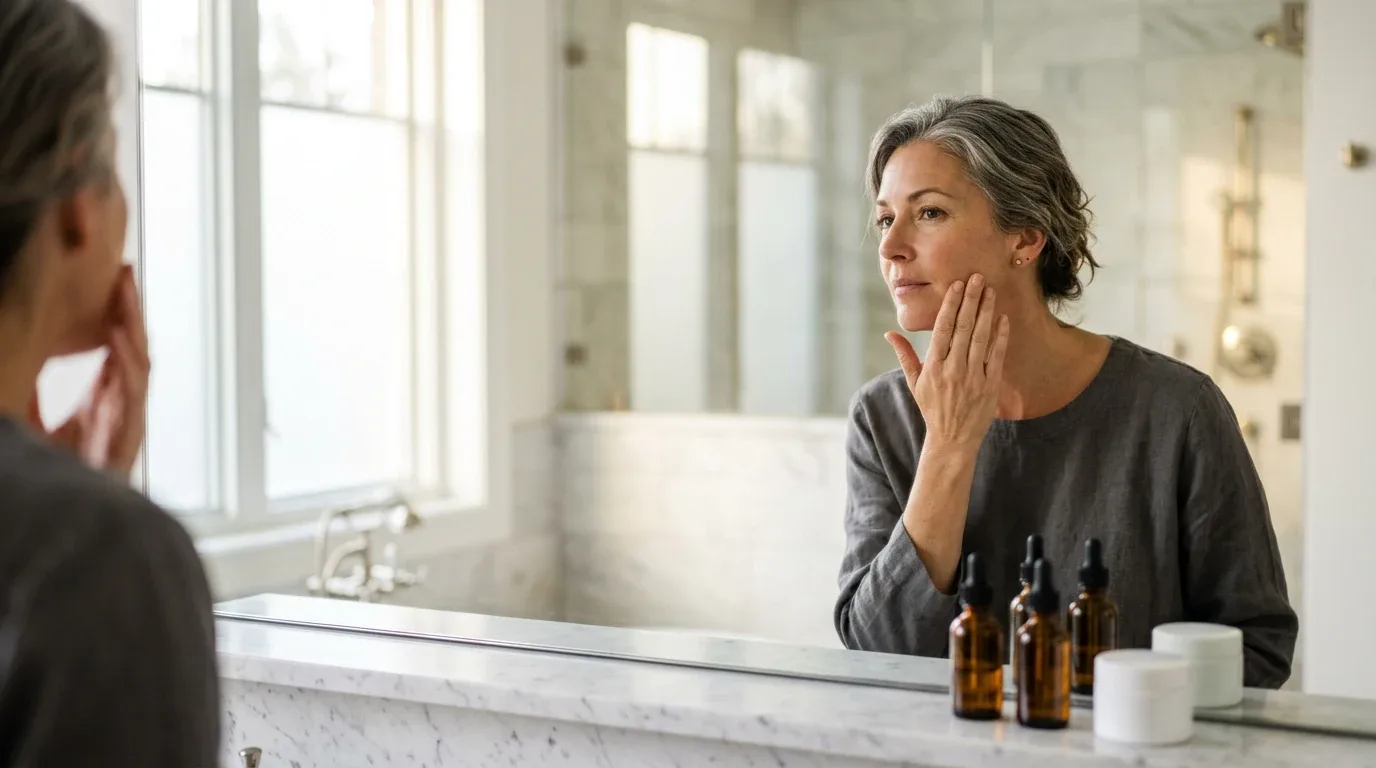
What Sunspots on Your Face Are, and Why Summer Makes Them Worse
Sunspots go by several names. The clinical term is solar lentigines, and you’ll also hear age spots or liver spots (they have nothing to do with your liver). Each one is a flat, tan-to-brown patch at the skin’s surface with a defined edge, anywhere from freckle size to about a centimeter across, produced by a small cluster of overactive pigment cells that built up over years of UV exposure. They favor the face, the backs of the hands, the shoulders, and the chest, which is to say the skin that catches the most sun.
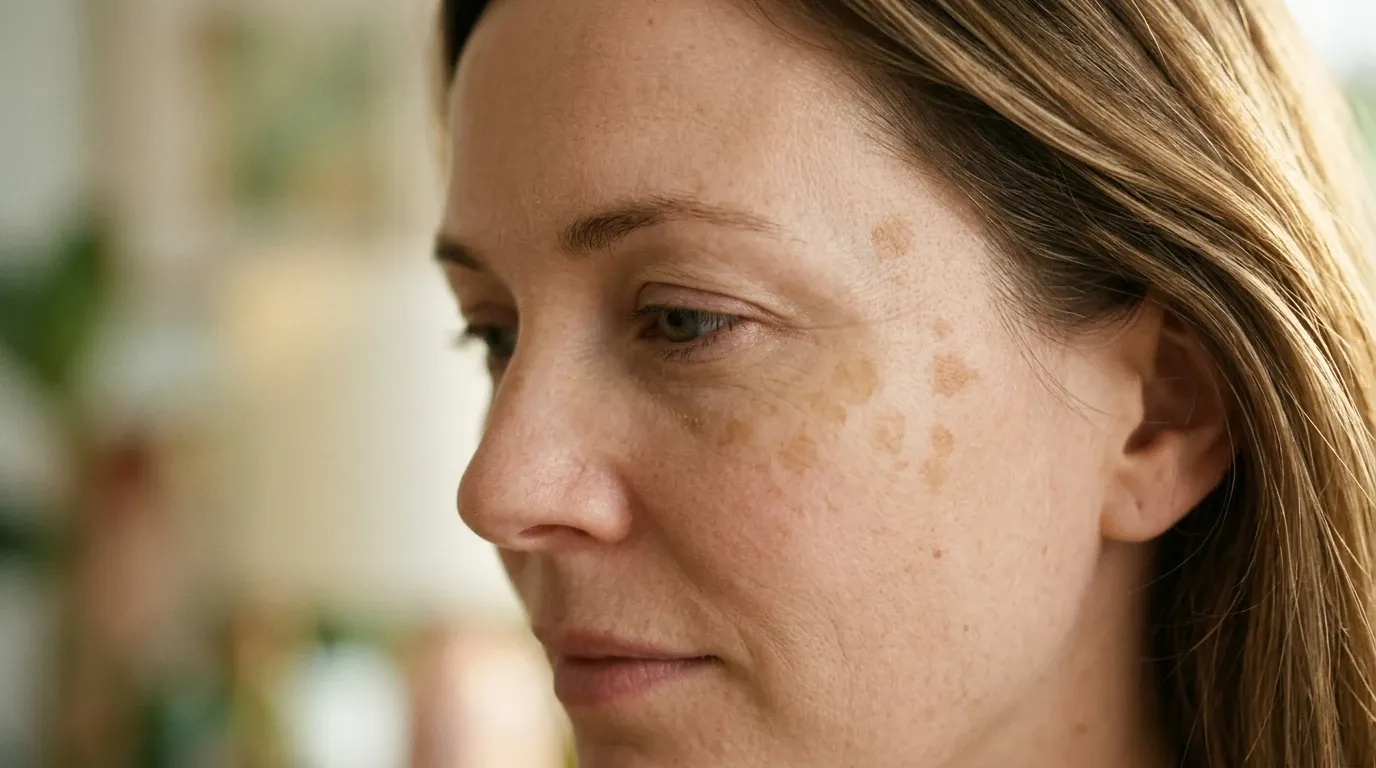
Summer makes them worse because UV is the trigger. UV rays from sun exposure drive melanin overproduction, and people over 40 are the most likely to notice these dark patches. Florida summer afternoons routinely sit at the top of the UV index scale, and that sustained exposure pushes melanocytes (the cells that make melanin) to overproduce pigment. A spot that was barely visible in April can be noticeably darker by August, and new ones tend to surface a few weeks after the exposure that caused them.
Sunspots vs. Melasma vs. Freckles
These three get confused constantly, and they respond to different treatments, so the distinction matters before you buy anything.
-
Sunspots (solar lentigines): defined borders, uniform color, caused almost entirely by cumulative UV. They don’t fade in winter, and, unlike freckles, they tend to persist rather than lighten with the seasons.
-
Melasma: larger, blotchy patches with irregular edges, usually symmetric across the cheeks, forehead, or upper lip. Hormones drive it, which is why it often appears during pregnancy or after starting birth control pills, and it’s more likely to return after treatment. Aggressive peels or lasers can make it worse.
-
Freckles (ephelides): small, scattered dots that darken in summer, lighten in winter, and run in families. They usually show up in childhood.
A provider can usually tell the three apart by the pattern and the edge, sometimes with a handheld UV lamp to gauge how deep the pigment sits. Settle that first, because a melasma plan and a sunspot plan overlap only partly.
Who Gets Them, and Why You Are Seeing More Now
Sunspots are a sign of accumulated photodamage, so they become more common with every decade. Fair skin that burns easily, years of outdoor work or weekend boating, past tanning-bed use, and skipped sunscreen all add to the total. They are not caused by anything you did this month; this summer simply darkened spots that were already forming.
That is also why people in their thirties and forties often feel like the spots arrived all at once. The damage is decades old. The visibility is new.
Do Sunspots on the Face Go Away?
Not on their own. Freckles lighten when UV drops in the cooler months because they’re a temporary response. A sunspot is a stable cluster of extra melanocytes making extra melanin, and it doesn’t reset with the seasons. Left alone, most sunspots hold their color, and each summer of unprotected sun tends to darken them another shade.
They do respond to treatment, and faster in the office than at home. Every option below fades sunspots one of two ways: by inhibiting melanin production or by speeding cell turnover. Topicals lighten mild spots over months, peels and facials work on the middle ground, and laser treatments handle the deep or widespread cases. The right treatment depends on how deep the pigment is and on your skin type, which is why the rest of this guide sorts the options by both.
How to Get Rid of Sunspots on Your Face at Home
Topical products won’t erase deep pigment, but the right actives visibly lighten mild to moderate sunspots over a few months. Two things decide whether they work: picking ingredients with evidence behind them, and using them every day alongside sunscreen. Skip the sunscreen and you’re fading old spots while building new ones.
Vitamin C and Other Brighteners
Topical L-ascorbic acid, the active form of vitamin C, blocks tyrosinase, the enzyme your skin uses to make melanin, and as an antioxidant it also mops up the free radicals UV generates, so a morning serum works as both a brightener and a layer of defense. Efficacy climbs with concentration only up to about 20 percent; past that you add irritation without adding results. Apply it in the morning, before moisturizer and sunscreen.
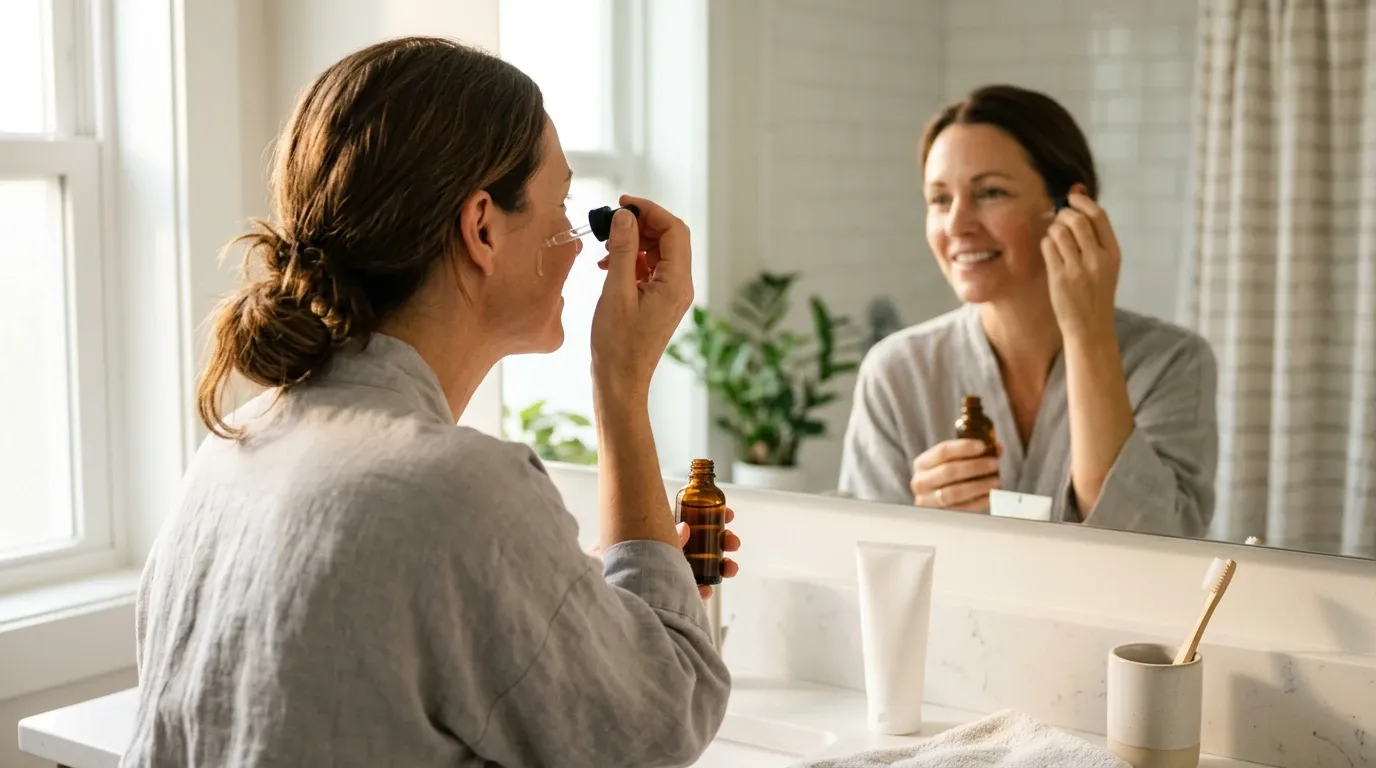
Other brighteners you’ll see on labels: niacinamide, tranexamic acid, alpha arbutin, kojic acid, azelaic acid, and glycolic acid. Most of them interrupt pigment production at different steps, which is why serums often combine two or three; glycolic acid is the exception, an exfoliant that lifts pigmented surface cells and supports a more even skin tone as part of a routine. None of them work fast, and none replace SPF.
What About Natural Remedies?
Aloe, apple cider vinegar, and lemon juice show up in a lot of “fastest way” lists. The honest summary: a 2018 review of natural ingredients for hyperpigmentation found some depigmenting activity for ingredients like arbutin, niacinamide, licorice extract, and soy, but noted the clinical studies are few and short. Nothing in that review supports rubbing acidic kitchen ingredients on your face, and irritation is one of the reliable ways to make pigment worse. If you want a natural-leaning routine, arbutin and niacinamide are the ingredients with actual data behind them.
Retinoids for Cell Turnover
Retinoids and other over the counter creams help fade age spots by speeding epidermal turnover, while stronger prescription treatments work faster on stubborn pigment. Over-the-counter retinol does this gently; prescription tretinoin does it more strongly, and in a 10-month randomized trial, 83% of patients using tretinoin on facial spots saw lightening versus 29% on placebo. Retinol’s benefits for sun-damaged skin take months to show, so give a new retinoid 8 to 12 weeks before judging it, and expect a spot a few shades darker than your skin tone to need 6 to 12 months to fade with consistent use, per dermatologist guidance on fading dark spots.
One caveat applies to every retinoid: it makes your skin more sensitive to UV. Using one without rigorous sun protection is counterproductive.
Prescription Options: Hydroquinone and Tretinoin
You will see hydroquinone recommended on almost every sunspot article, so here is the part they tend to skip. In the United States, hydroquinone is a prescription drug. In its safety communication on OTC skin-lightening products, the FDA states that Tri-Luma is the only FDA-approved drug containing hydroquinone, and that over-the-counter hydroquinone products are unapproved and not recognized as safe and effective. Reported side effects from unregulated products include rashes, facial swelling, and ochronosis, a blue-gray discoloration that is harder to fix than the spots you started with.
Prescription tretinoin, and combination creams that pair a retinoid with a second brightening agent, are also provider-prescribed and provider-monitored. A 2025 systematic review of sunspot trials found a mequinol-tretinoin combination to be the topical option with the strongest results, particularly on the face. None of this is something to buy online. If a topical prescription is the right fit, it comes with a plan for how long to use it and when to stop.
Medical-Grade Skincare Built Around Your Skin Type
Drugstore products can help. Medical-grade skincare formulates the same actives at higher concentrations with delivery systems built to reach the deeper epidermis, which is where the pigment lives. At Coastal Health & Medical Spa, those regimens are built by Danielle Hancock, Licensed Aesthetician and ZO Skin Health Expert Certified, from lines like ZO Skin Health (the ZO Brightalive brightener and the Illuminating AOX vitamin C serum, for example), Plated Skin Science, and SkinBetter Science.
The guidance matters as much as the product. A retinol that suits fair, non-sensitive skin can trigger post-inflammatory hyperpigmentation on a deeper skin tone, where irritation itself leaves a dark mark. A regimen built around your Fitzpatrick type, your sensitivity, and how your skin has responded to actives before avoids trading one kind of pigment for another.
Professional Treatments That Remove Sunspots
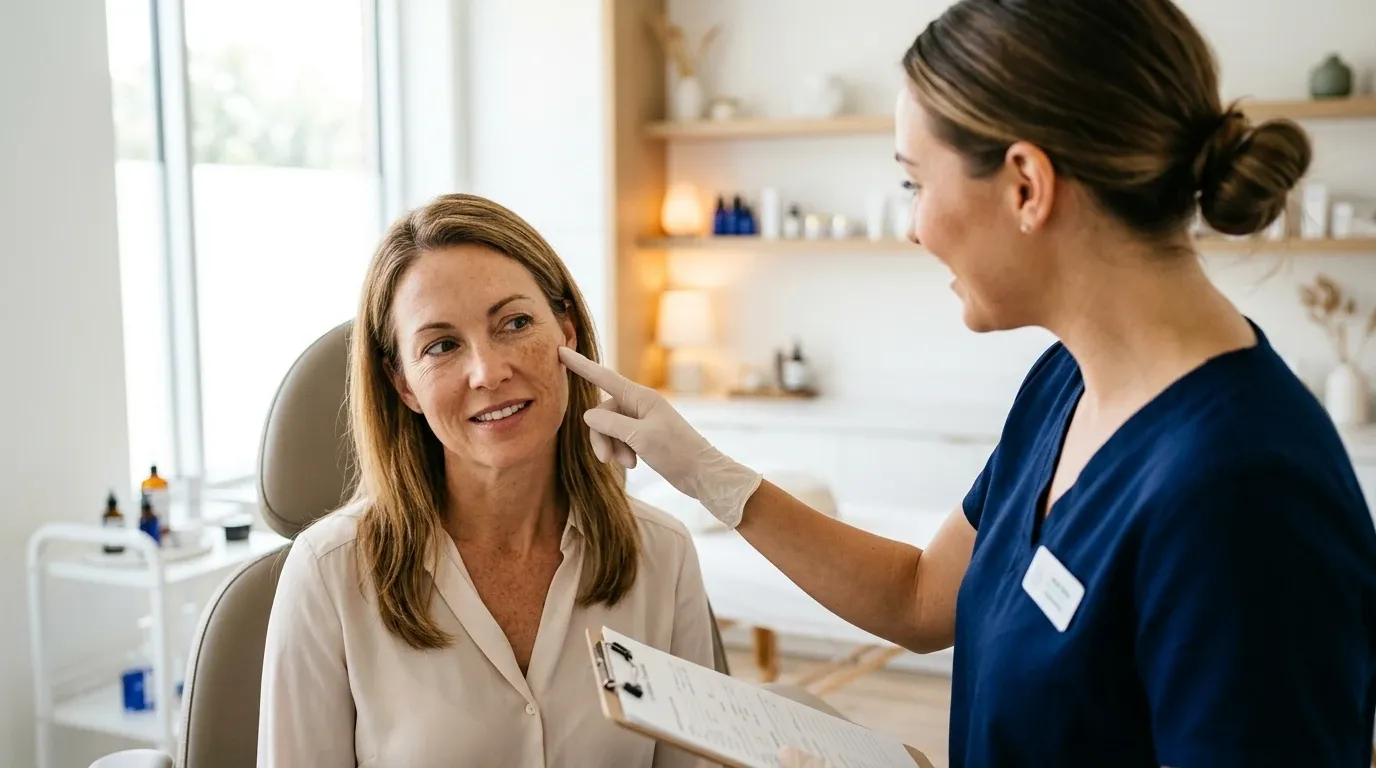
At-home care builds the foundation. In-office treatment is what clears the backlog. For stubborn spots, laser therapy and chemical peels are the medical treatment route, and they fade pigment faster than at-home care: a systematic review of sunspot treatments covering more than 3,000 patients found that laser and light treatments cleared solar lentigines faster and held results longer than topical creams, with peels and cryotherapy in between. Which option fits you depends on how deep the pigment sits, your skin tone, and how much downtime you’ll accept.
Chemical Peels for Sunspots
A peel applies a chemical solution that removes the outermost pigmented layers of skin, lifting superficial pigment with them and prompting fresh cells underneath. In one chemical peel versus cryosurgery study, 47 percent of people who had a chemical peel saw their age spots fade by half, and peels heal faster than freezing. Coastal offers chemical peels in Jacksonville at two depths, and they can also help improve uneven skin tone from sun damage.
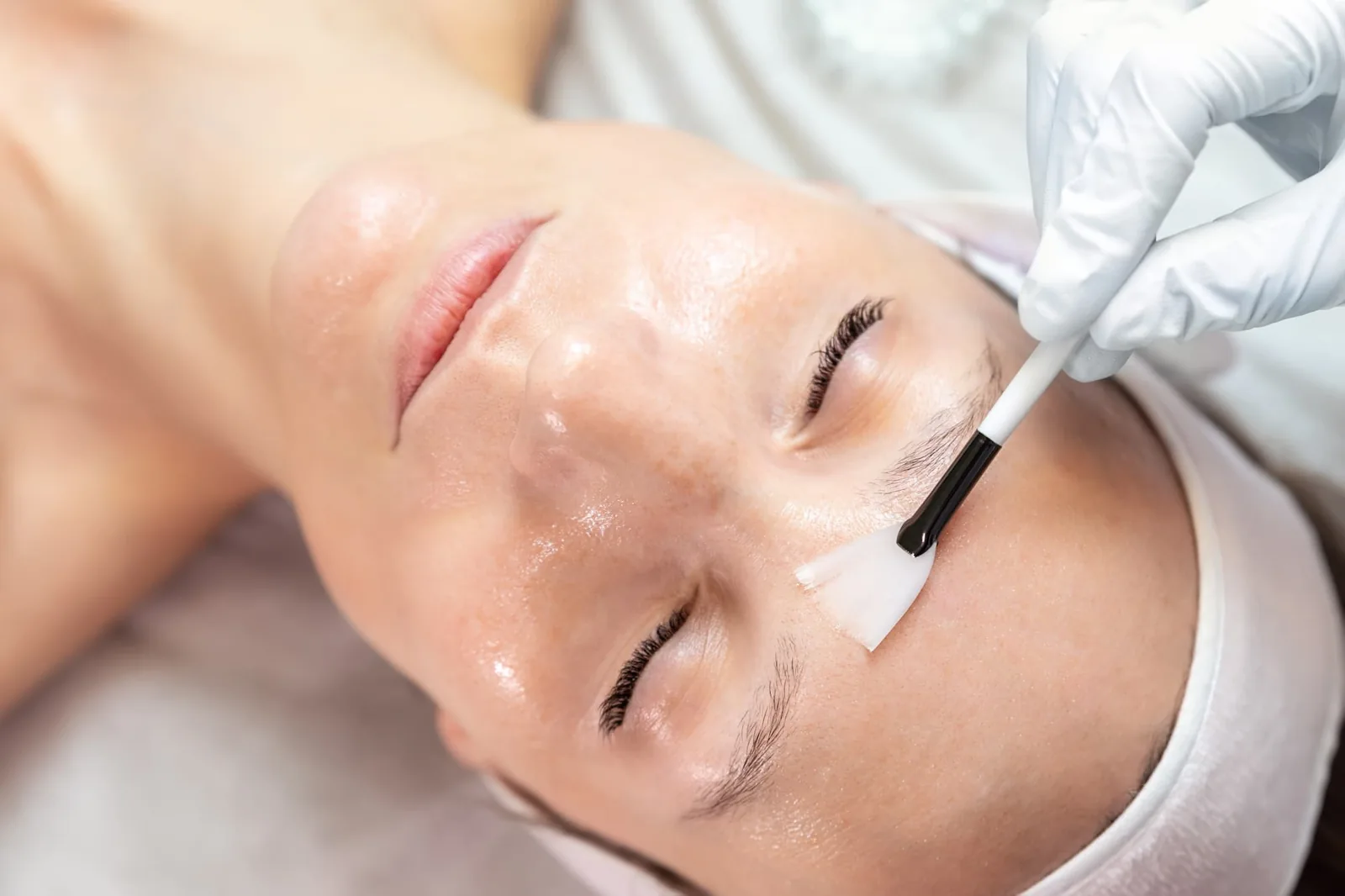
A peel solution being applied at Coastal. See the chemical peel treatment page for depths and pricing.
The ZO Stimulator Peel is superficial, with zero downtime, and suits faint or recent spots and maintenance between stronger treatments. The Perfect Derma Peel is medium-depth: TCA, retinoic acid, salicylic acid, kojic acid, and glutathione in one formula, with about five to seven days of visible peeling that starts around day three. It’s labeled safe for Fitzpatrick types I through VI, which matters if you have a deeper skin tone.
Chemical peels for hyperpigmentation are dosed differently from peels aimed at texture or acne, so tell your provider that pigment is the goal. Afterward, chemical peel aftercare decides half the result: skipping sunscreen or picking at peeling skin can trigger post-inflammatory hyperpigmentation that’s darker than the spot you started with.
CO2 Laser Resurfacing With the Alma Hybrid
For sun damage that comes with texture, fine lines, and rough, dull skin as well as spots, CO2 laser resurfacing renews the outer layers so smoother, more even skin comes in behind them. Coastal uses the Alma Hybrid, which pairs fractional CO2 with a 1570 nm non-ablative wavelength, so one session works on the surface and stimulates collagen production deeper down.
Downtime is shorter than the old CO2 reputation suggests. Coastal’s lighter PixelPeel protocol means about one day of pinkness; the more aggressive setting means two to three days of visible peeling. Most plans run three to five sessions spaced four to six weeks apart; the exact number depends on treatment intensity, pigment depth, and your skin, and your provider sets the count after a free skin evaluation that includes a Fitzpatrick assessment. For one isolated spot on otherwise smooth skin, pigment-specific lasers and light devices score higher in the trials than fractional CO2. Resurfacing earns its place when the whole area needs it. While healing, stay out of direct sun between 10 a.m. and 4 p.m.
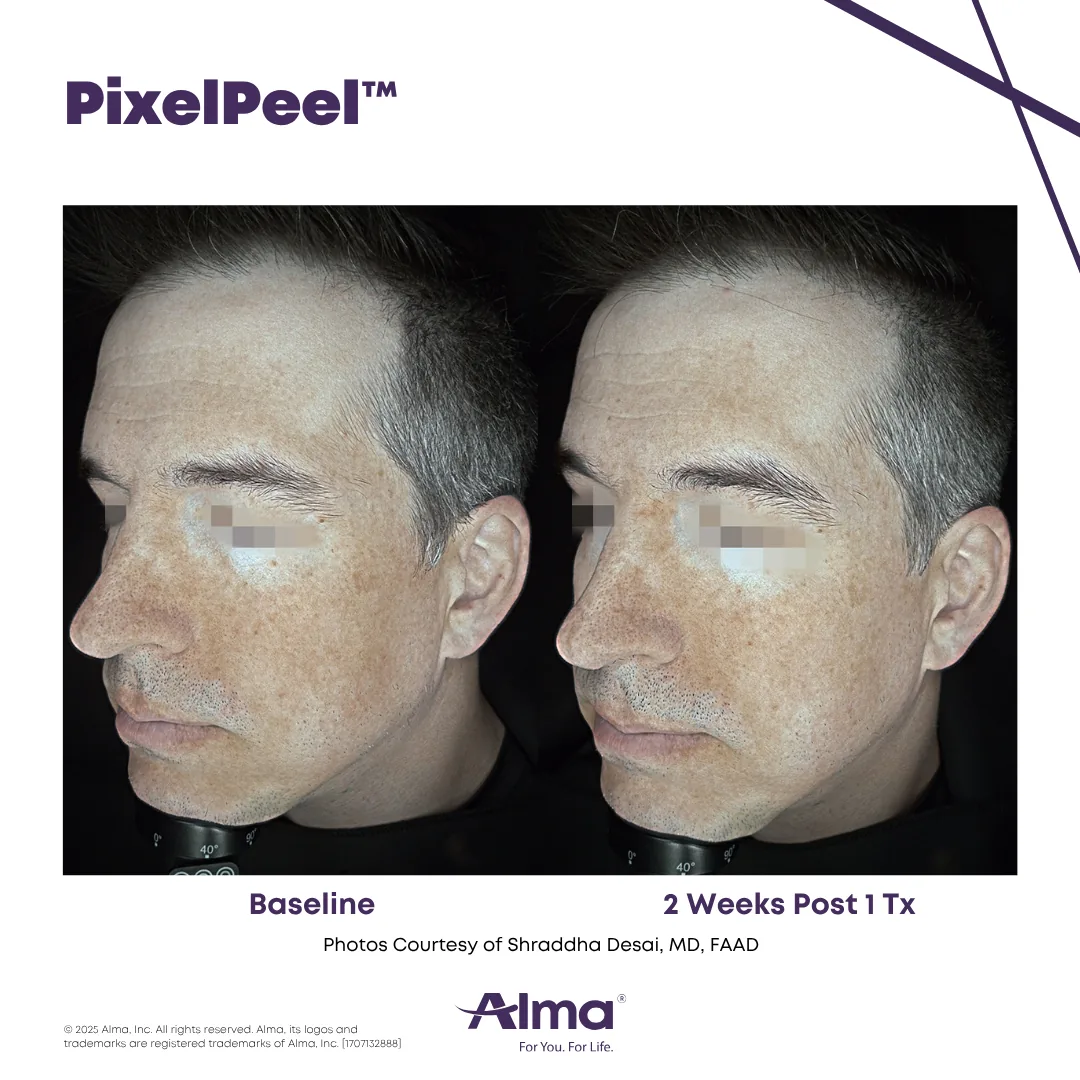
Sun-damage pigmentation before and two weeks after one Alma PixelPeel session (manufacturer example, not a Coastal patient; results vary). Coastal offers this protocol as PixelPeel CO2 laser resurfacing.
Brightening Facial and HydraFacial
If your pigment is mild, or you want maintenance between peels, facials help. Coastal’s brightening facial combines dermaplaning, the ZO Stimulator Peel, and the ZO Brightalive serum under an aloe mask in about 60 minutes with no downtime. The short version of what a brightening facial does is exfoliate, deliver brighteners, and send you home with SPF on, all in one visit.
HydraFacial treatments take a different route: vortex technology cleanses and extracts while boosters (vitamin C and arbutin for brightening) are infused into the skin. There’s no downtime, which makes it the easiest option to fit around work. Neither facial clears deep solar lentigines on its own; both hold results after a peel or laser and keep your overall tone even between visits.
Other In-Office Treatments You Will Read About
Search results for sunspot removal mention IPL, “pigment lasers,” cryotherapy, and microdermabrasion, so here is how they compare. The same 2025 review (41 clinical trials, 3,234 patients) puts numbers on each one: intense pulsed light cleared roughly 75% to 90% of treated spots and picosecond lasers 68% to 93%.
Cryotherapy (freezing individual spots) cleared 37% to 71% but carried more severe side effects. Trichloroacetic acid peels used alone landed at 12% to 46%, which is why peels for pigment are usually combined with a home routine. The same review noted that pairing lasers with topical agents may improve results and lower the risk of post-inflammatory hyperpigmentation. Microdermabrasion, a gentler mechanical exfoliation, helps with superficial discoloration and works best for maintenance.
Coastal’s in-office menu centers on chemical peels, CO2 resurfacing, brightening facials, and HydraFacial. If a consultation suggests that a spot-targeted light or laser treatment is the better tool for your specific spots, you will hear that directly.
Which Sunspot Treatment Fits Your Skin?
| Pigment Level | Typical Starting Point | Downtime | What the Evidence Says |
|---|---|---|---|
| Mild (faint, recent spots) | Medical-grade topicals (vitamin C, retinol, arbutin, niacinamide) plus a brightening facial or HydraFacial | None | Gradual lightening with daily use; reassess at 8 to 12 weeks |
| Moderate (multiple visible spots) | Prescription tretinoin or hydroquinone, or a chemical peel series plus home routine | None to 5–7 days of peeling per medium peel | Tretinoin: 83% of facial spots lightened at 10 months vs. 29% on placebo (NEJM); TCA peels alone 12–46%, stronger as a series with home care |
| Isolated, well-defined stubborn spots | IPL or a pigment-specific laser (referral if needed) | Minimal; spots darken then flake | IPL 75–90% and picosecond 68–93% clearance in trials |
| Widespread sun damage with texture changes | CO2 laser resurfacing (Alma Hybrid PixelPeel) | About 1 day (Light) to 2–3 days (Aggressive) per session | Best for whole-face photodamage, tone, and lines; lower per-spot clearance than pigment lasers |
| Maintenance and prevention | HydraFacial, daily SPF, topicals | None | Extends results; not a fix for deep lentigines on its own |
These are starting points, not promises. Results depend on your skin type, how deep the pigment sits, and how closely you follow aftercare, and a consultation is where the plan gets matched to you rather than to a table.
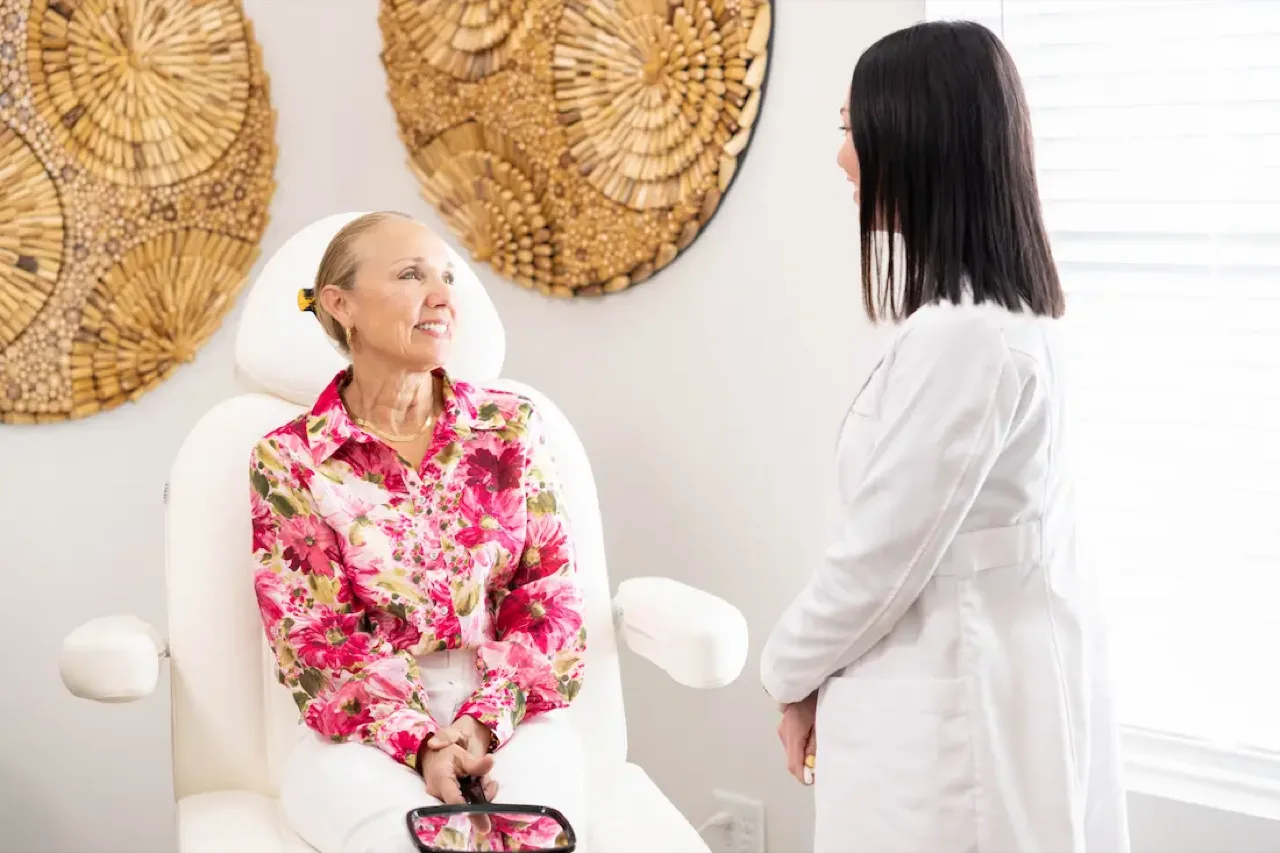
Every laser or peel plan at Coastal starts with a consultation. Book a free skin evaluation.
How to Keep Sunspots From Coming Back
Every treatment above fails without prevention, because the trigger never goes away. In Jacksonville, UV is a year-round factor, and the spots you clear this fall will rebuild by next August if your skin keeps taking unprotected sun.
Daily broad spectrum sunscreen, SPF 30 or higher, is the one rule that isn’t optional. Wear it every morning, on cloudy days and on days you’ll only be in the car, since UVA passes through clouds and window glass. Outdoors, reapply at least every two hours per sunscreen labeling guidance, and sooner if you’re sweating or swimming.
Beyond sunscreen, a few habits do measurable work:
-
Wear protective clothing, including a wide-brimmed hat, sunglasses, or a long sleeve shirt, for any stretch outdoors longer than a walk to the car.
-
Avoid direct sun during peak hours, roughly 10 a.m. to 4 p.m., when you can; that’s when the UV index is highest.
-
Keep the morning vitamin C serum going. Prevention and treatment overlap there.
-
Work out how often to get a facial with your aesthetician, so early pigment changes get caught before they set.
Treatment clears the backlog. SPF and protective clothing stop you from rebuilding it.

When to See a Professional About a Dark Spot
Most sunspots are harmless, but not every brown spot on the face is a sunspot, and some sun spots turn out to be other pigment changes entirely. Melanoma and other skin cancers can look like a benign spot in their early stages, and treating a cancer with a peel or laser gives it time to grow. Before any cosmetic treatment for pigment, have a spot that concerns you evaluated.
Get prompt medical evaluation if a spot shows any of the ABCDE warning signs for melanoma, including an irregular border:
-
Asymmetry: one half of the spot is unlike the other
-
Border: irregular, scalloped, or poorly defined edges
-
Color: more than one shade, such as tan and brown with black, or areas of white, red, or blue
-
Diameter: larger than about 6 millimeters, roughly a pencil eraser, though melanomas can be smaller
-
Evolving: changing in size, shape, or color, or bleeding, itching, or becoming raised
At Coastal, Dr. Olivia, DNP, APRN, looks at the spots you want treated during the free skin evaluation that comes before any laser or peel plan. Anything that looks atypical should be checked by a board-certified dermatologist, and biopsied if needed, before cosmetic treatment. The cosmetic work can wait; a diagnosis can’t.
Your Next Step Toward Clearer Skin After Summer
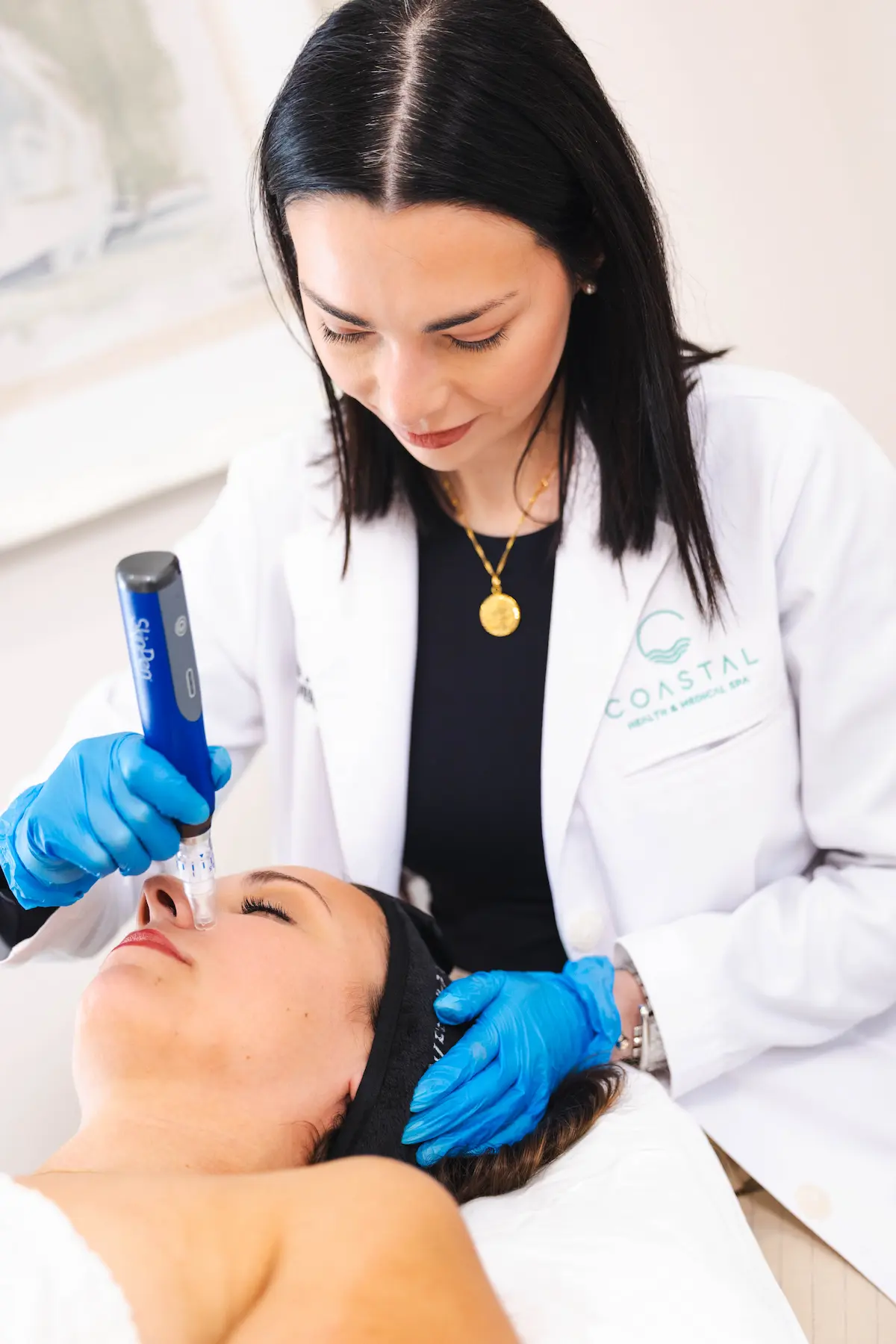
Dr. Olivia, DNP, APRN, performing SkinPen microneedling at Coastal, one of the collagen-building options a provider may pair with your pigment plan.
Sunspots don’t call for panic, and they don’t fade on wishful thinking either. The approach that works pairs the right actives at home with professional treatment matched to your skin type and pigment depth, then protects the result with daily SPF. Faint, surface-level spots may clear with a guided medical-grade regimen alone; deeper or widespread pigment usually needs a peel or laser series.
Ready to build a personalized sunspot plan? Book a consultation at Coastal Health & Medical Spa in Jacksonville with Danielle Hancock, Licensed Aesthetician and ZO Skin Health Expert Certified. She’ll evaluate your skin, start with a brightening facial in Jacksonville or a medical-grade regimen where that fits, and bring in Dr. Olivia, DNP, APRN, for peel and laser planning. You can also read more about the Coastal team before you visit.
Frequently Asked Questions
Do sunspots on the face go away?
Not on their own. Solar lentigines are permanent skin changes, so they stay put or slowly darken with more sun exposure. They do respond to treatment: brightening topicals for mild spots, and chemical peels, laser resurfacing, or pigment-specific lasers for more stubborn ones. Once cleared, daily sunscreen is what keeps them from returning.
How do Koreans get rid of dark spots?
Korean skincare routines lean on daily sunscreen, gentle exfoliation, and layered brightening serums with niacinamide, tranexamic acid, arbutin, or vitamin C, used consistently for months. In clinics, low-energy pigment lasers (often called laser toning) are part of the same approach. The principles translate anywhere: protect first, brighten daily, and let a provider handle the stubborn spots.
What is the best cream to get rid of sunspots?
The topicals with the most trial evidence for solar lentigines are prescription combinations built on tretinoin, with hydroquinone as the other prescription option. Over the counter, look for vitamin C, retinol, azelaic acid, kojic acid, or tranexamic acid, and use them with daily SPF. No cream works in weeks; plan on months.
What fades dark spots the fastest?
In-office treatments. Pigment-targeting lasers and light devices clear spots in the fewest sessions, chemical peels and CO2 resurfacing follow, and topicals are the slowest, taking months. Fast still isn’t instant: treated spots darken and flake before they lift, and skipping sunscreen afterward can bring them back.
Why am I suddenly getting so many sun spots?
They only feel sudden. Sunspots reflect years of accumulated UV exposure, and one high-UV summer darkens spots that were already forming under the surface, so several can seem to appear at once. Fair skin, outdoor work or weekends on the water, past tanning-bed use, inconsistent sunscreen, and family history can all raise the count over time. Any new spot that looks different from the others still needs a medical look to rule out skin cancer.
What does a sun spot look like on your face?
A sunspot is a flat, painless patch that is tan to dark brown, with even color and a clear edge, on sun-exposed skin such as the cheeks, forehead, and temples. Melasma looks blotchier and more symmetrical, and freckles are smaller dots that fade in winter. A spot that is asymmetrical, multicolored, raised, or changing is not a typical sunspot and should be evaluated.
