
Retinol is an over-the-counter form of vitamin A that speeds up skin cell turnover and stimulates collagen production. The main retinol benefits are softer fine lines and wrinkles, smoother skin, a more even skin tone with fewer dark spots, clearer pores, and firmer skin over time. In pooled clinical trials, improvement showed up by week 4 and kept building through week 12.
- Fine lines and wrinkles: reduced depth through collagen production
- Acne: fewer clogged pores because dead skin cells shed before they plug
- Dark spots and uneven skin tone: pigmented cells cycle out faster
- Texture and pore appearance: smoother surface, less congestion
- Firmness: structural change in the dermis over three to six months
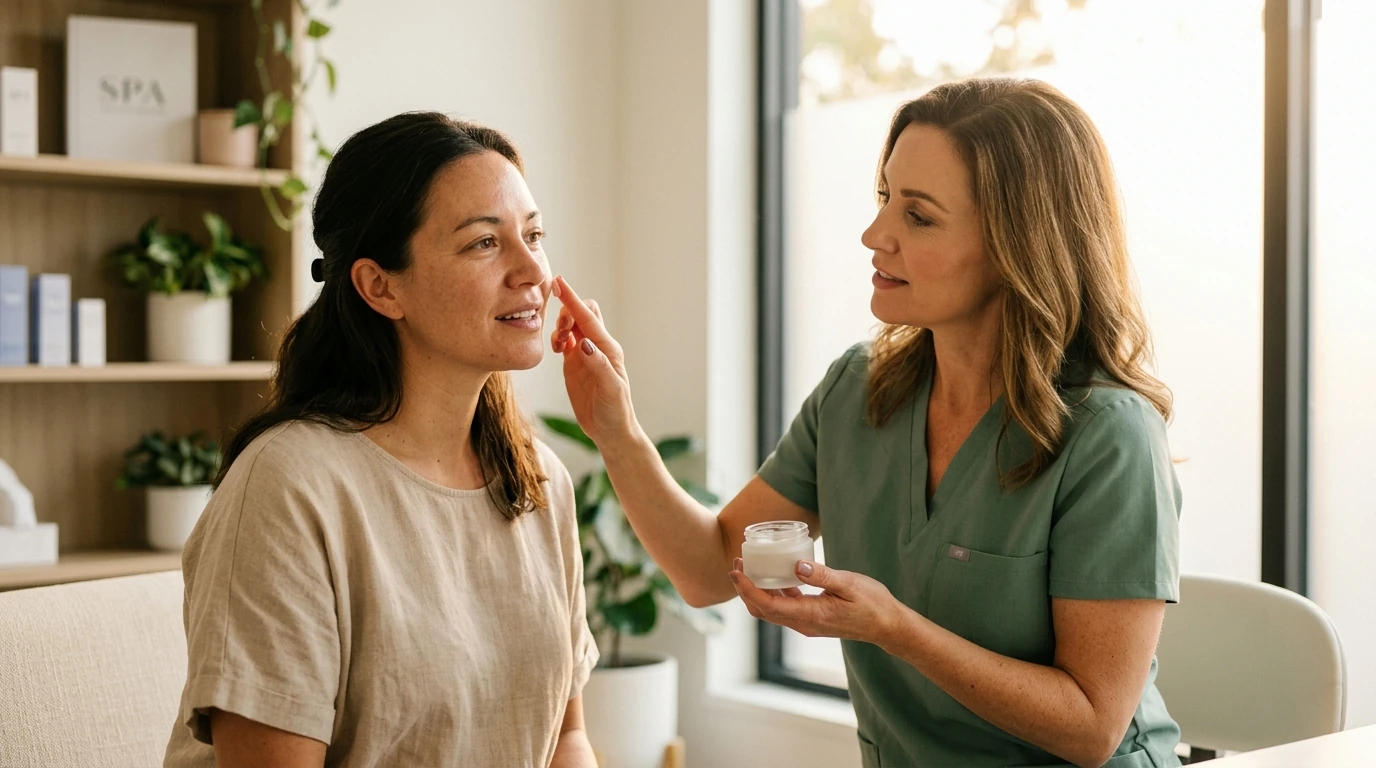
Matching retinol strength to your skin is what separates a good experience from a peeling mess.
The catch is that most people either quit early because of skin irritation or never start because the options feel overwhelming. Both problems have the same fix: the right strength, introduced slowly, with sunscreen every morning. The rest is patience, because the biggest changes take months.
What Is Retinol and How Does It Work?
Retinol is a form of vitamin A your skin converts into retinoic acid, the molecule that changes cell behavior. That two-step conversion is why topical retinol works more gradually than prescription retinoids like tretinoin, which are retinoic acid already. Vitamin A comes in many forms, and all topical retinoids, from gentle retinyl palmitate up to tretinoin, end up doing the same job. A dermatologist overview of retinoids puts it simply: they change the speed at which cells turn over and make new ones.
Cell Turnover: The Engine Behind Every Benefit
Young skin sheds and replaces cells on roughly a 28-day cycle. That cycle slows with age. Dead skin cells linger on the skin’s surface, pores clog more easily, and the complexion looks duller.
Retinol accelerates skin renewal, signaling cells to divide faster and pushing new skin cells up while old ones shed. That’s also why the first few weeks feel rough. Your skin is speeding up a process it had slowed down.
Collagen Stimulation and Long-Term Remodeling
Retinol also reaches the dermis, where it stimulates fibroblasts to produce collagen and elastin, the fibers behind skin elasticity. The effect shows up in biopsies of aging skin. In a one-week retinol biopsy study, type I procollagen roughly tripled and epidermal thickness about doubled, with results similar to topical retinoic acid and without noticeable retinoid side effects.
That same finding answers the persistent worry that vitamin A thins the skin. The peeling you see during the first month is the outermost dead layer turning over faster. Underneath it, the living epidermis gets thicker and the dermis gains collagen.
The dual action, faster turnover at the skin’s surface and collagen rebuilding underneath, is what separates retinoids from acids that only exfoliate. Where it lands in your regimen matters too: retinol takes the night slot in a skincare routine order built around it, after cleansing and before moisturizer.
The Benefits of Retinol for Your Skin
Retinol has one of the deepest research bases in skin care, and the benefits of retinol arrive in a predictable order: pores and texture first, pigment next, and the anti-aging benefits last. Results still vary with concentration, consistency, and skin types, and the same product can be a breakthrough on one face and an irritant on another.
Softens Fine Lines and Wrinkles
This is what most people come for. A pooled analysis of six retinol trials with 237 participants on stabilized retinol found improvement in every sign of photoaging, including crow’s feet, forehead wrinkles, brown spots, and uneven skin tone, by week 4, and the gains kept building through week 12. Irritation was limited to mild, transient redness and peeling in a handful of participants.
Don’t expect neurotoxin-level smoothing. Retinol is strongest at preventing wrinkles and reducing wrinkles that are still shallow. Deep-set lines usually need something else.
Retinol for Acne and Acne Scars
Faster turnover keeps pores from clogging in the first place, because dead skin cells shed before they can mix with sebum and form plugs. That makes vitamin A an effective treatment for mild to moderate acne on acne-prone skin: with consistent use, breakouts typically become less frequent and less severe over two to three months. Adapalene, an OTC retinoid built for treating acne, is often the better pick when breakouts are the main concern, and it stays stable next to benzoyl peroxide where retinol doesn’t.
Acne scars are two different problems. The flat red or brown marks left after a breakout are pigment, and they fade with retinol the same way other dark spots do, over two to four months. Pitted or rolling scars are missing collagen, and no topical fills them. Those respond to SkinPen microneedling in Jacksonville, which triggers the collagen production a cream can only nudge, and retinol in the weeks before and after helps that new collagen organize.
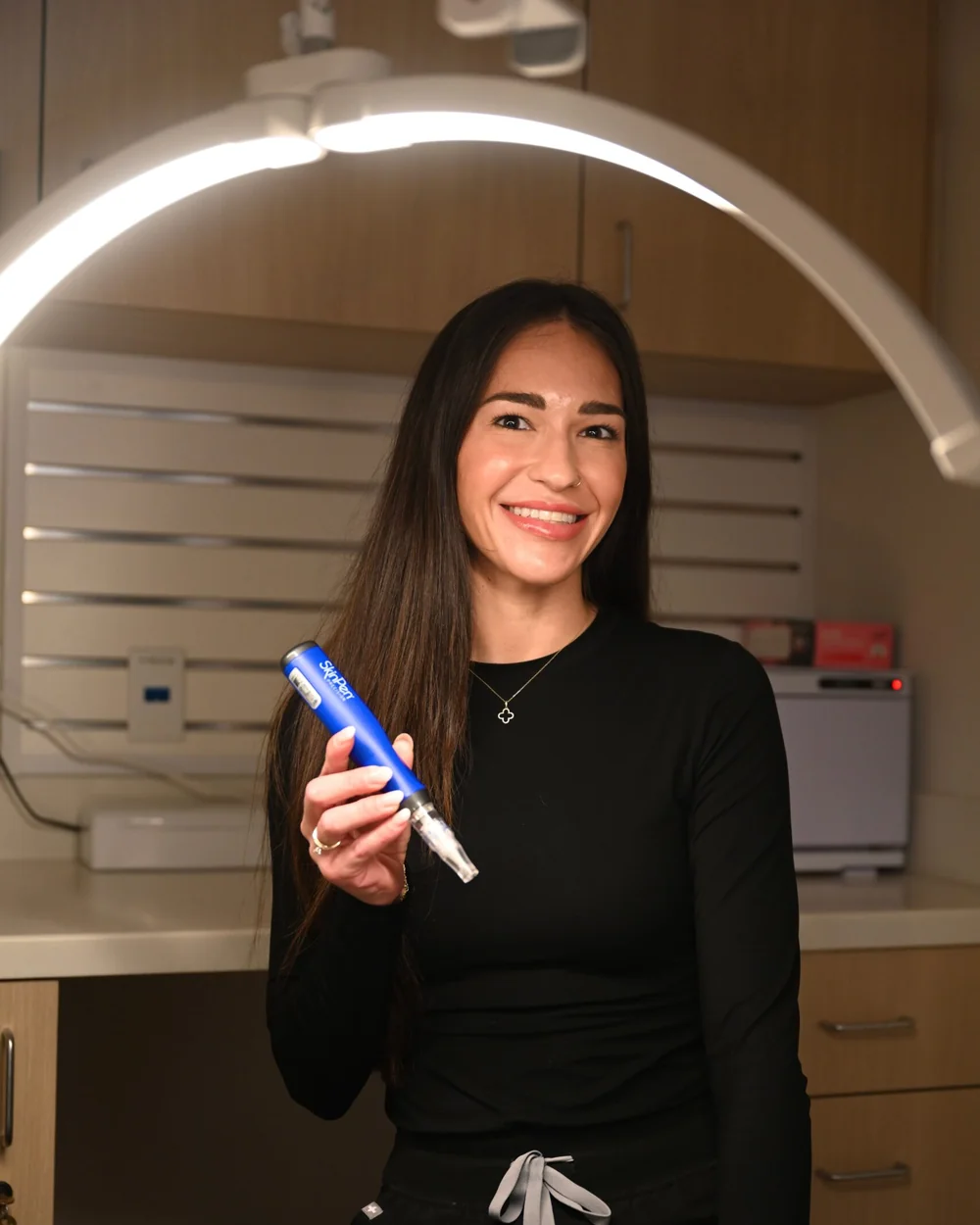
Danielle Hancock with the SkinPen device in Coastal’s treatment room. Pitted scars need collagen rebuilt from below, which is the job of SkinPen microneedling for scars.
Fades Dark Spots and Evens Tone
Post-inflammatory hyperpigmentation, sun spots, age spots, and the patchy melanin behind an uneven skin tone all respond over time as pigmented cells cycle to the surface and get replaced with even-toned skin. The even-toned skin you see at month three is the result of several full turnover cycles. For stubborn pigment, pairing retinol with chemical peels for hyperpigmentation tends to move faster than either alone. Marks from years of Florida sun exposure are the slowest to budge, and sunspots on the face usually clear faster with a peel or laser than with a topical.
Smooths Texture and Refines Pores
Rough, uneven texture usually means dead-cell buildup and congestion. Retinol addresses both, so the skin’s surface smooths and pores look smaller because they’re less stretched by trapped debris.
Retinol doesn’t change pore size, which is largely genetic. It empties what’s inside them and firms the tissue around them, which changes how they read.
Builds Collagen for Long-Term Firmness
AHAs and BHAs work at the surface. Retinol triggers structural change in the dermis, which is why it has better evidence against skin aging itself, and not only its surface signs, than any other ingredient you can buy without a prescription. Many people notice firmer skin and better skin elasticity after three to six months of consistent use, though timelines vary. Peptides take a different route, signaling fibroblasts rather than speeding turnover, which is why peptides for skin repair pair well with retinol instead of competing with it.
How Long Does Retinol Take to Work?
Retinol works on a schedule measured in months, and the order the retinol benefits arrive in is predictable. Texture and tone improve first, fine lines take a season, and firmness takes the better part of a year. Most retinol products show their first visible change around week 4, whether you use retinol nightly or three times a week.
| Timeframe | What’s happening | What you’ll notice |
|---|---|---|
| Weeks 2 to 4 | Skin adjusts to faster turnover; the retinol purge and dryness peak | Flaking, a few extra breakouts, a rough patch before it smooths |
| Weeks 8 to 12 | Congested and pigmented cells have cycled out | Smoother texture, fewer clogged pores, dark spots starting to fade, tone evening out |
| 3 to 6 months | Early dermal remodeling | Fine lines soften, crow’s feet look shallower, skin feels firmer |
| 6 to 12 months | Sustained collagen production | Deeper wrinkles improve, firmness holds, and results plateau at your maintenance frequency |
Three months is roughly where the visible changes land. In the pooled trials above, improvement in every sign of skin aging was measurable by week 4 and kept building through week 12, and that matches what people report: by the three-month mark most see smoother skin, fewer clogged pores, and some fading of dark spots. Fine lines soften more subtly, and firmness from collagen remodeling typically needs three to six months. If you’ve seen nothing at all after three months of consistent use, the formula or concentration is probably wrong for you. That’s a conversation to have with a provider, not a reason to double the amount.
Retinol vs Retinoids vs Tretinoin
“Retinoid” is the umbrella term for every form of vitamin A used on skin. The differences come down to how many conversion steps your skin has to perform before the molecule becomes retinoic acid, and whether a prescription is required. Retinyl esters, also called retinol esters, sit at the gentle end; tretinoin is retinoic acid itself.
| Form | Conversion steps to active | Availability | Relative potency | Best for |
|---|---|---|---|---|
| Retinyl esters (retinyl palmitate) | Three | OTC | Gentlest | Very sensitive or reactive skin |
| Retinol | Two | OTC | Moderate | Most people starting out |
| Retinaldehyde | One | OTC | Stronger than retinol | Tolerability with more speed |
| Adapalene | None | OTC | Prescription-level | Acne, and stable with benzoyl peroxide |
| Tretinoin | None | Prescription | Strongest common option | Photoaging, resistant acne |
Multipliers like “retinaldehyde is ten times retinol” or “tretinoin is twenty times stronger” are marketing shorthand with no peer-reviewed basis, so treat the ranking as directional rather than numeric.
Do You Actually Need a Prescription?
Not necessarily, and this is where the assumption that stronger means better breaks down. In a 196-subject comparative trial, an OTC regimen built on retinyl propionate beat prescription tretinoin on wrinkle area at eight weeks and matched it by 24 weeks, with significantly less redness and dryness. Better tolerated meant better adhered to, and adherence is what produces results.
The practical framing: retinol products are a good place to start for anyone trying vitamin A for the first time, with a gentler effect, while prescription retinoids are more potent and classified as pharmaceuticals. Start OTC unless you have resistant acne or significant sun damage, or you’ve run a consistent OTC retinol for three months with no change.
Concentration isn’t a simple ladder either. Higher concentrations don’t reliably outperform lower ones, because how much of the active survives in the bottle and reaches the skin depends on formulation and stability as much as on the number on the label.
Where Medical-Grade Retinol Sits
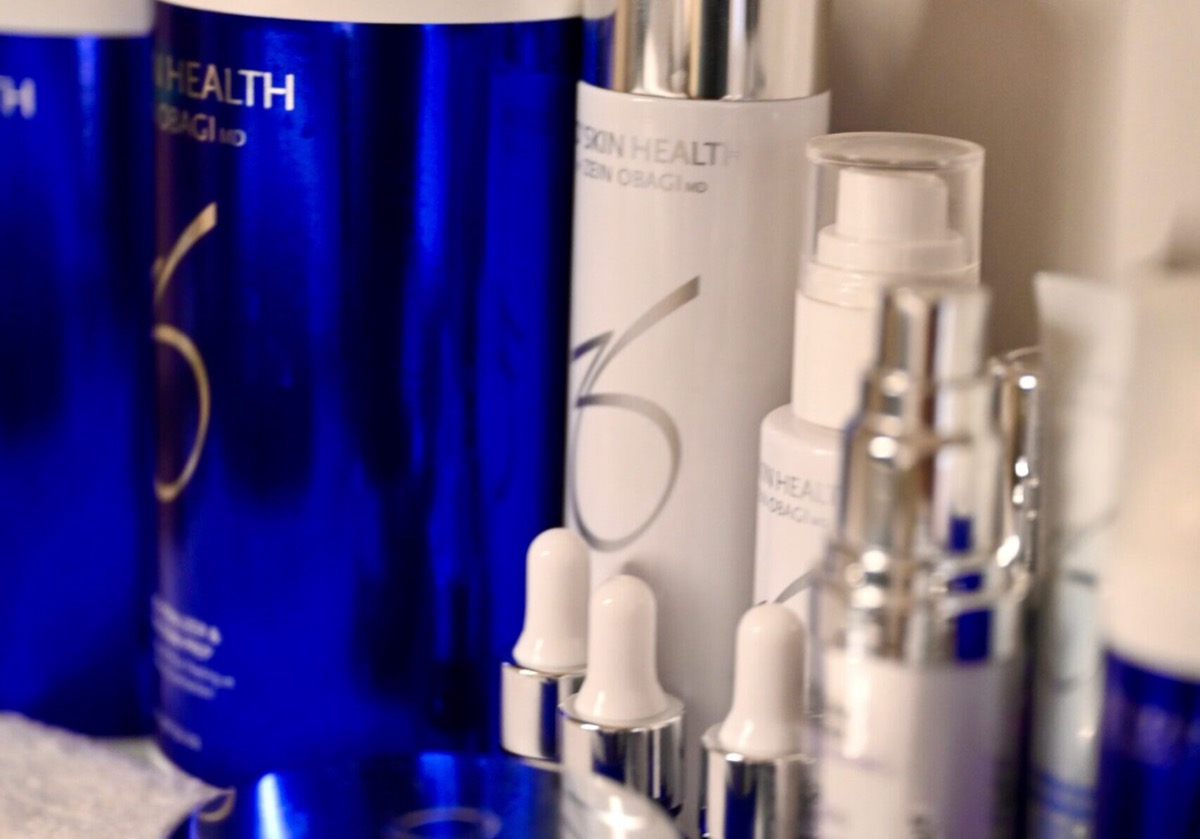
ZO Skin Health at Coastal, the medical-grade line Danielle matches to each skin type. Browse the ZO Skin Health products Coastal dispenses.
Medical-grade lines occupy the middle: higher concentrations of retinol with encapsulated or microemulsion delivery that releases the active ingredients gradually instead of all at once. Encapsulation measurably reduces skin irritation. In one comparison inside a review of retinoid irritation strategies, liposomal tretinoin scored 0.2 on redness versus 1.40 for a conventional formulation of the same molecule. Medical-grade skincare differs from drugstore skincare products in concentration, stability, and delivery rather than in the molecule itself.
How to Start Retinol Without Wrecking Your Skin
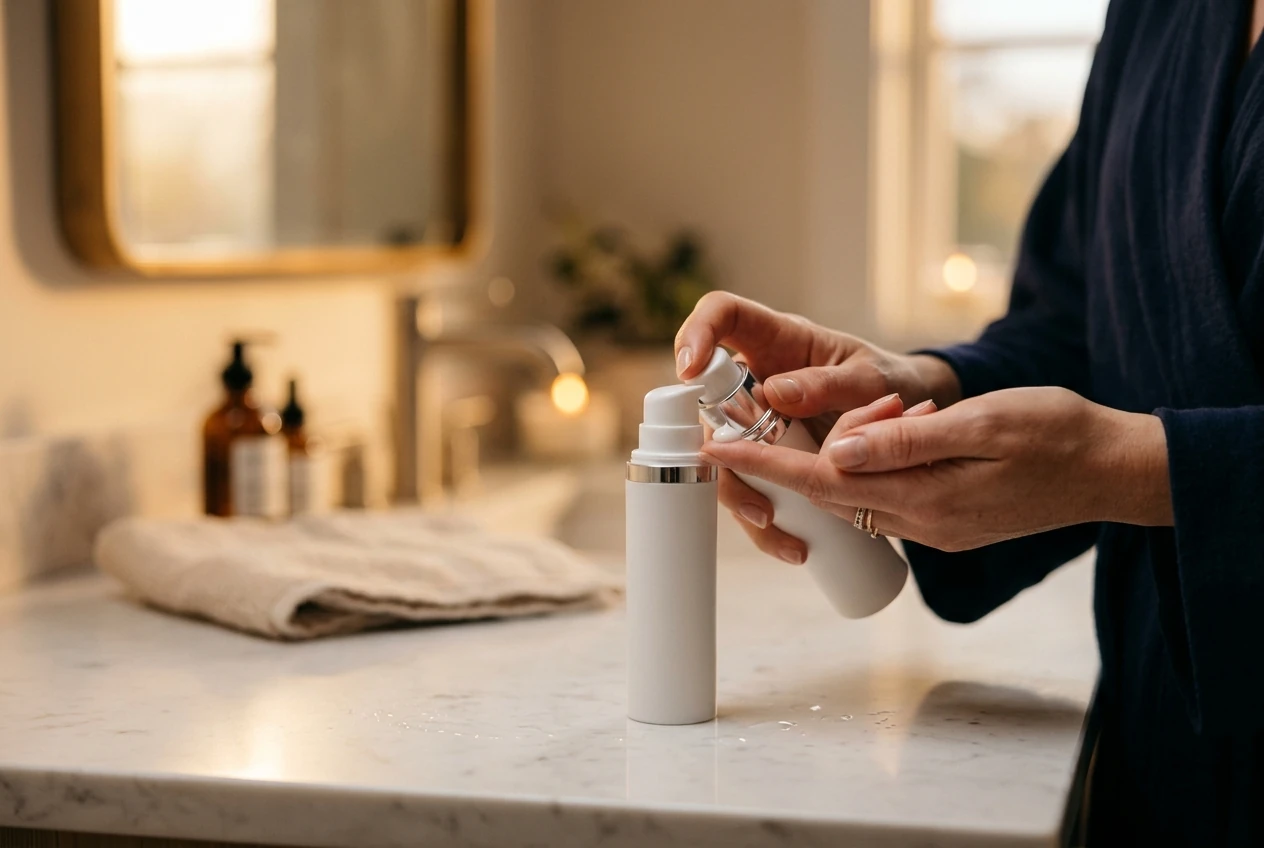
A pea-sized amount on dry skin at night is the whole technique. More product means more irritation, not faster results.
Most retinol horror stories come from too much, too often, too soon. Begin with the least intense formula, use it two nights a week at first, increase usage only when your skin stays calm, apply it at night only, and wear a broad spectrum sunscreen every morning, because sun exposure on freshly turned-over skin burns faster.
| Weeks | Frequency | What to watch for |
|---|---|---|
| 1 to 2 | 2 nights per week | Mild dryness is normal. Stinging is not. |
| 3 to 4 | 3 nights per week | Flaking around the nose and mouth |
| 5 to 8 | Every other night | Purging: small breakouts that resolve |
| 9 and beyond | Nightly if tolerated | Persistent redness means drop back a rung |
Use a pea-sized amount for the whole face at every stage. More product doesn’t accelerate results, it accelerates irritation. Apply retinol to completely dry skin, since damp application increases absorption and stinging, then follow with a barrier-supporting moisturizer. If you’re struggling, buffer by applying moisturizer first and retinol on top.
The eyes and neck can have it too, with more caution. Both areas are thinner and more reactive, so use less, apply it less often at first, keep product off the lash line, and consider a formula made for delicate skin. The neck and chest are commonly under-treated and respond well, but they irritate more easily than the face.
Three to four nights a week indefinitely is a perfectly good endpoint for a skincare regimen. Plenty of people never tolerate nightly use, and sensitive skin types often do best staying there.
Can You Use Retinol With Hyaluronic Acid, Vitamin C, or Exfoliating Acids?
Yes to hyaluronic acid, yes to vitamin C, and yes to acids, as long as they’re separated properly when you add retinol to a skincare routine.
Hyaluronic acid is the easiest pairing and the one to lean on during the adjustment period. It hydrates without exfoliating, so it never competes. The retinol sandwich, a layer of hyaluronic acid serum or moisturizer, then retinol, then moisturizer again, is the standard way to make a stronger formula tolerable on sensitive skin.
Vitamin C goes in the morning and retinol at night, which is the split the AM and PM routine order is built around. Both are unstable, both prefer different pH ranges, and separating them by time of day sidesteps the problem entirely.
Exfoliating acids are the ones to space out. Skip glycolic acid, lactic acid, salicylic acid, and benzoyl peroxide on retinol nights, especially in the first two months; stacking exfoliants on top of accelerated turnover is the fastest route to a raw, scaly skin barrier. Benzoyl peroxide also oxidizes most retinoids on contact, so keep it to mornings. Adapalene is the exception and stays stable alongside it. Niacinamide pairs fine at any time.
| Time | Step | Notes |
|---|---|---|
| AM | Cleanser → vitamin C → moisturizer → SPF 30+ | SPF is not optional on retinol |
| PM, retinol nights | Cleanser → retinol on dry skin → moisturizer | Nothing else. Pea-sized amount. Hyaluronic acid under it if you’re sandwiching. |
| PM, off nights | Cleanser → hydrating or barrier serum → moisturizer | Acids here if you use them, never with retinol |
Retinization Is Real, and Temporary
In the first two to six weeks you may see more breakouts, flaking, or dryness. This is the retinol purge, sometimes called retinization: vitamin A is pushing existing congestion to the surface faster than it would have appeared on its own. The side effects of both OTC retinol and prescription strengths are temporary, and they usually settle within three to four weeks as your skin adjusts.
Purging isn’t an allergic reaction. Persistent burning or severe redness that doesn’t settle within a day of stopping means discontinue and get it looked at. Pairing the adjustment period with professional facials in Jacksonville helps with skin recovery and keeps the barrier intact while your skin’s tolerance builds.
Retinol in Deeper Skin Tones
This is the highest-stakes caveat in retinol use, and it applies at every strength. Per retinoid guidance for skin of color, irritation can trigger dark marks on deeper skin tones, though starting slowly and using moisturizer helps mitigate that.
The practical consequence is that the ramp-up schedule above isn’t optional if you have a deeper skin tone. The darker your skin color, the more likely irritation leaves behind the exact pigmentation you were using retinol to treat. Go slower, buffer more aggressively, and back off at the first sign of persistent redness rather than pushing through.
Retinol Side Effects and Who Should Avoid It
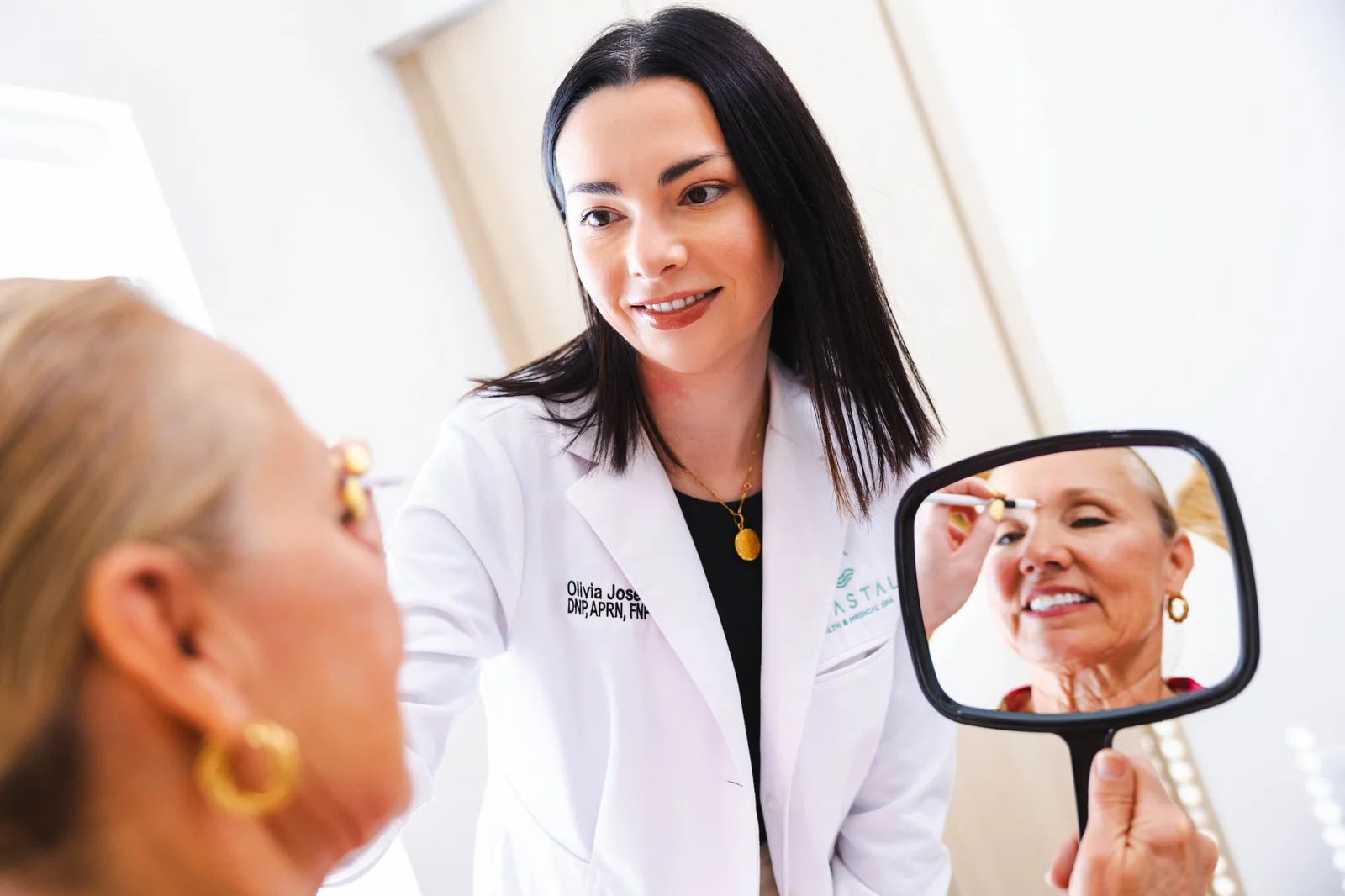
Dr. Olivia, DNP, APRN, reviewing a patient’s skin at Coastal. Unsure whether vitamin A fits your skin conditions? Book a free consultation.
The common side effects are dryness, peeling, redness, and increased sun sensitivity. Most skin acclimates within four to eight weeks, and skin irritation during that window is a reason to slow down rather than stop.
Sun exposure. Topical retinoids don’t cause skin cancer, but a thinner surface layer burns faster, so daily SPF 30 and shade during peak Florida sun aren’t negotiable while you’re using one.
Retinol During Pregnancy or Breastfeeding
Stop retinoids of every kind, retinol included, when you’re pregnant, trying to conceive, or breastfeeding. Oral vitamin A derivatives are known to cause birth defects, and although topical retinol absorbs far less, the retinoid guidance during pregnancy is to avoid it entirely rather than gamble on the margin. Standard practice extends the same caution to breastfeeding.
Swap to azelaic acid or bakuchiol for the duration. Azelaic acid keeps working on acne and pigment, bakuchiol covers some of the texture work, and your OB should sign off on anything else in the routine.
Active inflammatory conditions. Eczema flares, active rosacea, or a badly compromised barrier all mean waiting until things settle. Retinol on inflamed skin makes it worse.
Skin allergies or very dry skin. These skin conditions are the standard reasons to skip retinoids or use them only under supervision. If your barrier is already struggling, fix that first.
When to get it looked at. Burning that doesn’t stop, swelling, blistering, or hives mean stop and call a provider the same day. Redness that persists past two months at the lowest frequency means the product, not the schedule, is wrong for your skin concerns.
Retinol Around Professional Treatments
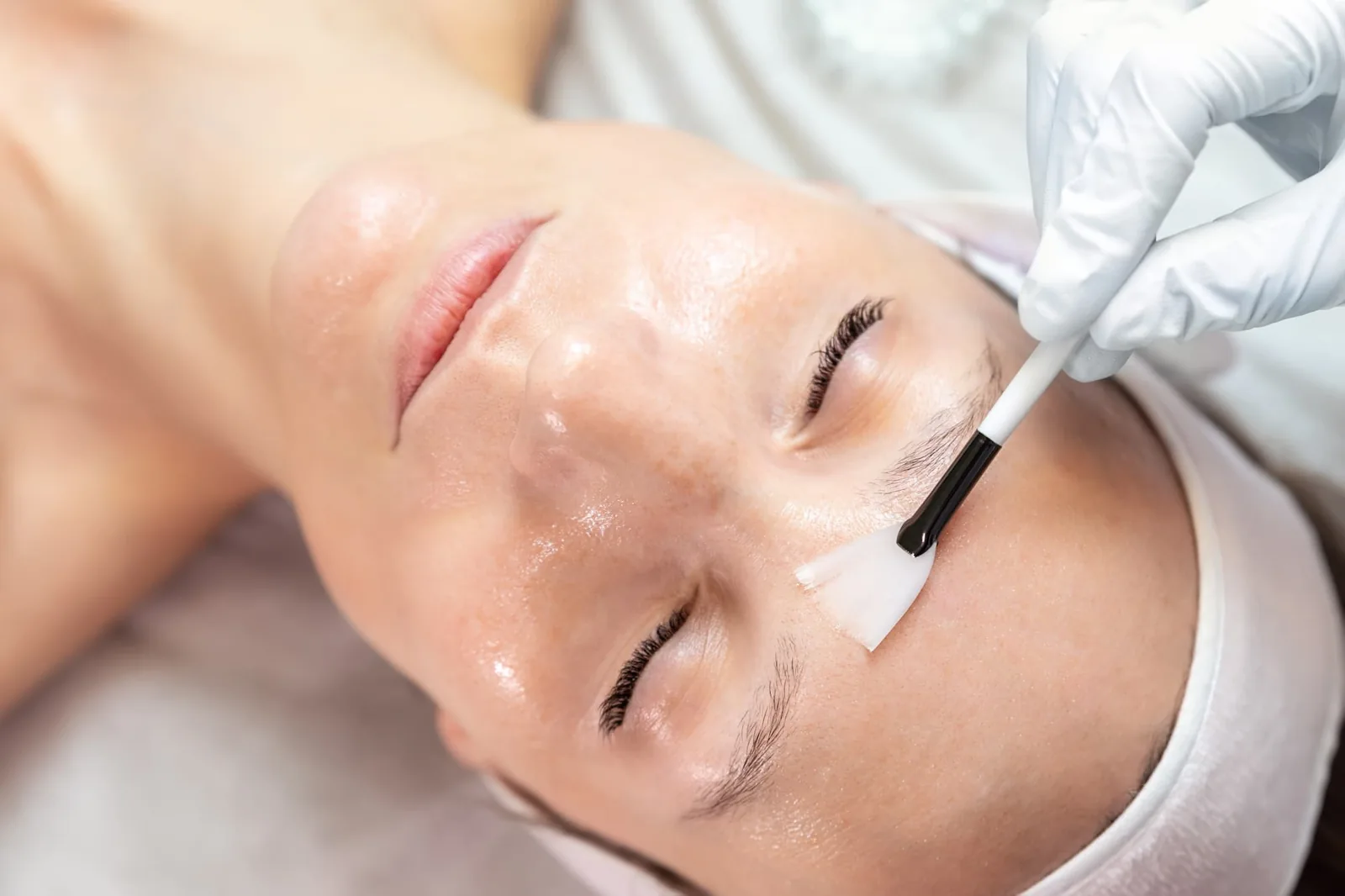
A chemical peel being applied at Coastal. Retinol pauses before every peel, including chemical peels in Jacksonville, then comes back in a specific order.
This is where people accidentally undo an expensive treatment or cause a reaction. Retinol thins the stratum corneum, which changes how skin responds to peels, needling, energy devices, and even waxing.
| Treatment | Typically pause before | Typically resume after |
|---|---|---|
| Light chemical peel | 3 to 5 days | 5 to 7 days |
| Medium or deep peel | 7 days | 2 to 4 weeks |
| Microneedling | 3 to 5 days | 5 to 7 days |
| Laser resurfacing | 7 days | Per provider |
| Dermaplaning | 3 days | 2 to 3 days |
| Facial waxing | 5 to 7 days | 3 to 5 days |
These are typical windows, not universal rules. Your provider sets the actual timing based on depth and how your skin behaves, and their instructions override any chart. The same applies to chemical peel preparation, where retinol is the first thing on the stop list.
There’s an upside. Many professional protocols use retinol deliberately as pre-conditioning in the weeks before a treatment, because skin with established turnover often responds more predictably. That’s a provider decision, not a self-directed one.
Drugstore vs Medical-Grade Retinol
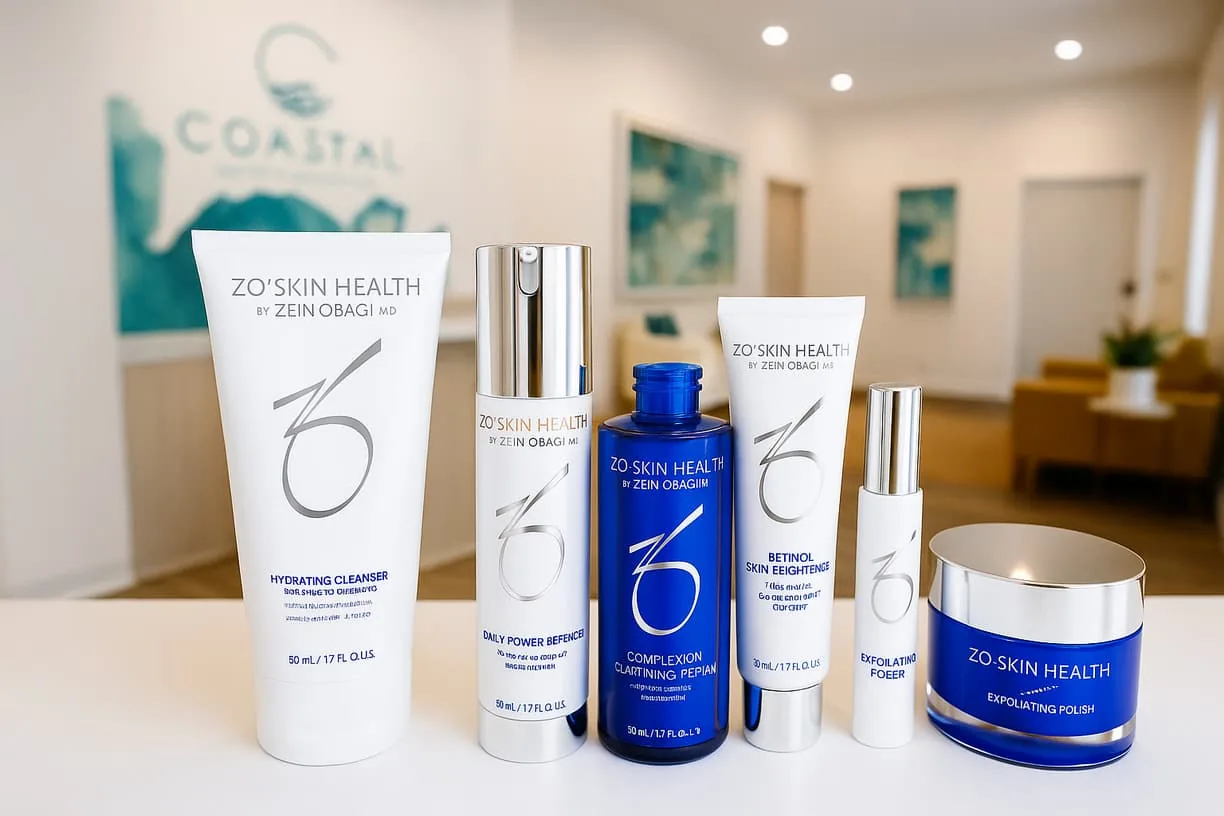
ZO Skin Health retinol products at Coastal, dispensed at a strength matched to your skin. See the ZO Skin Health line.
A drugstore retinol and a medical-grade formula are skincare products built on the same molecule. The difference is concentration, stability, and delivery.
Drugstore retinol products often sit at the low end of the range in packaging that lets the active degrade with light and air. Retinol is chemically unstable, which is why opaque, air-restrictive packaging isn’t marketing. Store it cool, dry, and out of direct light with the cap closed tightly; a bedroom drawer beats a bathroom counter, and that matters more in Florida humidity than most places. Drugstore skincare products are a reasonable place to test tolerance, and plenty of people use retinol from the drugstore for years without needing more.
Coastal dispenses ZO Skin Health retinol products, which use encapsulated and microemulsion delivery to release retinol gradually rather than in one burst. Danielle Hancock, Licensed Aesthetician and ZO Skin Health Expert Certified, matches strength to skin types and goals. That matching matters more than people expect. Putting sensitive skin on the same strength as resilient, oily skin is how someone ends up abandoning retinol entirely.
If you ran a drugstore retinol consistently for three months and saw nothing, or couldn’t tolerate it at all, both are signals that a guided skincare regimen would serve you better.
Find the Right Retinol Strength for Your Skin

Coastal Health & Medical Spa in Jacksonville, where Danielle matches retinol strength to skin in person. Book a skin assessment.
The retinol benefits for fine lines, acne, tone, and firmness are measurable, and they arrive at the right strength and the right pace. Going in too aggressively, or picking a formula wrong for your skin, turns a well-evidenced ingredient into a frustrating one.
If you’re starting retinol, or you’ve stalled with your current skincare routine, Danielle Hancock and the Coastal team can assess your skin and match you to a strength that works. Schedule a skincare consultation at Coastal Health & Medical Spa in Jacksonville to build a retinol protocol around your skin rather than someone else’s.
Frequently Asked Questions
What happens if you use retinol every day?
If your skin has built up tolerance gradually, nightly use is fine and is what many people work toward. If you jump straight to daily use, expect dryness, peeling, redness, and stinging, and a higher chance of quitting. On deeper skin tones, that irritation can leave dark marks. Build up over two to three months rather than starting nightly, and stay at three or four nights a week if that’s where your skin is comfortable.
What does retinol do for your face?
On the face, retinol speeds up cell turnover and boosts collagen production. In practice that means smoother skin, fewer clogged pores and breakouts, fading dark spots, a more even tone, and it can reduce fine lines and wrinkles, including crow’s feet. The first changes show up around week 4, and the benefits of retinol against visible skin aging keep building over three to six months.
What are the disadvantages of retinol?
Dryness, flaking, redness, and stinging during the first three to four weeks. Increased sun sensitivity, so daily SPF becomes mandatory. A purge phase where breakouts temporarily worsen. Topical retinol can’t be used in pregnancy. It degrades with light and air, so packaging and storage matter. And it’s slow: visible change on lines and firmness takes months, not weeks. On deeper skin tones there’s the added risk that irritation triggers hyperpigmentation.
What do Koreans use instead of retinol?
Korean skincare tends to favor gentler alternatives, most commonly bakuchiol, a plant-derived ingredient positioned as a retinol alternative, along with peptides, niacinamide, and heavy emphasis on barrier support and hydration through essences and layered moisturizers. Many K-beauty retinol products do exist, often at low concentrations paired with soothing ingredients to reduce irritation. The philosophical difference is prioritizing barrier health first and using lower-strength actives more consistently, rather than pushing potency.
Can retinol make skin glow?
Yes, indirectly. Glow is light bouncing off a smooth, hydrated skin’s surface, and retinol clears the dull layer of dead cells that scatters it while refining the texture underneath. Expect the glow to arrive after the purge, usually by weeks 8 to 12, and only if you pair it with moisturizer and daily sunscreen. A dry, flaking face reads as the opposite of glowing.
What is the 123 rule of retinol?
The 1-2-3 rule is a beginner ramp: apply retinol once in week one, twice in week two, and three times in week three, then hold at three nights a week or keep climbing if your skin stays calm. It’s the same idea as the schedule above, compressed. Pea-sized amount, dry skin, night only, sunscreen in the morning.
Why do people say not to use retinol?
Usually because they started too strong, too fast, or without sunscreen, and got the purge, peeling, and redness that follow. The legitimate reasons to skip it are pregnancy and breastfeeding, active eczema or rosacea, and a broken skin barrier; acne-prone skin is a reason to use retinol, not avoid it. Used correctly, on the right skin, it has more evidence behind it than nearly any other ingredient in skin care.
