
Glass skin is a complexion smooth and hydrated enough to reflect light evenly, like a pane of glass. To get glass skin: double cleanse, exfoliate gently once or twice a week, layer a hydrating essence and serums onto damp skin, seal with moisturizer, and wear SPF daily. Professional treatments accelerate the smoothing that takes months at home.
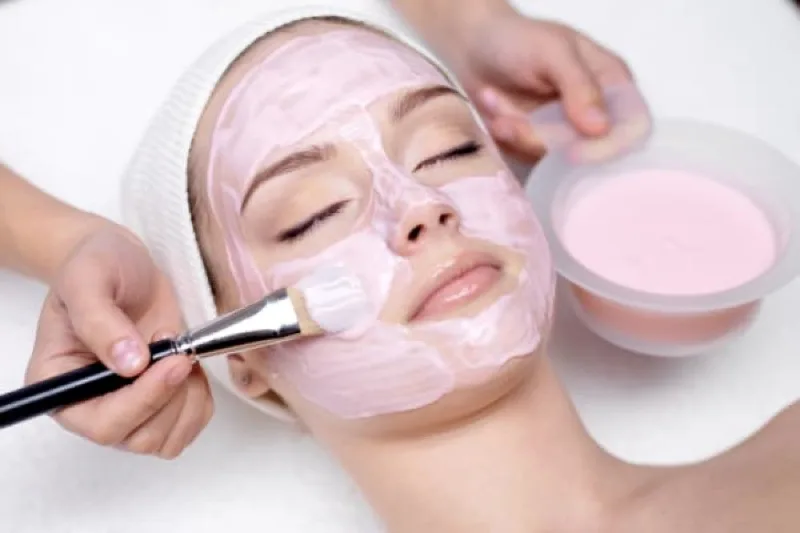
Glass skin is roughly 80% consistent home care and 20% what you physically cannot do to your own face.
The term comes from Korean skincare culture, where the goal is healthy skin that doesn’t need matte perfection or heavy coverage. Below is the skincare routine that builds it, the glass skin products that fit each step, the treatments that speed it up, and a candid account of what’s achievable for your skin type.
What Is Glass Skin?
Glass skin refers to a complexion so smooth, clear, and deeply hydrated that it reflects light like polished glass. The Korean term is yuri pibu (유리 피부), and the glass skin trend went global a few years ago when K-beauty creators started showing complexions so luminous they looked polished. The glass skin look comes from skin that appears plump and almost translucent, with very little visible texture, rather than from shimmer or highlighter.
In practice that means minimal visible pores, even tone without redness or dark patches, and a soft reflective quality that catches light on its own. It reads like a dewy glow, but smoother. Unlike the “glazed donut” look, glass skin skips the greasy sheen for a clear, water-like finish. Of all the skincare trends to come out of the K-beauty world, this one has lasted because it’s a description of healthy, luminous skin rather than a product category.
Nobody’s skin literally looks like glass. Pores exist, and their size is largely genetic, so no product or treatment shrinks them. The goal is minimizing pores and uneven texture enough that skin reads as flawless skin from a conversational distance. That distinction matters, because chasing literal perfection is what leads people to over-treat their faces and end up further from the goal.
Can Anyone Get Glass Skin?
Most people can achieve glass skin, or get a lot closer to it, with the right routine. How close depends on your starting point. Someone who starts out smooth and well hydrated gets there faster than someone managing active acne or rosacea.
Setting Expectations by Skin Type
| Skin type | Your advantage | The obstacle | Realistic timeline |
|---|---|---|---|
| Oily | Sebum already creates baseline dewiness | Shine control and congestion, not hydration | Fast on glow, slower on texture |
| Dry | Responds dramatically to hydration layering | Barrier repair has to come first | Often the fastest visible change |
| Combination | Cheeks usually hydrate easily | An oily T-zone that wants different products than the cheeks | Moderate, once you zone the routine |
| Sensitive or rosacea-prone | Gentle routines suit this look anyway | Redness, and a narrow product list | Longest timeline, still achievable |
| Acne-prone | Hydration-first philosophy helps directly | Active breakouts and leftover marks | Treat acne first, then glow |
| Textured or scarred | Hydration improves the surface quickly | Structural texture needs collagen remodeling | Months, and needs treatment |
Oily types should reach for lightweight, water-based hydrators rather than rich creams. Combo skin can run a gel on the T-zone and a heavier formula on the cheeks in the same routine. Sensitive types should fix the skin barrier before chasing glow, since aggressive exfoliation and stacked actives push you backward. For acne-prone skin, niacinamide is useful because it addresses barrier and blemishes together, and our guide to facials for acne-prone skin covers what’s safe to book while breakouts are active.
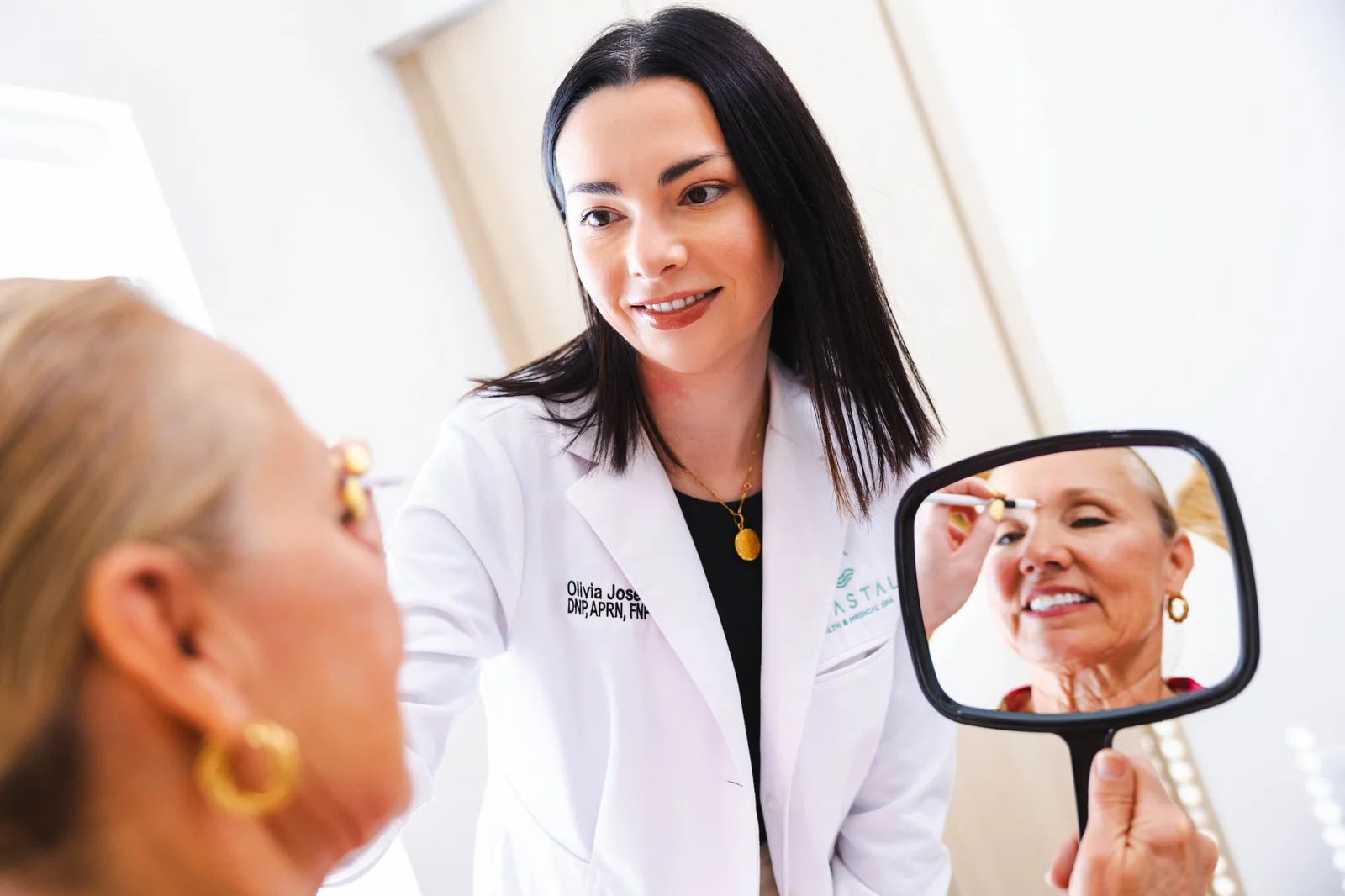
A consultation is where skin type, barrier health, and pigment concerns get sorted before any treatment is booked. Book a free consultation.
The Part Nobody Tells Acne-Prone Skin
The reason people with clear skin still don’t look glassy is usually post-inflammatory erythema and hyperpigmentation: the flat red or brown marks left behind after a breakout heals. Those marks are pigment and lingering blood vessels, so no amount of essence layering resolves them. They need time, sun protection, and usually a pigment-targeted treatment to reach a more even skin tone.
Two more points that get lost in the usual advice. First, face oils and slugging feed fungal acne in some people, because occlusive layers trap the yeast that causes it. In Jacksonville’s year-round humidity, sealing your face under an occlusive overnight is bad advice for most oily and acne-prone skin. Second, the small dark dots on your nose are usually sebaceous filaments, not blackheads, and they refill within two to four weeks no matter what you apply topically. That’s the case for periodic professional extraction rather than scrubbing harder at home.
Glass Skin for Men
The routine is the same. Men’s faces tend to be thicker-skinned and produce more oil, so a gel moisturizer and a lighter hand with hydrating layers usually work better than the richer textures marketed to women. The two adjustments that matter are shaving and sun.
Shaving is exfoliation. It drags dead skin cells and the top of the barrier off along with the hair, so exfoliating with an acid on the same day is how men end up with razor burn that never quite heals. Shave, rinse with lukewarm water rather than hot water, then apply a fragrance free hydrating toner and moisturizer while your face is damp. Save the acid for a non-shave day. The beard area still needs SPF, and the areas most men skip, the ears, the neck, and the hairline, are the same areas that show sun damage first. A daily broad spectrum SPF 30 is the habit that separates men who get the finish from men who don’t.
How to Achieve Glass Skin: The Daily Routine
Every guide to how to get glass skin lists the same steps, because every glass skin routine follows the same logic: remove impurities, gently resurface, layer hydration in progressively thicker textures, then seal. Each step has a purpose, and skipping one weakens the chain. For the full sequencing logic, including where actives fit, our guide to the correct order to layer products walks through both the morning routine and the evening one.
Skin Barrier First
Before any of the steps below, check the state of your skin barrier. The barrier is the outermost layer of cells and the lipids between them, and its job is holding moisture in and irritants out. Every hydrating layer in a glass skin routine depends on it. Layer moisture onto a leaky barrier and it evaporates; layer it onto a healthy one and it stays, and skin that’s deeply hydrated stays that way.
The signs of a compromised moisture barrier are persistent stinging from products that are normally gentle, sudden dryness with flaking, and redness that lingers. When that happens, pause all strong actives, simplify to a gentle cleanser and a barrier cream, and stay there until symptoms resolve. Pushing through makes it worse. For sensitive skin, that simplified version is often the whole skincare routine for the first month, and it still moves you toward the goal.
Step 1: Double Cleanse
Start with an oil-based cleanser to dissolve sunscreen, makeup, and excess sebum, then follow with a gentle water-based cleanser. The first cleanse lifts what’s sitting on the surface; the second gets everything clean without stripping the barrier that everything else is built on. Rinse with lukewarm water, since hot water strips lipids. Every evening, plus one gentle cleanse in the morning. If you want the full Korean skincare version, the 4 2 4 rule is the extended form: four minutes massaging the oil cleanser, two minutes with the water-based one, four minutes of rinsing.
Step 2: Gentle Exfoliation, One to Three Times Per Week
Dead skin cells scatter light instead of reflecting it, which is exactly why exfoliation matters for this look. A gentle chemical exfoliant with an AHA like lactic acid or a BHA like salicylic acid dissolves the bonds holding dead cells at the surface and builds a smooth texture over a few weeks. The goal is to gently exfoliate, never to scrub.
Match the method to your skin rather than to a trend. Mild chemical exfoliation suits sensitive and acne-prone skin better than scrubs, since mechanical exfoliation can be too irritating, and the more aggressive the exfoliation, the less often it should be done. Apply gently for about 30 seconds, rinse with lukewarm water, and moisturize immediately after.
One caution: avoid strong chemical or mechanical exfoliation if you have a darker skin tone or notice dark spots after breakouts, because more aggressive exfoliation can lead to increased pigmentation. If that describes you, stay at the gentle end and go less often.
Step 3: Hydrating Toner or Essence

Patting a watery essence into damp skin in thin layers is the technique behind the finish.
This is where Korean skincare diverges from Western routines. Instead of astringent, alcohol-based toners, glass skin routines use hydrating toners or essences: lightweight, watery products with hydrating ingredients like glycerin, applied to damp skin as a first layer. They prime skin to absorb what follows. Some people pat on two or three thin layers rather than one heavy application, which is the technique behind the look.
Step 4: Hydrating Serums
This step does the heavy lifting, and a good hydrating serum is the product most people are missing. Hyaluronic acid is the anchor ingredient because it draws and holds water, creating the plump, bouncy quality of deep hydration. A 2022 review of topical hyaluronic acid concluded it’s well tolerated and effective for hydration, with numerous studies supporting it as a noninvasive way to improve skin moisture.
Layer niacinamide alongside or after it. A review of topical niacinamide found it raises ceramides and reduces water loss, which is the evidence for improved barrier function, with clinical effects documented at concentrations from 2% to 5%. You don’t need a high concentration; higher percentages mostly add irritation. Barrier integrity is what lets hydration stay put, which is the whole mechanism behind the finish.
Apply both to a damp face and follow immediately with moisturizer. Hyaluronic acid is a humectant, so on a bare dry face in dry air it can pull moisture out rather than in. That’s why the “HA made my skin drier” complaint exists. If tightness persists, switch to a serum that pairs humectants with barrier-supporting ingredients, or use it less often.
Step 5: Moisturizer to Seal
Hydration evaporates without something holding it in. Choose a moisturizer with ceramides or peptides that reinforces the barrier and holds moisture without feeling heavy. A gel texture for oily skin, a richer formula for dry skin. The moisturizer’s job is sealing the layers underneath, not adding shine on top, and at night it’s the final step.
The Florida Humidity Adjustment
Jacksonville humidity changes the textures in a glass skin routine, not the steps. Go lighter: a watery essence and a gel moisturizer instead of rich creams and face oils, breathable layers that don’t feel occlusive, and a sweat-resistant sunscreen reapplied more often. You can drop a hydrating layer or two during peak humidity while keeping barrier support constant. Slugging and heavy oils are poor advice in this climate, especially for oily or acne-prone skin. In the short dry stretch of a Florida winter, add the layer back.
Step 6: SPF Every Morning
UV rays drive hyperpigmentation, break down collagen, and thicken surface texture. All three work directly against glass skin. Apply a broad spectrum SPF 30 or higher to all exposed skin, reapplied every two hours outdoors or immediately after swimming or sweating. A lightweight, dewy-finish sunscreen can enhance the effect during the day. If summer already left sunspots behind, our guide to sunspots on the face covers fading them before you chase the glow.
Eye Cream and the Eye Area
The eye area has the thinnest skin on the entire face, with fewer oil glands, so it dehydrates first and shows fine lines first. Most people don’t need a separate eye cream if their moisturizer is gentle enough to use there, but an eye cream earns its place when the skin under the eyes is dry, crepey, or puffy while the rest of the face is fine. Apply it before moisturizer, with a ring finger, and keep acids and retinol off the lid. A finish that stops at the cheekbones reads as unfinished, and the eye area is usually the giveaway.
Weekly: A Hydrating or Gently Exfoliating Mask
Most glass skin routines include one weekly face mask, and it’s worth keeping in the full routine. A hydrating sheet mask or a gel mask with aloe vera gives intense hydration and a short-term plumping boost that’s useful before an event. A gentle enzyme or clay mask, used on a non-exfoliation night, handles congestion without adding a second acid to the week. Pick one, not both, in the same week.
Glass Skin Products for Each Step of the Routine
Glass skin products don’t need to be Korean. The routine is Korean; the formulas can come from anywhere, and the medical-grade lines sold through a clinic often use higher concentrations of the same hydrating ingredients with better tolerance data. Coastal stocks two lines that map cleanly onto the routine above: ZO Skin Health in Jacksonville for cleansing, exfoliation, brightening, retinol, and sun protection, and Plated Skin Science serums for the hydration and barrier-support layers. The table pairs each step with the skincare products that fit it and the skin type each suits.
| Routine step | Products at Coastal | Best for |
|---|---|---|
| Cleanser | ZO Gentle Cleanser, ZO Hydrating Cleanser, ZO Balancing Cleansing Emulsion | Sensitive skin, dry skin, and combination-to-oily skin, in that order |
| Toner | ZO Calming Toner pH Balancer | Alcohol-free, for irritated or sensitive skin |
| Exfoliant | ZO Complexion Renewal Pads (glycolic and salicylic acid), ZO Exfoliating Polish | Chemical for most skin types; the polish for skin that tolerates physical exfoliation |
| Hydrating and treatment serums | Plated DAILY Serum, ZO Daily Power Defense, ZO Illuminating AOX Serum | DAILY for hydration and barrier support; Daily Power Defense for antioxidant protection; AOX with vitamin C for uneven skin tone |
| Eye area | Plated EYE Serum, ZO Growth Factor Eye Serum | Puffiness, dark circles, and fine lines around the eyes |
| Moisturizer | A ceramide or peptide moisturizer matched to your skin at a complimentary skin assessment | Gel texture for oily skin, richer texture for dry skin |
| SPF | ZO Daily Sheer Broad Spectrum SPF 50, ZO Sunscreen + Primer SPF 30, ZO Smart Tone SPF 50 | Invisible finish under makeup; primer for makeup days; tinted for a no-makeup day |
| Night treatment (optional) | ZO Retinol Skin Brightener 0.25%, Plated INTENSE Serum | The 0.25% retinol for beginners and sensitive skin; INTENSE as a treatment phase before switching to DAILY |
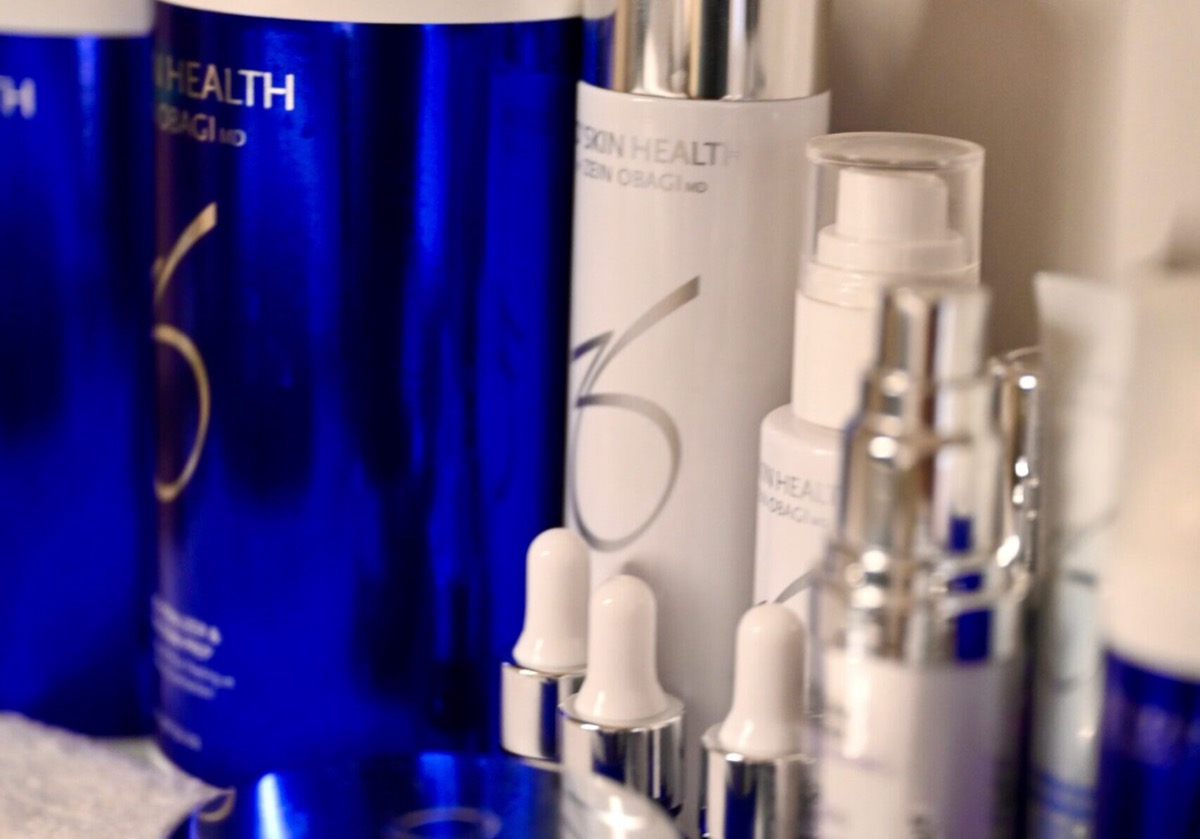
The ZO line Coastal stocks in Jacksonville, with a skin assessment to match the regimen to your skin. Browse ZO skincare products.
Two rules for buying glass skin products. Add one product at a time and give it two weeks before adding the next, because a face that reacts to a five-product haul can’t tell you which one did it. And spend on the serum and the SPF before anything else; a gentle formula cleanser doesn’t need to be expensive, but the serum and the sunscreen are the two products you’ll use twice a day for years.
Glass Skin Treatments That Do the Work for You
A good home routine gets you most of the way. Professional treatments do things topical products physically can’t, which is why they compress the timeline rather than adding to it. To plan the cadence, see our guide to how often to get a facial.
| Treatment | What it does that home care cannot | When you see it | How long it holds | Downtime |
|---|---|---|---|---|
| Glass Skin Facial | ZO Stimulator Peel, then professional microneedling with hydrating and growth-factor serums, then a high-strength retinol serum to continue at home | Radiance right after the peel; texture builds over the following weeks as collagen rebuilds | Progressive, maintained by the at-home retinol | Redness for 24 to 48 hours; most people are back to normal within 1 to 3 days |
| HydraFacial | Physically extracts sebaceous filaments and comedones | Immediate, peaks 1 to 3 days | Glow 5 to 7 days, extraction benefit 3 to 4 weeks | None |
| Dermaplaning | Removes vellus hair plus stratum corneum so light reflects instead of scattering | Immediate | 3 to 4 weeks | None |
| Light chemical peel | Higher acid concentration and lower pH than any OTC product | Brightening around day 5 to 7 | Cumulative over a series | 3 to 7 days of flaking |
| SkinPen microneedling | Remodels dermal collagen, the only route to structural texture change | 4 to 6 weeks after a session | Months, builds over a series | 2 to 4 days |
The Glass Skin Facial
One treatment is built for this specific finish. At Coastal Health & Medical Spa, the Glass Skin Facial in Jacksonville is a three-part protocol: a ZO Stimulator Peel that uses citric, glycolic, and lactic acid to clear dead cells, professional microneedling that drives hydrating and growth-factor serums into the skin while triggering collagen, and a high-strength retinol serum you take home and start on the schedule your provider sets, typically 24 to 48 hours after. Danielle Hancock, Licensed Aesthetician and ZO Skin Health Expert Certified, performs it and adjusts the peel and the needling depth to the skin in front of her.
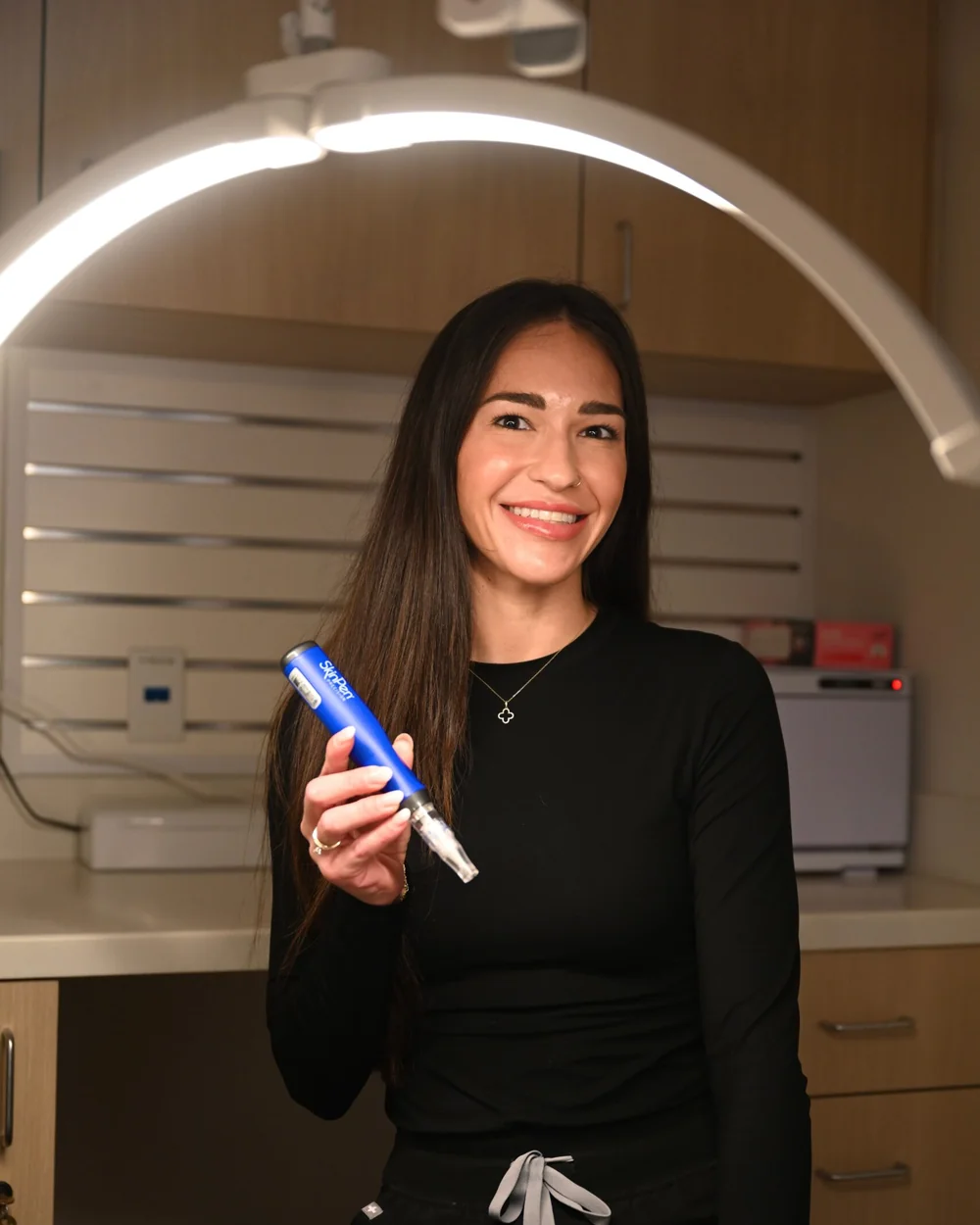
Danielle Hancock in the facial room where she performs Coastal’s Glass Skin Facial. See Coastal’s Glass Skin Facial.
On the day, the face is cleansed and numbed, the peel goes on and comes off, the microneedling pass follows, and a soothing mask, moisturizer, and mineral SPF finish the session. Add the at-home retinol and the daily skincare routine above, and the results compound. Expect redness like a moderate sunburn that fades over 24 to 48 hours, skip makeup for that window, and plan on being back to normal within one to three days. The peel gives an immediate radiance; the texture and pore refinement build over the following weeks as collagen rebuilds, which is why it suits people whose obstacle is texture, dullness, or fine lines rather than pure dehydration. It’s customizable to most skin types and tones, and a consultation comes first so sensitivity and contraindications get checked. The at-home retinol is what keeps the glass-like skin texture between visits.
HydraFacial
HydraFacial treatments use vortex suction to cleanse and extract while infusing hyaluronic acid and antioxidants. The “poreless” look after a HydraFacial comes from pores being empty, not smaller. Extraction clears the sebaceous filaments and comedones that make pores read as dark and large. Nothing you apply at home extracts. That’s a mechanical action, and it’s the clearest example of the 20% you can’t do yourself. At Coastal it’s also the gentlest option on this list, with no downtime, and the Deluxe version adds dermaplaning, a custom mask, a booster serum, and LED in the same visit.
Dermaplaning

Dermaplaning delivers glass skin’s defining physical property: an unbroken surface that reflects light rather than scattering it.
Dermaplaning uses a sterile blade to remove dead cells and fine vellus hair. Of every treatment on this list, it’s the one that delivers glass skin’s defining property. Vellus hair scatters light in every direction; remove it along with the loose stratum corneum and the surface reflects evenly. That’s the literal mechanism behind the word “glass.”
It’s also the treatment people skip most often because of a myth. Facial hair doesn’t grow back thicker or darker after dermaplaning. Blunt-cut regrowth can feel coarser for a few days, but the hair itself is unchanged. Our comparison of dermaplaning versus waxing goes into the difference. Results last three to four weeks with no downtime, which makes it the best pre-event option available.
Chemical Peels
If uneven tone or post-acne marks are what stand between you and the finish, professional chemical peels resurface in a way serums can’t match. The reason is concentration and pH. Over-the-counter exfoliants are effectively capped around 10% AHA at a pH of roughly 3.5 to 4; professional peels go substantially higher with controlled contact time and neutralization. That’s a different category of resurfacing, not a stronger version of the same thing.
Expect three to seven days of flaking, with brightening around day five to seven. Pigment concerns usually need a series, spaced weeks apart, and your provider sets the number. One scheduling rule: don’t book a peel within two weeks of an event. A brightening facial for uneven tone is the lower-risk option close to a date.
SkinPen Microneedling

Microneedling is the only option on this list that changes skin structure rather than its surface.
SkinPen microneedling creates controlled micro-injuries that trigger collagen remodeling in the dermis. It’s the only standalone treatment here that addresses structural barriers: atrophic acne scarring, enlarged pores, crepey texture. The Glass Skin Facial folds a microneedling pass into its protocol for the same reason.
Be realistic about the timeline. Visible change comes four to six weeks after a session, full results at three to six months, and most people need a series with two to four days of downtime each. And the precise version of the pore claim: microneedling thickens the collagen around pores, which reduces how visible they are, while pore size itself stays genetic. Different claim, and stating it accurately is the point.
The Honest Answer to “Glass Skin by Friday”
People search for how to get glass skin in a day, overnight, in a week. No home skincare routine delivers that. The answer is a dermaplaning session, often paired with a HydraFacial, one to three days before the event. Dermaplaning gives the smooth light-reflecting surface immediately, the HydraFacial empties pores and plumps, and neither has downtime. That combination produces the finish on a deadline. In the same week, keep the routine simple, don’t introduce new actives, exfoliate once at most, and skip any peel or the Glass Skin Facial, both of which need a runway. What the fast version doesn’t do is change your skin, which is what the daily routine and a longer treatment series are for.
How Long Does It Take to Get Glass Skin?
Skin cell turnover sets the floor. Keratinocytes take about 28 days to reach the surface from the basal layer, so expect at least four to six weeks before a new skincare routine shows a visible difference, and two to three months to achieve glass skin that holds. That cycle lengthens with age, which is why older skin needs more patience rather than more product.
In the first two weeks skin usually feels more hydrated and looks slightly dewier. That’s surface hydration. Deeper changes, reduced pigmentation and smoother skin texture, take two to three months of consistency. Professional treatments compress this, but a HydraFacial delivers instant glow rather than lasting change; repeated sessions alongside daily care are what make it hold.
Consistency beats intensity. A simple skincare routine you follow outperforms an elaborate one you abandon in a week. If you’re unsure what to apply first, our skincare routine order guide lays out the exact sequence step by step.
Mistakes That Wreck Your Progress
- Over-exfoliating. The most common error. It strips the skin barrier, and skin looks worse rather than smoother. One to three times a week maximum, one type of exfoliant at a time.
- Skipping SPF. Unprotected UV rays undo the work in real time. No sunscreen, no glass skin.
- Stacking actives. Retinol, vitamin C, AHA, BHA, and niacinamide all have uses. All at once destroys the barrier. Add one, wait two weeks.
- Occlusives on acne-prone skin in humidity. Face oils and slugging are climate-dependent advice that gets presented as universal.
- Treating pigmentation as dehydration. Marks left over from breakouts need pigment treatment and sun protection, not more essence.
- Chasing a new product every month. Skincare trends move faster than skin does. Give a skincare routine and its skincare products a full turnover cycle before you judge it.
- Dirty pillowcases and brushes. Meticulous cleansing followed by eight hours on a dirty pillowcase undercuts the routine. Swap every few days, wash makeup brushes weekly.
Makeup, Sleep, and the Rest of It
Glass Skin With Makeup (and Without It)
You can wear makeup and still build glass skin. The makeup version of the glass skin look copies the skincare version: hydration first, then the thinnest possible layer of coverage, then light. Start with a hydrating primer or a dewy SPF over your morning routine. Use a skin-like base rather than full coverage, because heavy foundation settles into texture and reads as the opposite of the look; a tinted moisturizer, a skin tint, or a sheer foundation pressed in with fingers is enough. Choose cream products over powders for blush and highlighter, and put the highlighter only on the high points, the cheekbones and the bridge of the nose, where skin would catch light on its own.
Skip the powder, or use it only where you get shiny by midday. Powder is the fastest way to lose the finish, because it’s matte by design. If you need it, blot first, then press a small amount on the T-zone and leave the cheeks alone. Keep makeup non-comedogenic, and take all of it off with the first cleanse at night; makeup left on overnight is the most common reason a glass skin routine stalls.
Glass skin without makeup is the version people search for, and it’s the one this whole article is about: naturally radiant, clean skin that reflects light because of its own hydration and surface, so makeup becomes optional. Even on no-makeup days, SPF stays.
Sleep, Stress, and Water
Poor sleep and chronic stress amplify inflammation and dullness, which makes an even finish harder to hold. Drinking water doesn’t hydrate skin directly the way a serum does, but chronic dehydration shows up as dullness, and a balanced diet with enough protein and healthy fats supports the lipids the barrier is built from. Treat lifestyle as the multiplier on your skincare routine rather than a replacement for it.
Frequently Asked Questions
How can I get glass skin naturally?
Consistency with a small number of steps: cleanse twice at night, exfoliate gently one to three times a week, layer a hydrating essence and a hyaluronic acid serum onto damp skin, seal with a ceramide moisturizer, and wear SPF 30 or higher every morning. Add sleep, water, and a clean pillowcase. A natural skincare routine can’t extract congestion or change skin structure, so expect a slower timeline to achieve glass skin than treatment-assisted results.
How do Koreans get glass skin?
Korean glass skin comes from prioritizing barrier health over potency: hydration layering with watery toners and essences patted onto damp skin, gentle rather than aggressive exfoliation, ingredients like snail mucin, centella, and rice extract, weekly sheet masks, and daily sun protection treated as non-negotiable. Routines can run seven to ten steps, but the steps are thin and low-strength rather than a stack of strong actives. The cultural difference is patience.
How to get skin to look like glass?
Skin looks like glass when the surface is smooth enough to reflect light in one direction and hydrated enough to look plump. At home, that means gentle exfoliation to clear dead cells, hydration layered onto damp skin, a moisturizer to seal it, and daily SPF. For a deadline, dermaplaning with a HydraFacial one to three days out delivers the reflective surface immediately; the Glass Skin Facial builds it over the following weeks.
Is glass skin just oily skin?
No, and this is the most common misunderstanding. Oily skin produces excess sebum, which sits on the surface and scatters light unevenly, reading as greasy and often accompanied by congestion and enlarged-looking pores. Glass skin is hydrated, meaning water content within the skin, with a smooth, even surface that reflects light uniformly. You can have oily skin that’s also dehydrated, and it won’t look glassy. Getting there from oily skin is about texture, even tone, and controlling excess oil.
In what order do you use glass skin products?
Thinnest to thickest. At night: oil cleanser, water-based cleanser, exfoliant on the nights you use one, hydrating toner or essence, serums, eye cream, then moisturizer as the final step. In the morning: one gentle cleanse, toner, serum, moisturizer, then SPF last. Retinol goes at night after serums and before moisturizer, never on an exfoliation night.
What is the best product for glass skin?
A hydrating serum, because hydration is the mechanism behind the finish. Look for hyaluronic acid or glycerin plus a barrier ingredient like niacinamide or ceramides, and apply it to damp skin under moisturizer. Sunscreen is a close second, since UV damage undoes texture and tone faster than any serum repairs them. Cleansers and toners matter less; the serum and the SPF are where the money goes.
What is the 4 2 4 rule in skincare?
A Korean cleansing method: four minutes massaging an oil cleanser into dry skin to dissolve sunscreen, makeup, and sebum, two minutes with a water-based cleanser, then four minutes of rinsing, usually two with lukewarm water and two with cool water. It’s the long form of the double cleanse in a glass skin routine. Most people don’t need the full ten minutes nightly, but the sequence is the point.
Your Glass Skin Plan

Coastal Health & Medical Spa in Jacksonville, where Danielle assesses skin and builds the treatment plan around it. Book a free consultation.
How to get glass skin comes down to a skin health outcome, built on smart hydration, gentle exfoliation, daily sun protection, and patience through at least one full skin cycle, rather than fifteen steps or lucky genetics. Start with the daily routine, resist throwing every active at your face, and be candid about which parts of the goal are texture, which are pigment, and which need a professional.
If you want to move faster, or you’ve been consistent for months and something still isn’t resolving, have someone look at it properly. Book a facial consultation at Coastal Health & Medical Spa in Jacksonville. Danielle will assess your skin, tell you which treatments apply to your concerns, and build the plan around what you need rather than what’s trending. You can read more about the Coastal team before you come in.
