
The dermaplaning vs waxing debate usually starts the same way: you want smoother skin, fewer visible hairs on your face, and a treatment that won’t leave you red and irritated for two days. Both options promise to remove unwanted facial hair, but they work in fundamentally different ways and suit very different skin types. Picking the wrong one can mean unnecessary pain, breakouts, or results that fade too fast.
This guide breaks down how each treatment works, who benefits most from each, and what side effects to watch for. By the end, you’ll have a clear framework for deciding which method matches your skin, your hair type, and your tolerance for downtime.
What Separates Dermaplaning from Waxing
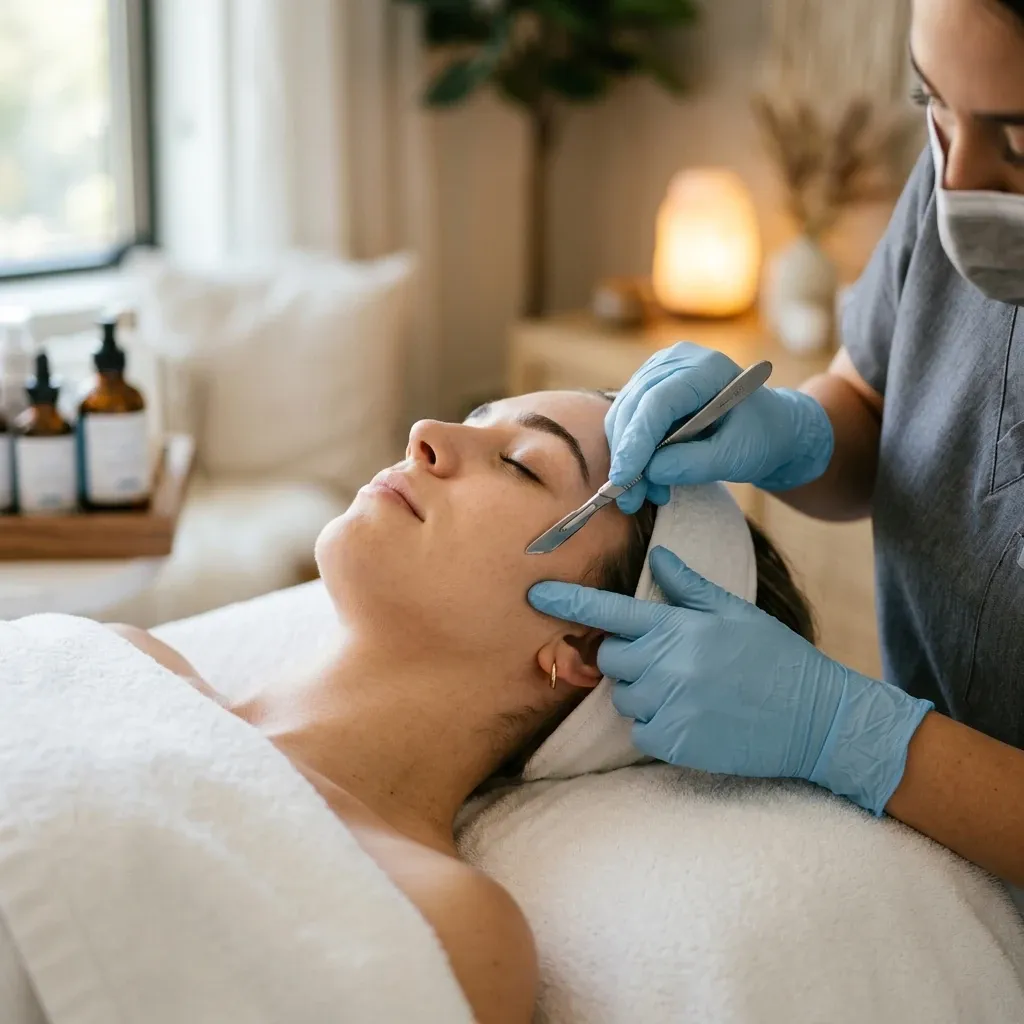
Both treatments remove facial hair, but the similarities mostly stop there. Dermaplaning uses a sterile surgical scalpel held at a 45-degree angle to gently scrape away peach fuzz (vellus hair) along with dead skin cells on the surface, which is why Cleveland Clinic classifies it as an exfoliation treatment as much as a hair-removal one.
Waxing, on the other hand, applies warm or hard wax to the skin and removes hair by pulling it out from the root. This makes waxing more effective for coarser, darker facial hair, but it also means more trauma to the skin. One practical distinction: dermaplaning is a face-only treatment, while waxing works almost anywhere on the body, from brows and upper lip to legs and bikini line. If you’ve ever wondered what a dermaplane facial involves and what it helps with, the exfoliation component is really what sets it apart from standard hair removal.
| Factor | Dermaplaning | Waxing |
|---|---|---|
| Hair types removed | Fine vellus hair (peach fuzz) | Fine and coarse hair |
| Exfoliation benefit | Yes, removes dead skin cells | Minimal |
| Pain level | Little to none | Moderate to high |
| Results last | 3–4 weeks | 3–6 weeks |
| Downtime | None to minimal redness | Redness, possible bumps for 24–48 hours |
| Ideal skin types | Sensitive, dry, mature skin | Normal to oily, resilient skin |
| Average cost per session | $75–$250 | $15–$75 |
Dermaplaning Benefits for Sensitive and Reactive Skin
One of the strongest reasons to choose dermaplaning over waxing is skin sensitivity. If you deal with rosacea, easily irritated skin, or a compromised moisture barrier, waxing can trigger flare-ups that last for days. Dermaplaning avoids the pulling and adhesive contact that makes waxing so harsh on reactive complexions.
Why Dermaplaning Works for Rosacea-Prone Skin
The blade glides across the surface without tugging or pulling at living tissue. There’s no heat involved, no chemical adhesive sitting on inflamed skin. For people with rosacea or chronic redness, that difference is the deciding factor.
Dermaplaning also delivers a smoother canvas for skincare products and makeup. Removing that top layer of dead cells means serums and moisturizers penetrate more effectively. Many clients notice an immediate glow after their first session, which is partly why dermaplane facials have become so popular as standalone treatments.
Who Should Skip Dermaplaning
Dermaplaning isn’t for everyone. Active acne with raised, inflamed lesions is a clear contraindication because the blade can nick pustules and spread bacteria. If you’re currently using retinoids or have had a chemical peel within the past week, your skin is already sensitized and adding a blade will do more harm than good.
People with very coarse or dark terminal facial hair often find dermaplaning disappointing. The scalpel is designed for fine vellus hair, not the thicker strands that waxing handles well.
Waxing Side Effects and Who Should Think Twice
Waxing delivers longer-lasting results because it removes hair from the root, but this aggressive approach comes with a trade-off list that’s worth taking seriously.
The most common side effects include redness, minor swelling, and skin that feels raw for 24 to 48 hours. Ingrown hairs are a frequent complaint, especially along the upper lip and jawline where skin folds create tricky angles. Some people develop folliculitis, which looks like small infected bumps around hair follicles. Sun sensitivity also increases after waxing, so scheduling a session before a beach weekend is a bad idea.
This is one area where the two treatments diverge sharply. Because dermaplaning only shaves hair at the skin’s surface and never pulls from the root, it can’t produce ingrown hairs the way waxing can. In fact, by clearing away the dead-cell buildup that traps growing hairs, it can help prevent them. If recurring ingrowns or folliculitis are a chronic problem for you, that contrast alone may settle the decision.
Contraindications for Facial Waxing
Avoid facial waxing if you’ve used isotretinoin (Accutane) within the last six months. The American Academy of Dermatology warns that waxing during this window can cause permanent scarring because the medication leaves skin significantly thinner and more fragile. Eczema, psoriasis, open wounds, and recent sunburn are also reasons to postpone.
Waxing over skin treated with retinol or glycolic acid within the past 48 to 72 hours can cause lifting, where the wax literally removes a layer of skin along with the hair. That’s a burn, not a beauty treatment.
Choosing Dermaplaning vs Waxing by Hair Type and Goal
Your decision should come down to two things: what kind of hair you’re trying to remove and how your skin typically reacts to treatments. If you’re dealing with hormonal facial hair, the kind that often comes with PCOS or shows up as coarse, dark strands on the chin and jaw, dermaplaning won’t touch it. The scalpel is built for fine vellus hair, so waxing (or another root-targeting method) is the more realistic choice for genuinely coarse terminal hair.
Choose dermaplaning if:
- You primarily want to remove peach fuzz and get exfoliation benefits
- Your skin is sensitive, rosacea-prone, or dry
- You want zero downtime and no pain
- You’re preparing your skin for better product absorption or a special event
Choose waxing if:
- You have coarser or darker facial hair that dermaplaning won’t effectively address
- You want results that last closer to six weeks
- Your skin tolerates waxing without significant irritation
- Budget is a primary concern
One common myth worth addressing directly: neither treatment causes hair to grow back thicker. Dermaplaning cuts hair at the surface, so regrowth can feel blunt initially, but the hair itself hasn’t changed in texture or color. Waxing pulls hair from the root, and with consistent sessions over time, regrowth may gradually become finer or sparser, the opposite of the “shaving makes hair coarser” myth, though genetics and hormones still play the biggest role.

Aftercare That Protects Your Results
Post-treatment care is where many people sabotage their own results. For dermaplaning, avoid direct sun exposure for at least 48 hours and apply a broad-spectrum SPF 30 or higher daily. Skip exfoliating acids and retinoids for three to five days to let your fresh skin settle. Following a solid dermaplaning aftercare routine makes a noticeable difference in how long your glow lasts.
After waxing, keep the treated area clean and avoid touching it with unwashed hands. Skip hot showers, saunas, and heavy workouts for 24 hours since heat and sweat can aggravate freshly waxed skin. A gentle, fragrance-free moisturizer helps calm redness faster.
If you’re preparing for your first session of either treatment, knowing how to prepare for dermaplaning ahead of time can help you avoid common mistakes that lead to irritation.
Can You Combine Both Treatments?
You can, but not at the same time on the same area. Some people dermaplane the cheeks and forehead (where peach fuzz dominates) and wax the upper lip or chin (where hair tends to be coarser). If you want both on the same area, space them at least two weeks apart to avoid over-stressing your skin.
Frequently Asked Questions
Q: Can I dermaplane or wax at home, or should I see a professional?
A: Professional treatments are usually safer because technique, sanitation, and product selection reduce the risk of nicks, burns, and irritation. If you choose at-home care, use tools made for facial use, follow strict hygiene, and stop immediately if your skin feels compromised.
Q: How should I time dermaplaning or waxing before a big event?
A: Schedule a first-time treatment at least 1 to 2 weeks before an event so you can see how your skin reacts. If you have done it before without issues, many people book 2 to 5 days ahead to allow any mild sensitivity to settle while keeping results fresh.
Q: What should I avoid putting on my skin on the day of my appointment?
A: Arrive with clean skin and avoid heavy makeup, self-tanner, and strong fragranced products that can mask irritation or increase sensitivity. It also helps to skip new skincare products for several days beforehand so any reaction is easier to identify.
Q: Is waxing or dermaplaning safer if I am prone to hyperpigmentation or dark marks?
A: Hyperpigmentation risk is usually tied to inflammation, friction, and aftercare rather than the hair removal method alone. If you are prone to dark marks, prioritize gentle technique, diligent sunscreen use, and avoiding any treatment when your skin is already irritated.
Q: Can I wear makeup right after dermaplaning or waxing?
A: Many providers recommend waiting until the next day, especially after waxing, to reduce the chance of clogged pores or irritation. If you must apply makeup sooner, choose non-comedogenic formulas and use clean brushes or sponges.
Q: How do I choose between hard wax and soft wax for the face?
A: Hard wax is often preferred for delicate facial areas because it typically grips hair more than skin and can feel gentler on removal. Soft wax can work well for larger areas but may be more irritating for people who react easily, so a patch test and provider guidance help.
Q: What add-on treatments pair well with dermaplaning or waxing without overdoing it?
A: Gentle, barrier-supporting options like soothing masks, LED red light, or hydrating facials can complement either method when timed appropriately. Avoid stacking multiple aggressive treatments in the same visit unless a professional specifically recommends a safe protocol for your skin.
The Right Treatment Starts with Your Skin

The best choice between dermaplaning and waxing isn’t universal. It depends on your hair type, skin sensitivity, and what you want beyond just hair removal. If exfoliation and a brighter complexion rank high on your list, dermaplaning is the stronger option. If longer-lasting removal of coarser hair is your priority and your skin can handle it, waxing delivers.
At Coastal Health & Medical Spa in Jacksonville, FL, our team of aestheticians evaluates your unique skin type and hair concerns before recommending a treatment plan. A one-size-fits-all approach doesn’t work for facial treatments any more than it works for skincare. Book a consultation to get a tailored recommendation that actually fits your skin.
