A dermaplane facial is a non-chemical exfoliation method in which a trained professional glides a sterile surgical blade across your skin to remove dead skin cells and fine hairs (vellus hair), leaving your face instantly smooth. This treatment does not use harsh chemicals, making it suitable for individuals who are sensitive to chemical solutions. No lasers, no downtime, no numbing cream. The procedure typically takes only a few minutes to complete, yet it consistently ranks among the most requested services at medical spas nationwide, and for good reason.
The appeal goes beyond removing peach fuzz. Dermaplaning manually exfoliates the outermost layer of dead skin cells, revealing a smoother and more luminous complexion underneath. The result is skin that absorbs serums more effectively, holds makeup more evenly, and simply looks healthier. If you’ve been curious about whether this treatment lives up to the hype, this guide breaks down exactly what happens during the procedure, who benefits most, and how to get the best possible results.
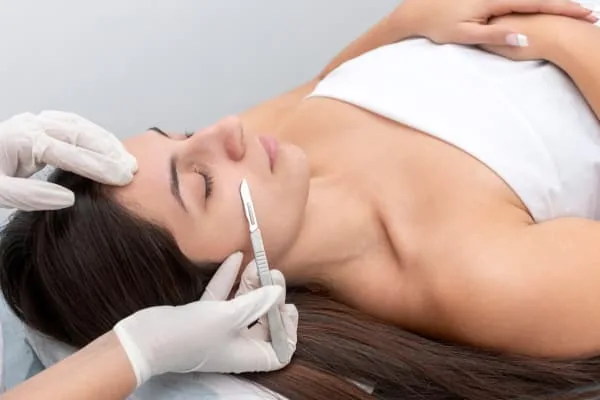
The blade step of a dermaplane facial: dead skin and peach fuzz lift away in short, feathering strokes. Dermaplaning in Jacksonville.
What Is a Dermaplane Facial, and How Does It Actually Work?
A dermaplane treatment is a professional exfoliation procedure in which a licensed aesthetician uses a sterile, single-use surgical scalpel (typically a #10 blade) held at a 45-degree angle against the skin. Because it works at the surface rather than pulling hair from the root the way waxing does, it tends to suit sensitive skin better; our dermaplaning vs waxing comparison breaks down which method fits your skin and hair type. Short, feathering strokes remove dead skin cells and fine vellus hair (peach fuzz), resulting in a smoother texture and brighter complexion.
Think of it as a deeper, more precise version of physical exfoliation. While scrubs and washcloths only displace surface debris, dermaplaning reaches the stratum corneum and removes a uniform layer of buildup that dulls your complexion over time. The benefits of dermaplaning include improved skin appearance, enhanced product absorption, and prevention of breakouts, making it an effective skincare treatment for promoting healthier, more radiant skin. The technique requires a steady hand and thorough knowledge of facial anatomy, which is why it belongs in a clinical setting rather than your bathroom.
During the procedure, the sensation is typically painless and feels like a gentle scratching or brushing on the skin.
Pros and Cons at a Glance
| Pros | Cons |
|---|---|
| Instant results: smoother, brighter skin the same day | Results are temporary; peach fuzz returns unchanged in about 3 to 4 weeks |
| No downtime, no chemicals, no numbing cream | Not for active acne, rosacea flare-ups, sunburn, or recent isotretinoin use |
| Removes peach fuzz along with dead skin, so makeup and serums sit better | Mild redness and sensitivity for a day or two are normal |
| Considered safe in pregnancy and for most skin types, including sensitive skin | Does not treat deep acne scars, melasma, or significant sun damage |
| Quick: the blade work itself takes about 15 to 20 minutes | Needs a licensed provider; at-home tools do not give the same exfoliation |
The short version: it is a low-risk, high-satisfaction treatment for texture and glow, and a poor fit if your skin is inflamed or your goal is scar repair.
Dermaplaning vs. Shaving: What’s the Real Difference?
This is probably the most common question people ask, and it deserves a straight answer. Dermaplaning and shaving both remove facial hair, but that’s where the similarities end.
| Factor | Dermaplaning | Shaving |
|---|---|---|
| Tool | Sterile surgical scalpel | Razor or electric razor |
| Depth | Removes dead skin cells + vellus hair and unwanted hair growth | Cuts hair at the surface only |
| Performed by | Licensed aesthetician or provider | Self-administered |
| Exfoliation | Yes, significant | Minimal to none |
| Results | Brighter skin, improved texture, better product absorption | Hair removal only |
| Risk of irritation | Low (professional setting) | Higher (razor burn, nicks) |
Shaving tackles hair using a razor or electric razor. Dermaplaning tackles unwanted facial hair, unwanted hair growth, and skin quality simultaneously. If you’re only concerned about removing fuzz, shaving works fine. But if you want the exfoliation and glow that comes with professional-grade cell turnover, dermaplaning delivers something a razor simply cannot.
It is a myth that hair will grow back thicker or darker after dermaplaning.
Dermaplane Facial Benefits That Go Beyond Smooth Skin
Most articles list generic benefits without explaining the “why” behind them. Here’s what’s actually happening at a skin level when you get a dermaplane facial. The benefits of dermaplaning include exfoliation, skin renewal, and clearing pores, which help remove microscopic bacteria and prevent breakouts. This process promotes healthier skin by improving texture, brightening the complexion, and supporting long-term skin health.
Improved Product Absorption and Refined Texture
Removing that layer of dead cells from the skin’s surface eliminates the barrier that prevents your serums, moisturizers, and other skincare products from penetrating effectively. Dermaplaning enhances the effectiveness of both skincare products and skin care products by creating a smoother skin surface, allowing them to absorb more deeply and deliver better results. Studies on transdermal absorption consistently show that exfoliated skin uptakes topical products at a significantly higher rate. Your $80 vitamin C serum actually reaches the cells it’s designed to help.
Texture improvements are visible immediately. Fine lines appear softer because light reflects more evenly off a smooth surface rather than catching on rough patches and dead skin buildup.
A Brighter Complexion and Help with Hyperpigmentation
Dullness is almost always a dead skin cell problem. By physically removing dead skin cells, dermaplaning helps address skin concerns such as dullness and acne scars, revealing the fresher, more evenly pigmented skin underneath. For clients dealing with mild hyperpigmentation or post-inflammatory marks, consistent dermaplaning sessions accelerate the natural cell turnover that fades dark spots and improves the appearance of acne scars over time.
That said, dermaplaning won’t resolve deep melasma or significant sun damage on its own. It’s a powerful complement to targeted treatments, not a standalone solution for advanced pigmentation concerns.
The Makeup Application Difference
This benefit alone drives many first-time clients to book. Dermaplaning creates a smoother texture and improves the skin’s surface, making makeup application much easier. Foundation glides on without catching on dry patches or peach fuzz. Makeup artists have used dermaplaning as a pre-event prep technique for years because it creates the smoothest possible canvas. If you have a wedding, photoshoot, or special event coming up, schedule your session about a week beforehand to let any minor redness fully resolve.
Who Should (and Shouldn’t) Get a Dermaplane Facial
Dermaplaning works well for most skin types, but it isn’t universally appropriate. Before undergoing dermaplaning, a thorough review of your medical history is important to assess suitability and prevent complications. Being honest about candidacy matters more than booking every person who walks through the door.
Good candidates include people dealing with dull or rough skin texture, fine lines, mild hyperpigmentation, dry or flaky patches, and anyone who wants a smoother base for skincare or makeup. It’s also safe during pregnancy, which makes it one of the few professional exfoliation options available to expecting mothers.
You should avoid dermaplaning if you have:
- Active acne breakouts or pustular lesions (the blade can spread bacteria)
- Rosacea flare-ups or highly reactive skin
- Open wounds, cuts, or sunburned skin
- A history of keloid scarring
- Current use of isotretinoin (Accutane) or recent discontinuation within the past six months
- Skin growths, as dermaplaning is not intended for treating scars, lesions, or other prominent skin anomalies
If you’re using retinoids, most providers recommend pausing for five to seven days before your appointment. The skin is already in an accelerated turnover state, and adding manual exfoliation on top can cause unnecessary sensitivity.
As with any cosmetic procedure, there are possible complications such as irritation, redness, or infection, so it’s important to consult a qualified professional to discuss your individual risks and skin conditions.
Dermaplaning is generally considered safer for individuals with delicate skin or darker skin tones compared to dermabrasion, which carries a higher risk of scarring or pigmentary changes.
Side Effects and Risks of a Dermaplane Facial
Dermaplaning is one of the lower-risk exfoliation treatments available, and the dermaplaning procedure itself is quick and noninvasive, with minimal downtime needed; most people can resume daily activities immediately after treatment. However, every physical exfoliation carries some possibility of irritation or reaction. Knowing what’s expected versus what warrants a call to your provider keeps recovery stress-free, and it’s important to avoid irritating products post-treatment to support proper healing.
Common Side Effects
- Mild redness or flushing, typical for 1 to 24 hours post-treatment
- Tightness or mild tingling as freshly exfoliated skin adjusts
- Slight sensitivity to product application for 24–48 hours
- Temporary small breakouts in the days after, as pores adjust to the newly exposed surface
Less Common Risks
- Small nicks or cuts (rare in professional settings, common with at-home tools)
- Post-inflammatory hyperpigmentation (higher risk for Fitzpatrick IV–VI skin tones without experienced providers)
- Bacterial breakouts from treating over active acne lesions
- Persistent redness beyond 48 hours, often linked to over-exfoliation or inappropriate candidacy
- Allergic reactions to post-treatment serums or masks, not the blade itself
Call your provider if you experience worsening pain, signs of infection (yellow discharge, spreading redness, heat), blistering, or any discoloration that persists beyond 10 days. The vast majority of dermaplane facial issues resolve on their own with barrier-supportive skincare and sun protection.
Dermaplane Facial Recovery Timeline: Day 1, Week 1, Month 1
Dermaplaning is often marketed as “zero downtime,” and for most patients that’s accurate. But knowing what each stage of recovery looks like helps you plan skincare and events around your treatment.
| Timeframe | What to Expect |
|---|---|
| Day 1 | Mild pink flush, skin feels softer and brighter, SPF applied before you leave. Skip heavy makeup and active ingredients. |
| Days 2–3 | Visible glow, makeup glides on more smoothly, product absorption noticeably better. Skip AHAs, retinol, scrubs, and hot yoga. |
| Week 1 | Full results visible, skin feels smoother, peach fuzz is gone. Resume normal skincare routine with SPF every day. |
| Weeks 2–3 | Peak smoothness and brightness begin to soften as natural cell turnover cycles back. Vellus hair regrowth begins (no thicker than before). |
| Week 4+ | Most patients schedule their next session every few weeks to maintain results as part of a treatment plan. |
After your dermaplane facial, a calming serum or mask is often applied along with sunscreen protection to soothe and shield the freshly revealed skin.
What Happens During a Professional Dermaplane Facial: Step by Step
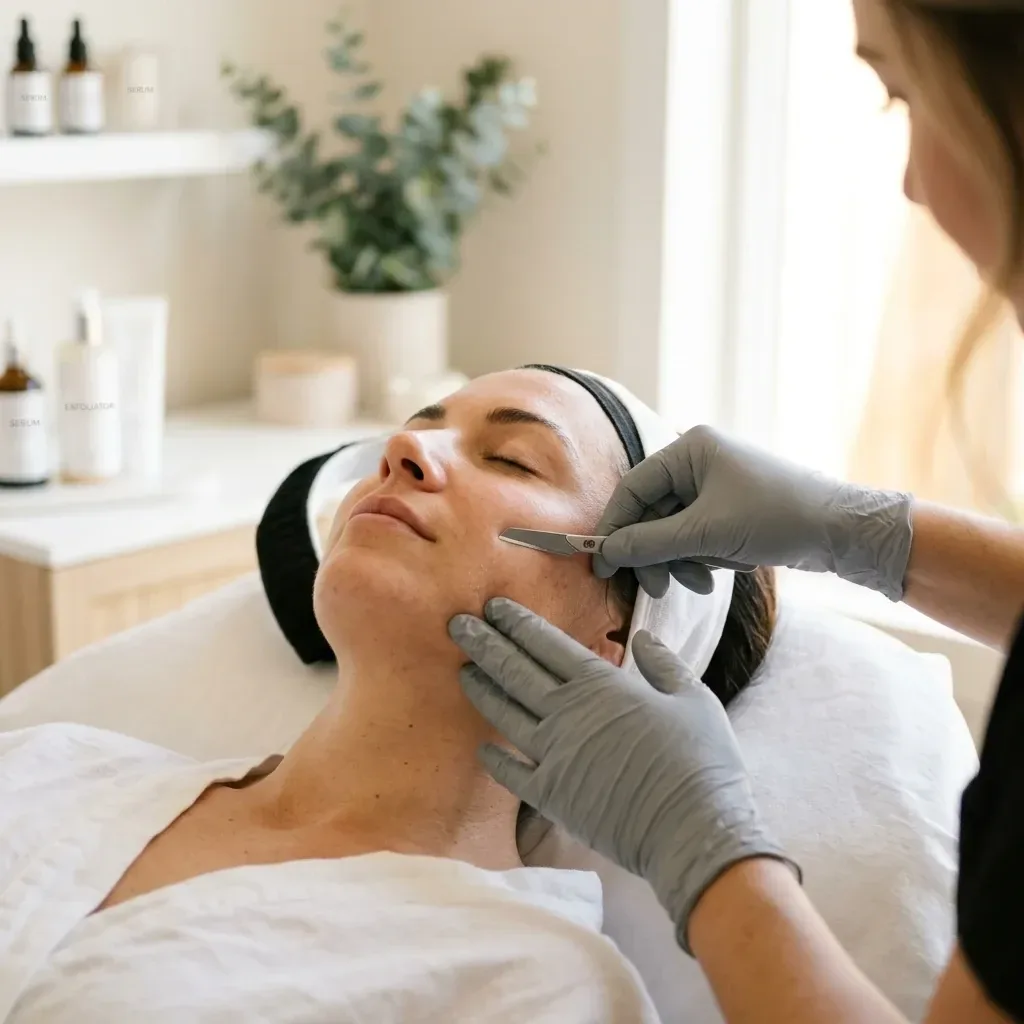
A sterile, single-use blade held at a shallow angle is what separates a dermaplane facial from shaving. Professional dermaplaning in Jacksonville.
The full experience at a medical spa goes well beyond the scraping you’ve seen on social media. At Coastal Health & Medical Spa in Jacksonville, a dermaplane facial, also known as a dermaplaning treatment, follows a structured clinical protocol designed to maximize results and minimize risk.
Step 1: Consultation and skin assessment. Your provider evaluates your skin type, current products, and any contraindications before touching a blade. This step gets skipped in at-home attempts, and it’s arguably the most important one.
Step 2: Double cleanse. All makeup, sunscreen, and oil are thoroughly removed so the blade can work on clean, dry skin.
Step 3: Dermaplaning. Using a sterile, single-use surgical blade held at a precise 45-degree angle, your provider works in short feathering strokes across each section of the face. The entire process typically takes 15 to 20 minutes. Most clients describe the sensation as a gentle scratching. It doesn’t hurt.
Step 4: Treatment enhancement. This is where the professional experience really separates itself. With the dead skin barrier removed, your provider applies targeted serums, a hydrating mask, or a soothing, calming serum or mask that penetrates far deeper than it would on untreated skin.
Step 5: SPF and finishing. A broad-spectrum sunscreen is applied to protect your freshly revealed skin. You leave with a noticeable glow and zero downtime.
Does Dermaplaning Hurt?
No. Dermaplaning needs no numbing cream because the blade never cuts into living skin; it skims the surface at a shallow angle, so you feel a light brushing or scratching.
The upper lip and jawline are the spots people notice most, so your aesthetician uses lighter pressure there and protects the eyes and lips with a balm. Sunburned skin and recent retinoid use are the two avoidable causes of discomfort.
Preparation and Aftercare: Protecting Your Results

A dermaplane facial starts with a clean, prepared treatment room and a skin assessment. Book a free consultation.
Before Your Appointment
Discontinue retinoids and strong chemical exfoliants five to seven days prior. Avoid prolonged sun exposure in the days leading up to your session, and skip any facial waxing for at least two weeks before. Arrive with clean skin if possible, though your provider will cleanse thoroughly regardless.
The First 72 Hours Post-Treatment
Your skin is more receptive after dermaplaning, which means it’s also more vulnerable. For a thorough breakdown of what to do and avoid, our guide to dermaplaning aftercare for glowing skin covers the full protocol. The essentials: wear SPF 30 or higher daily, skip active ingredients like AHAs and retinol for 48 to 72 hours, avoid heavy sweating and hot water on the face, don’t use physical scrubs, and avoid irritating products during the first 72 hours post-treatment.
Stick to gentle, hydrating products. A hyaluronic acid serum under a simple moisturizer works well during this window.
Wait until the next day for makeup if you can, and if you need it sooner, choose non-comedogenic formulas and clean brushes or sponges.
Professional vs. At-Home Dermaplaning: Is DIY Worth the Risk?
Social media has popularized at-home dermaplaning tools, and I’ll be direct: they’re not the same treatment. The small, single-blade tools sold for home use are designed with safety guards that prevent them from reaching the same depth as a professional surgical scalpel. You’ll remove some peach fuzz, but you won’t achieve meaningful exfoliation.
The bigger concern is safety. Without proper training, you risk nicks, uneven exfoliation, and spreading bacteria across active breakouts you may not have identified. A licensed aesthetician understands skin anatomy, blade angle, pressure modulation, and contraindication screening. That expertise is the product you’re paying for.
If budget is a consideration, an at-home tool between professional sessions won’t cause harm for most skin types. But don’t mistake it for a replacement.
Combining Dermaplaning with Other Treatments for Better Results
One of dermaplaning’s biggest advantages is how well it pairs with other skincare treatments to address specific skin concerns and help clients achieve their individual skin goals. Removing that dead cell layer right before a chemical peel allows the solution to penetrate more uniformly, which often means better results with less irritation.
A HydraFacial performed after dermaplaning delivers hydration and antioxidants deeper into the skin. And for clients focused on collagen stimulation and scar improvement, dermaplaning before microneedling can enhance outcomes. If you’re considering microneedling, understanding how often you should microneedle helps you plan a treatment schedule that complements your dermaplaning sessions without over-stressing the skin.
Demand for layered, clinically-guided facials has grown steadily, and combination protocols like this one are part of why. Patients increasingly want visible results without invasive procedures or long recovery windows, and pairing treatments is how skilled providers meet that bar.
Space Botox and dermal fillers from dermaplaning so the skin is calm around injection sites, and ask your spa for a coordinated schedule.
Dermaplaning vs HydraFacial
People ask which one is better, and the honest answer is they do different jobs. Dermaplaning is a manual exfoliation that also removes vellus hair; a HydraFacial uses a vortex handpiece to cleanse, exfoliate, extract, and hydrate in one pass, no blade. If your main complaint is peach fuzz and rough texture, dermaplaning wins. If it is congestion, blackheads, or dehydrated skin, a HydraFacial wins. The two pair well: the Deluxe and Platinum HydraFacial in Jacksonville tiers include a dermaplane before the mask and serum steps.
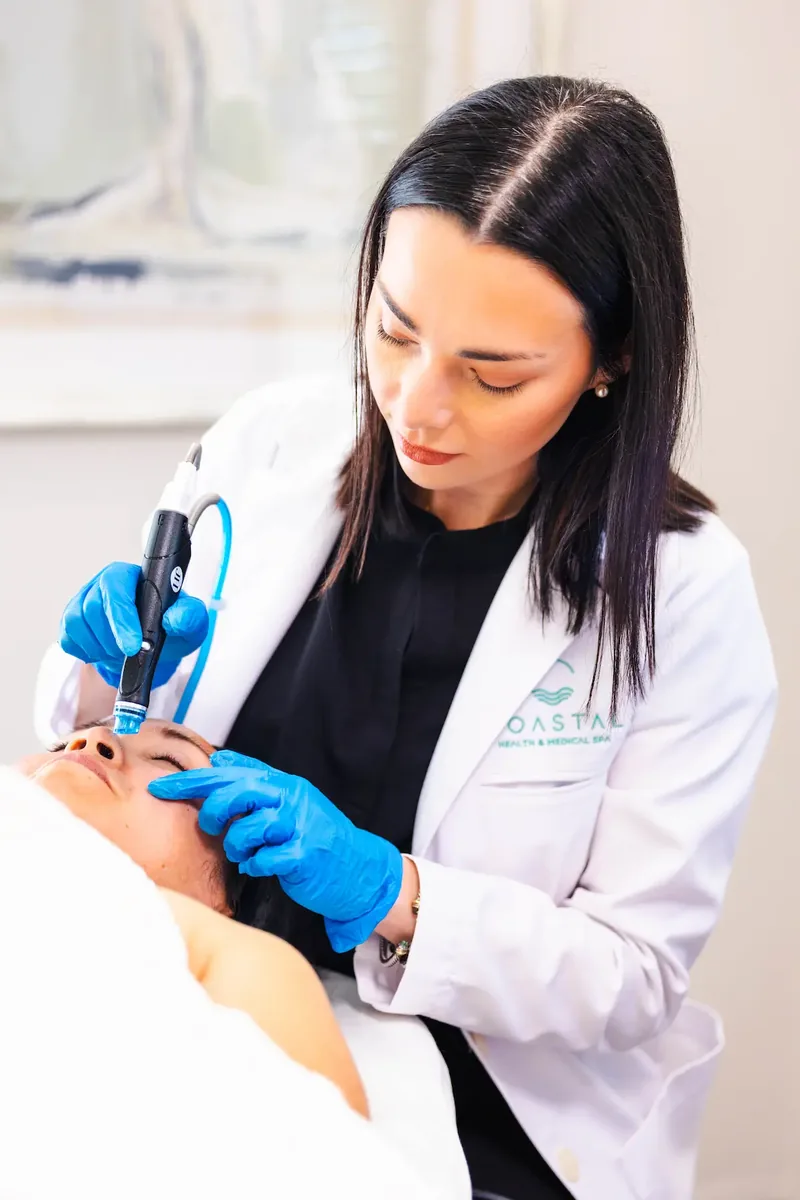
A HydraFacial in progress at Coastal Health & Medical Spa; the Deluxe and Platinum tiers add a dermaplane first. HydraFacial treatments in Jacksonville.
What About Deep Acne Scars?
Dermaplaning works on the surface, and deep acne scars live below it. Ice-pick, boxcar, and rolling scars are pits in the dermis where collagen was lost, so a blade cannot fill them in. The AAD guidance on acne scar treatment points to collagen-building procedures for these instead.
SkinPen holds an FDA De Novo classification for improving the appearance of facial acne scars in adults. If scars are your main concern, start with a SkinPen microneedling in Jacksonville consultation, then add dermaplaning later as maintenance.
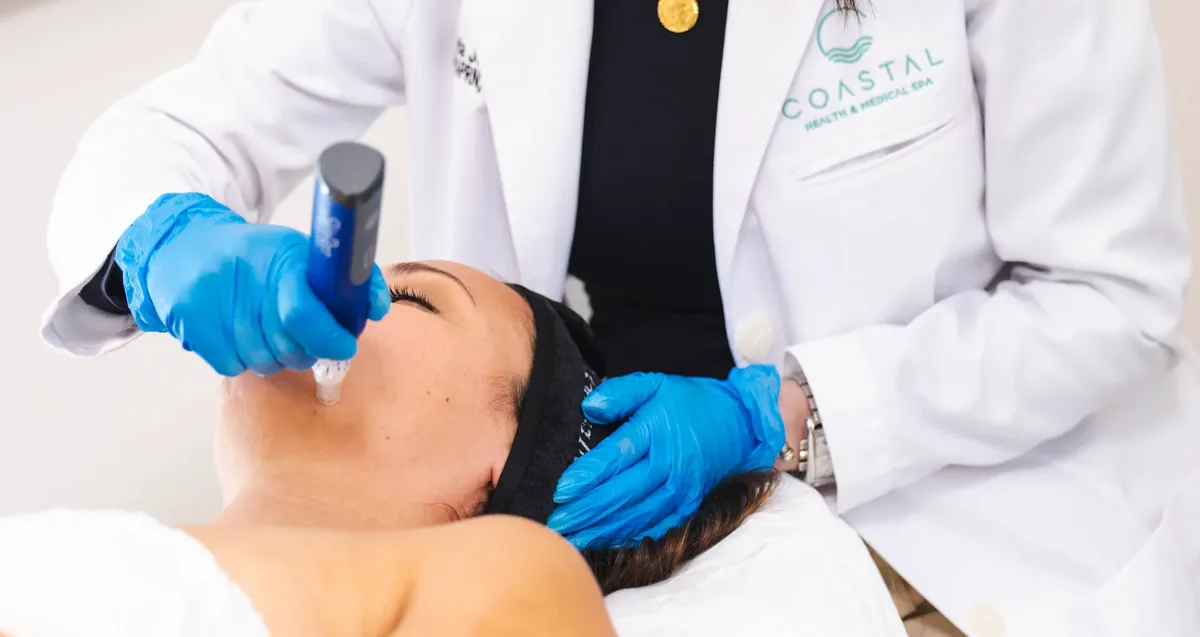
SkinPen microneedling at Coastal Health & Medical Spa reaches the scar tissue a blade cannot. SkinPen microneedling in Jacksonville.
The Hair Myth and Other Dermaplaning Misconceptions
“Will my hair grow back thicker?” No. This is the single most persistent myth about dermaplaning, and it’s categorically false. Vellus hair is structurally different from terminal hair. Cutting it at the surface doesn’t change the follicle, the growth rate, or the texture. What you might notice is the blunt edge of regrowth feeling slightly different from the tapered tip of uncut hair. It’s a tactile illusion, not actual thickening.
“Dermaplaning causes breakouts.” A properly performed treatment on appropriate skin actually reduces breakout potential by clearing pores and removing pore-clogging debris. By clearing pores, dermaplaning helps eliminate microscopic bacteria and prevents breakouts caused by clogged pores, promoting healthier, clearer skin overall. Breakouts after dermaplaning typically result from either an underlying contraindication that wasn’t screened or contaminated tools in a non-professional setting.
“It’s not safe for darker skin tones.” Dermaplaning is generally safe across all Fitzpatrick skin types. However, individuals with darker skin tones should work with an experienced provider who understands the higher risk of post-inflammatory hyperpigmentation from any trauma to the skin. Proper technique and aftercare minimize this risk significantly.
“It fixes ingrown hairs.” Only partly: dermaplaning keeps the surface smooth, but it is not a primary treatment for true ingrowns.
Long-Term Results, Recommended Frequency, and Cost
Results from a single session typically last three to four weeks, which aligns with your skin’s natural cell turnover cycle. To maintain results, most providers recommend scheduling dermaplaning every four to six weeks as part of a personalized treatment plan. More frequent sessions aren’t necessarily better and can lead to over-exfoliation. That same turnover cycle is why our guide to how often you should get a facial lands on every four to six weeks for most skin.
Over time, clients who maintain a regular dermaplaning schedule as part of their treatment plan often notice cumulative improvements in skin texture and tone. Pairing sessions with targeted treatments like peels or dermal fillers for volume concerns creates a comprehensive approach that addresses multiple signs of aging simultaneously.
How Much Does a Dermaplane Facial Cost?
Across the U.S. market, a standalone dermaplane facial typically ranges from $75 to $200 per session. Add-ons like a hydrating mask, LED light therapy, or enzyme peel usually push the total to $150 to $300. Bundled packages of 3 to 6 sessions often bring the per-session cost down 10–20% compared to single bookings.
What drives the variation:
- Provider credentials (licensed aesthetician vs. nurse vs. physician-led spa)
- Add-on serums or masks included in the protocol
- Regional market: urban and coastal markets price higher than rural
- Package commitments vs. single-session bookings
Note on pricing: The ranges above reflect typical U.S. industry figures for planning purposes only. They do not represent Coastal Health & Medical Spa’s current pricing. Contact our team for up-to-date rates on any treatment discussed here.
Your Next Step Toward Smoother, Brighter Skin
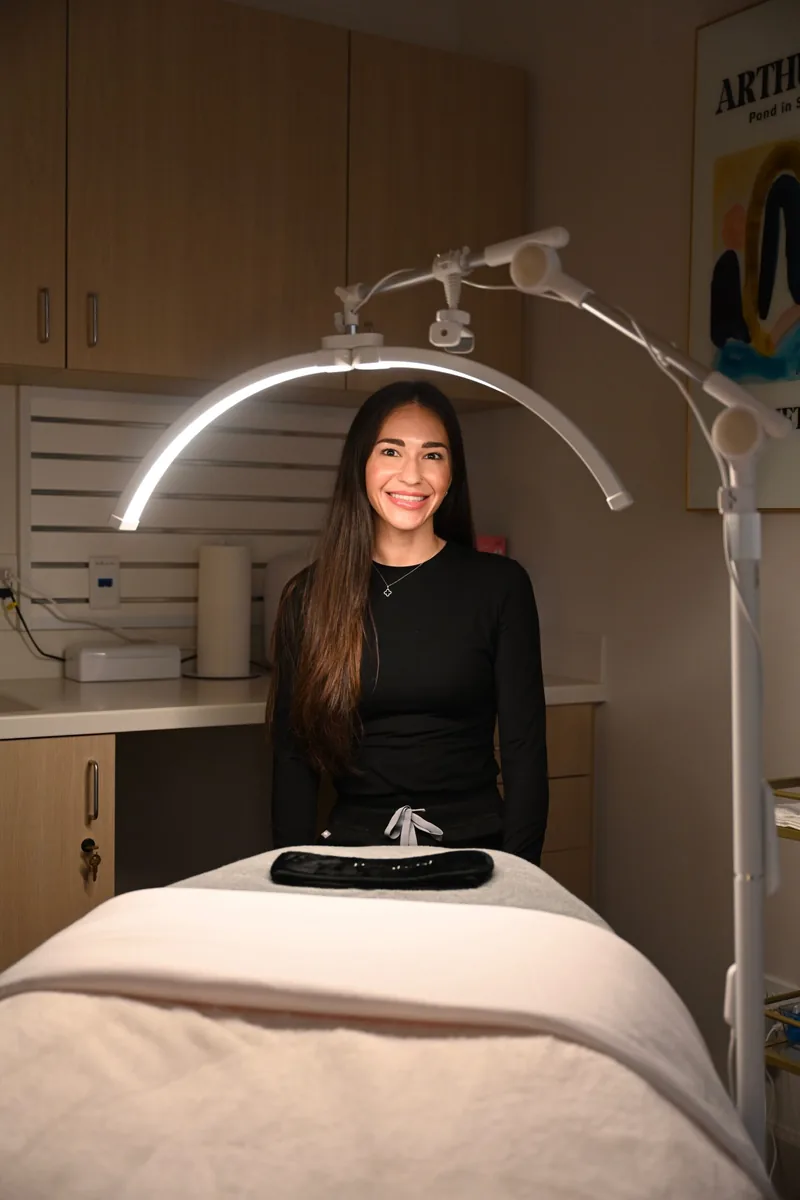
Danielle Hancock, Licensed Aesthetician, performs dermaplaning and dermaplane facials at Coastal Health & Medical Spa. Dermaplane facials in Jacksonville.
A dermaplane facial delivers visible, immediate results with zero downtime, making it one of the most rewarding entry points into professional skincare. Whether you’re prepping for a special event or building a long-term skin maintenance routine, the treatment adapts to your goals. A personalized treatment plan can be developed to help you achieve your unique skin goals, often combining dermaplaning with other services for optimal results.
Younger generations continue to drive demand for professional skincare, treating consistent, expert-guided care as a baseline rather than an indulgence. Investing in professional skin treatments isn’t a luxury anymore. It’s a standard part of how people take care of themselves.
At Coastal Health & Medical Spa in Jacksonville, FL, every dermaplane facial starts with a personalized skin assessment to ensure the treatment is right for you. Our licensed aestheticians tailor each session to your skin type, concerns, and goals. Visit Coastal Health & Medical Spa to schedule your consultation and experience the difference professional dermaplaning makes.
Book a dermaplane facial with Danielle Hancock, Licensed Aesthetician, read more about the Coastal team, or reach our Jacksonville office to ask which option fits your skin.
Frequently Asked Questions
Is dermaplaning good for your face?
For most skin, yes. It removes the dead cells and vellus hair that make skin look dull, lets serums absorb better, and gives makeup a smoother base, with no chemicals or downtime, and it is considered safe in pregnancy. Skip it over active acne, a rosacea flare, sunburn, or recent isotretinoin use; results last three to four weeks.
What are the disadvantages of dermaplaning?
The results are temporary, so expect a session every four to six weeks. It cannot be done over active breakouts, rosacea flares, or open skin. Expect mild redness for a day or two, plus a small risk of nicks or dark marks in untrained hands, and it does nothing for deep acne scars, melasma, or sun damage.
Which is better, HydraFacial or dermaplaning?
Neither is better across the board. Dermaplaning is the choice for peach fuzz, rough texture, and pre-event makeup prep. A HydraFacial is the choice for clogged pores, dehydration, and oily or breakout-prone skin, since it extracts and hydrates with no blade. Many people get the best result from both: Coastal’s Deluxe and Platinum HydraFacials include a dermaplane first.
What do I wish I knew before dermaplaning?
Five things first-timers wish they had known: peach fuzz grows back exactly as it was, not thicker; skip it during a breakout, since the blade can spread bacteria; SPF afterward is non-negotiable; makeup sits differently for about a day; and book it three to five days before an event, not the morning of.
