The debate over microneedling vs laser often stalls on the wrong question. Most people want to know which treatment is “better,” but the real answer depends on your skin type, your budget, how much downtime you can handle, and what you’re actually trying to fix, your unique skin goals, such as reducing wrinkles, scars, or pigmentation. A treatment that works brilliantly for shallow acne scarring on fair skin might be the wrong call for hyperpigmentation on a deeper skin tone.
This guide breaks down both treatments across the factors that matter most: how they work, what they cost, how long recovery takes, and which skin concerns each one handles best. You’ll walk away with a clear framework for choosing the right option, not just a vague recommendation to “consult a professional.”
What Is Microneedling and How Does It Work?

Microneedling uses a device equipped with fine, sterile needles to create thousands of controlled micro-injuries in the skin’s surface. This minimally invasive treatment uses tiny needles to create controlled micro injuries in the skin’s surface, stimulating the body’s natural healing process. These tiny punctures trigger your body’s natural wound-healing response, which ramps up collagen and elastin production over the following weeks. The result is gradual skin remodeling that improves texture, firmness, and tone.
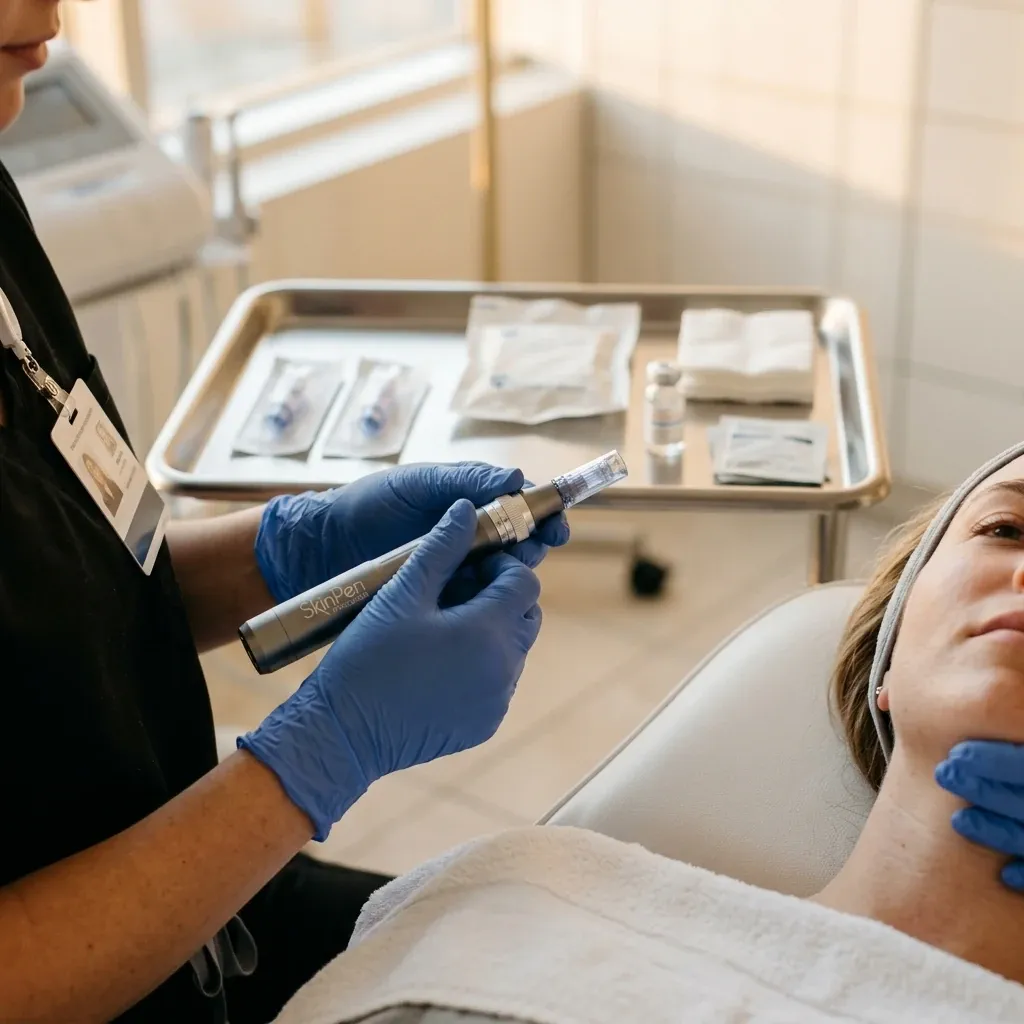
Professional microneedling devices like the SkinPen reach depths between 0.5mm and 2.5mm, depending on the treatment area and concern. That precision matters. Deeper needle penetration targets acne scars and stretch marks, while shallower settings address fine lines and general texture.
Microneedling is also known as collagen induction therapy. The process stimulates the body’s natural healing process, leading to increased collagen and elastin production for skin rejuvenation and improved texture.
Clinical reviews consistently show that a series of microneedling sessions triggers measurable collagen remodeling, producing meaningful structural improvement in skin quality without the heat energy or prolonged recovery that comes with more aggressive procedures.
Microneedling primarily targets the upper layers of the skin, making it especially effective for improving texture and tone, while laser treatments can penetrate deeper layers to address more significant issues like deep wrinkles and extensive sun damage. Ablative options like CO2 laser resurfacing in Jacksonville go the deepest, remodeling the skin’s surface to treat wrinkles, scars, and sun damage in a single more intensive treatment.
What Is Laser Skin Resurfacing? Types and When It’s Used
Laser skin resurfacing is a form of laser therapy that uses focused light energy for targeted treatment of specific skin concerns. This technology can precisely address issues such as pigmentation, wrinkles, and sun damage by delivering energy to targeted areas. Laser treatments come in several forms, including non-ablative lasers that penetrate below the surface layer of the skin without damaging the outermost barrier. Lasers can also be precisely adjusted for depth and specific targets, such as brown spots, making them versatile for a range of cosmetic applications. Understanding these differences is important when comparing laser options to microneedling.
Ablative vs. Non-Ablative Lasers
Ablative lasers (CO2 and Er:YAG) physically vaporize the outer layers of skin. They deliver dramatic results for deep wrinkles, severe sun damage, and pronounced scarring, but they come with significant downtime. Expect 7–14 days of recovery, and sometimes longer before your skin fully normalizes.
Non-ablative lasers heat tissue beneath the surface without destroying the top layer. Recovery is much shorter (typically 1–3 days), but results are more subtle and usually require multiple sessions.
Fractional Laser Technology
Fractional lasers treat only a percentage of the skin’s surface, leaving tiny columns of untouched tissue between treatment zones. This speeds healing considerably compared to full-field ablative lasers. Fractional CO2 lasers represent a middle ground: more aggressive than non-ablative options, but less destructive than traditional full-surface ablative resurfacing.
The variety of laser platforms is both a strength and a complication. Each type targets different depths and concerns, which means the “laser” side of the microneedling vs laser comparison isn’t a single procedure. It’s a whole category.
Microneedling vs Laser: Side-by-Side Comparison
| Factor | Microneedling | Laser Resurfacing |
|---|---|---|
| Mechanism | Mechanical micro-injuries stimulate collagen | Light/heat energy removes or remodels skin and stimulates collagen |
| Treatment Depth | 0.5–2.5mm (adjustable) | Varies by laser type (superficial to deep) |
| Skin Type Safety | Fitzpatrick I–VI (all skin tones) | Best for Fitzpatrick I–III; higher risk for darker tones |
| Downtime | 1–3 days | 3–14 days (depends on laser type) |
| Sessions Needed | 3–6 sessions (4–6 weeks apart) | 1–3 sessions (varies widely) |
| Cost per Session | $200–$700 | $500–$3,000+ |
| Pain Level | Mild to moderate (with numbing cream) | Moderate to significant (often requires stronger anesthesia) |
| Results Timeline | Gradual improvement over 4–6 weeks per session | Noticeable within 1–2 weeks after healing |
When comparing microneedling vs laser, it’s important to understand the key differences in their technologies, effects, and suitability for specific skin concerns. Both treatments stimulate collagen and are effective for improving texture, but laser therapy delivers faster and more targeted correction of textural issues.
One detail that often gets overlooked: microneedling’s safety across all Fitzpatrick skin types is a major differentiator. Because it relies on mechanical injury rather than heat or light energy, it carries a lower post-inflammatory hyperpigmentation (PIH) risk in skin types IV–VI, which is why many providers now position it as their first-line resurfacing option for deeper skin tones. If you have a medium to deep skin tone, this distinction should weigh heavily in your decision.
For patients with multiple concerns, combining microneedling and laser treatments can offer comprehensive skin rejuvenation by addressing a wider range of issues through a personalized approach.
Which Treatment Wins for Specific Skin Concerns?
Microneedling vs Laser for Acne Scars
For mild to moderate acne scarring, microneedling delivers strong results over a series of sessions with minimal risk. It works particularly well for rolling and boxcar scars. Deep ice-pick scars may respond better to ablative fractional lasers, but the trade-off is longer recovery and higher cost.
If you’re weighing microneedling against other resurfacing options for scarring, our comparison of microneedling vs chemical peel breaks down how chemical exfoliation stacks up for texture concerns, and HydraFacial vs microneedling covers how a hydrating facial compares for clients who want a gentler option.
Fine Lines and Wrinkles
Both treatments are aimed at achieving younger looking skin by stimulating collagen production and boosting collagen levels. Both improve fine lines effectively. Microneedling builds collagen gradually, making it well-suited for early signs of aging and prevention. Ablative lasers can address deeper wrinkles more aggressively in fewer sessions, though the recovery commitment is substantially higher.
Pigmentation and Sun Damage
Laser treatments are commonly used to treat sun damage and pigmentation issues. This is where laser treatments can outperform microneedling, but with a significant caveat. Laser treatments are generally more effective for targeting sun spots and age spots because they directly target excess melanin. Additionally, laser facials are effective for targeting hyperpigmentation and redness, making them suitable for treating issues like sun damage and post-acne pigmentation. Lasers target melanin directly, making them highly effective for sunspots on lighter skin. On darker skin tones, that same melanin-targeting mechanism increases the risk of hyperpigmentation or hypopigmentation. Microneedling is the safer choice for pigmentation concerns across all skin tones.
Enlarged Pores and Skin Laxity
Microneedling’s collagen-stimulating effect tightens pore appearance over multiple sessions. For mild skin laxity, it provides noticeable firming. Significant laxity may benefit from radiofrequency-assisted microneedling or laser treatments that deliver deeper tissue heating, though those options come with proportionally more downtime.
RF Microneedling vs. Laser: When Radiofrequency Changes the Math
Traditional microneedling stimulates collagen through mechanical injury alone. RF (radiofrequency) microneedling adds heat energy delivered through insulated needles directly into the dermis, heating the deeper layers of the skin to address deeper skin concerns such as deep wrinkles and acne scars. This thermal effect is similar to some laser treatments, which also heat deeper layers to stimulate collagen remodeling, but RF microneedling does so without the pigment-targeting mechanism that makes lasers risky on darker skin.
That combination is why RF microneedling has become a popular middle ground between standard microneedling and ablative laser resurfacing. It’s more aggressive than standard microneedling but safer than ablative lasers across Fitzpatrick IV–VI skin. Additionally, microneedling is safer for heat-sensitive conditions like melasma, as it avoids triggering rebound pigmentation.
| Factor | RF Microneedling | Laser Resurfacing |
|---|---|---|
| Best for | Skin laxity, acne scars, deeper wrinkles, body areas, deeper skin concerns | Surface pigmentation, fine lines, severe sun damage, deeper layers |
| Mechanism | Micro-injury + radiofrequency heat in dermis (heats deeper layers) | Light/heat vaporizes or heats surface tissue and deeper layers |
| Darker skin safety | Safe across all Fitzpatrick types | Varies; ablative lasers risky for IV–VI |
| Downtime | 2–5 days | 3–14 days |
| Typical cost per session | $800–$2,000 | $500–$3,000+ |
RF microneedling is the stronger choice when you need tightening and deeper collagen stimulation or have deeper skin concerns but can’t accept the risks of ablative laser on your skin tone. Choose ablative laser when surface-level sun damage and pigmentation are the priority and your skin type allows it.
Microneedling vs. Laser by Age: 30s, 40s, and 50s+

Patients benefit most from treatment plans that are tailored to their evolving skin goals and prioritize long term skin health. Age alone isn’t a dealbreaker for either treatment, but the concerns that bring patients in shift meaningfully with each decade. Here’s how most providers sequence treatments across age brackets.
In Your 30s
Most patients in their 30s are focused on prevention, early fine lines, enlarged pores, and post-acne scarring. Microneedling treatments are typically the go-to at this age — these minimally invasive procedures use fine needles to promote collagen production, improve skin texture, and reduce early signs of aging such as fine lines and scars. Laser is usually reserved for patients with significant sun damage or specific spot concerns.
In Your 40s
Mid-life concerns often combine texture, early laxity, and deeper pigmentation. This is where RF microneedling shines because it addresses multiple layers at once, improving texture and overall skin appearance. Many providers use a targeted treatment approach, combining a microneedling series for overall rejuvenation with a targeted non-ablative laser session to precisely address specific concerns like sun spots or broken capillaries.
50s and Beyond
In the 50s and beyond, more advanced signs of aging, pigmentation, or sun damage often require more aggressive treatments like ablative or fractional CO2 laser. Significant sun damage, deeper wrinkles, and skin laxity tend to dominate at this stage. Ablative or fractional CO2 laser produces the most dramatic single-session results for lighter skin types, while RF microneedling offers a lower-risk alternative with gradual improvement. Age is rarely the limiting factor — skin condition, tone, and overall health matter more.
Microneedling Downtime vs Laser Recovery: Day-by-Day Timeline
Microneedling needs time to work to effective address deep scars, uneven texture and more. Here’s a breakdown of the expected timeline of microneedling recovery.
Microneedling Recovery
Hours 0–24: Skin looks and feels sunburned, with mild redness and mild swelling being common and expected reactions after microneedling. This mild redness usually subsides quickly within 24 hours. Avoid touching your face and skip all active skincare products.
Days 1–3: Redness fades significantly. Some patients experience mild flaking or tightness. Most people return to work and light activities by day 2. You can apply mineral makeup after 24 hours in most cases.
Days 4–7: Skin typically looks normal. You can resume regular skincare, including gentle exfoliation. Sunscreen is non-negotiable. For a full breakdown of post-treatment care, our microneedling aftercare guide covers everything from product recommendations to exercise timelines.
Laser Resurfacing Recovery
Non-ablative laser: 1–3 days of mild redness and mild swelling are typical after treatment. Most patients return to normal activities within 48 hours, and the mild redness usually subsides within a few days.
Ablative/fractional CO2 laser: The first 3–5 days involve significant redness, swelling, and oozing. You’ll need to keep the area moist and follow a strict wound-care regimen. Days 5–10 bring peeling and flaking. Full redness resolution can take 2–4 weeks, and some patients experience pinkness for several months.
Exercise, sun exposure, and active skincare products should be avoided for at least a week after ablative laser procedures, and sometimes longer depending on your provider’s protocol.
Cost Comparison: What You’ll Actually Pay
Microneedling sessions typically range from $200 to $700, depending on the provider, treatment area, and whether add-ons like PRP (platelet-rich plasma) are included. A full treatment course of 3–6 sessions runs $600 to $4,200.
Laser resurfacing costs vary dramatically by laser type. Non-ablative sessions start around $500, while ablative CO2 laser treatments can cost $1,500 to $3,000+ per session. Because ablative lasers often require only 1–2 sessions, total treatment costs may range from $1,500 to $6,000.
Neither treatment is typically covered by insurance since both are considered cosmetic. When budgeting, factor in post-treatment skincare products, follow-up appointments, and maintenance sessions. Investing in medical grade skincare can enhance and prolong the results of both microneedling and laser treatments, making it an important consideration for maximizing your outcome. Microneedling’s lower per-session cost and shorter recovery period make it more accessible for most budgets, especially when you account for less time away from work.
Note on pricing:* The ranges above reflect typical U.S. industry figures for planning purposes only. They do not represent Coastal Health & Medical Spa’s current pricing. Contact our team for up-to-date rates on microneedling and related services.*
Pre-Treatment Preparation for Both Procedures
Proper preparation reduces side effects and improves outcomes regardless of which treatment you choose. In the two weeks before either procedure, stop using retinoids and other strong actives. Avoid prolonged sun exposure and discontinue blood-thinning supplements like fish oil and vitamin E.
For laser treatments specifically, your provider may prescribe antiviral medication if you have a history of cold sores, since laser energy can trigger outbreaks. Some laser protocols also require a skin-lightening regimen for several weeks beforehand to reduce hyperpigmentation risk.
Microneedling preparation is generally simpler. Arrive with clean skin, skip makeup on treatment day, and confirm that any active breakouts or skin infections have cleared. If you’re curious how microneedling stacks up against gentler resurfacing options, our guide on dermaplaning vs microneedling explains where each treatment fits in a skincare routine.
Long-Term Results and Maintenance Schedules
Microneedling results develop gradually and peak around 3–6 months after completing a full treatment series. By boosting collagen production, microneedling helps achieve radiant skin, youthful looking skin, and tighter skin as collagen remodeling continues during that window, so patience matters. Most providers recommend maintenance sessions every 6–12 months to sustain these improvements. Annual touch-ups work well for patients focused on anti-aging and general texture enhancement.
Laser resurfacing results appear faster after healing and can last 3–5 years for ablative treatments, depending on your skin, sun exposure habits, and skincare routine. Non-ablative laser results are less dramatic and may require annual maintenance sessions, but both types of laser treatments also work by boosting collagen, contributing to a more youthful looking, radiant, and tighter skin appearance.
Both treatments benefit enormously from consistent sun protection. SPF 30 or higher daily isn’t optional. It’s the single most important thing you can do to preserve treatment results, regardless of which procedure you choose.
Can You Combine Microneedling and Laser in One Treatment Plan?
Yes, and in some cases it’s the smartest approach. Combining microneedling and laser treatments is often recommended for comprehensive skin rejuvenation, as both treatments stimulate collagen to improve skin texture and address multiple concerns. A common protocol uses microneedling as a foundation for collagen building and overall texture improvement, then targets specific stubborn concerns with laser treatments. For example, you might complete a microneedling series for general skin rejuvenation and follow up with a targeted laser session for deep sunspots.
Timing matters when combining treatments. Most providers recommend spacing microneedling and laser sessions at least 4–6 weeks apart to allow full healing between procedures. Starting with microneedling makes sense for most patients because it carries less risk and provides a baseline improvement to build on. Chemical peels are another common pairing for patients focused on pigmentation and tone, and your provider can also explore how Botox and microneedling work together if wrinkle reduction is part of your overall plan.
How to Choose: A Decision Guide Based on Your Skin Type and Budget
When deciding between microneedling and laser resurfacing, consider your common skin concerns—such as acne scars, wrinkles, or dark spots—and which option offers the most targeted treatment for your needs.
Microneedling is likely your best fit if:
- You have a medium to deep skin tone (Fitzpatrick IV–VI)
- You want minimal downtime and can commit to multiple sessions
- Your primary concerns are texture, mild scarring, fine lines, or enlarged pores
- You prefer a lower per-session cost and gradual improvement
Laser resurfacing may be worth considering if:
- You have fair skin (Fitzpatrick I–III) and want aggressive results in fewer sessions
- You’re targeting deep wrinkles, severe sun damage, or pronounced scarring
- You can accommodate a longer recovery period
- Your budget allows for higher per-session costs
Here’s an honest take: for the majority of patients seeking skin rejuvenation, microneedling provides the best balance of safety, affordability, and effectiveness for common skin concerns. Laser treatments excel as a targeted treatment for specific issues on lighter skin, but they carry more risk and demand more recovery time. I’d only steer someone toward ablative laser resurfacing if their concerns genuinely warrant that level of intervention.
A Transparent Note on Treatment Availability
Coastal Health & Medical Spa in Jacksonville offers professional SkinPen microneedling but does not currently provide laser resurfacing services. If a consultation determines that laser treatment is the better option for your specific concerns, our team will refer you to a trusted provider. We’d rather direct you to the right treatment than push a service that isn’t your ideal match.
That said, microneedling addresses the concerns that bring most patients through our doors. For the vast majority of skin types and goals, it’s the treatment we recommend first.
Your Next Step Toward Clearer Skin

Choosing between microneedling and laser resurfacing comes down to your unique combination of skin type, concerns, budget, and tolerance for downtime. For most people, microneedling offers the safest and most versatile path to real improvement, especially when guided by a provider who understands your skin’s specific needs.
Coastal Health & Medical Spa in Jacksonville, FL builds every treatment plan around the individual, not a one-size-fits-all checklist. Our team of aestheticians and physicians will assess your skin, discuss your goals honestly, and recommend the approach that actually makes sense for you. Schedule a consultation at Coastal Health & Medical Spa to find out which treatment will deliver the results you’re looking for.
Frequently Asked Questions
Q: Which is more effective, microneedling or laser?
A: Neither is universally “more effective” — the better choice depends on your concern. Laser outperforms microneedling for targeted pigmentation and severe sun damage on lighter skin tones. Microneedling wins for texture, acne scars, and rejuvenation across all skin tones, and is safer for Fitzpatrick IV–VI. For most general anti-aging cases, microneedling is the more versatile first-line option.
Q: Should I do microneedling or laser first?
A: Most providers recommend starting with microneedling because it carries less risk, costs less per session, and builds a collagen foundation that improves how the skin responds to follow-up treatments. If a laser session is still warranted after a microneedling series, space it at least 4 to 6 weeks after your last microneedling appointment to allow full healing.
Q: Is 40 too old for microneedling?
A: No — the 40s are actually one of the most popular age brackets for microneedling. Collagen production slows meaningfully in your 30s and 40s, which is exactly when collagen-induction treatments produce the biggest visible improvement in firmness, fine lines, and tone. Age alone is not a limiting factor; skin health, medical history, and realistic goals matter more.
Q: How do I know if I am a good candidate for microneedling or laser if I have active acne?
A: Active, inflamed breakouts can increase irritation and the risk of complications with either procedure. A provider will usually stabilize acne first, then plan resurfacing to address scarring and texture once the skin is calmer.
Q: How should I choose a provider for microneedling if results depend on technique?
A: Ask what device they use, how they set needle depth by area, and how they handle sterility and post-care guidance. You can also request before-and-after photos of patients with similar skin tone and concerns to gauge consistency.
Q: What should I ask during a consultation to avoid being upsold into the wrong treatment?
A: Ask which specific concern you are treating first, what success looks like after each session, and what alternatives they would recommend if you were not a candidate. A good consultation includes a clear plan, realistic expectations, and a discussion of risks, not just a package quote.
Q: Are there times of year that are better for scheduling these treatments?
A: Many patients prefer cooler months when it is easier to avoid intense sun and outdoor heat. If you have a high sun exposure lifestyle, discuss timing and protective habits with your provider so your treatment plan matches your routine.
Q: How do microneedling and laser compare for sensitive or rosacea-prone skin?
A: Sensitivity and vascular redness require a cautious approach, because aggressive resurfacing can trigger flares. A consultation can determine whether a gentler protocol, fewer passes, longer spacing, or an alternative treatment is safer for your baseline redness.
Q: Can I wear makeup, use self-tanner, or get a spray tan around my appointment?
A: Plan to arrive with clean skin and avoid tanning products beforehand, since they can irritate skin or interfere with proper assessment of tone and redness. After treatment, follow your provider’s timeline for makeup and avoid self-tanner until the skin barrier feels fully normal.
Q: What lifestyle factors can reduce results even if the procedure is done correctly?
A: Smoking, inconsistent sleep, poor protein intake, and high alcohol consumption can slow healing and limit collagen-building outcomes. Managing stress, hydration, and a consistent, gentle skincare routine can help your results look better and last longer.
