
Do facials help with wrinkles? Yes, for fine lines, dryness lines and rough skin texture, and the improvement lasts a few weeks at a time. No, for expression lines made by muscle movement or for sagging from volume loss. Those need Botox, SkinPen microneedling, Sculptra or dermal fillers, and a facial works best alongside them, not instead of them.
That is the honest version, and it is not the one most people hear at a front desk. A good anti-aging facial is a real professional facial treatment with measurable effects on the right skin concerns. It is also a surface treatment, and wrinkles start in more than one layer. Knowing which type you have tells you what a facial can do about it.

A facial treatment in progress at Coastal. See the anti-aging facial in Jacksonville.
Quick Answer: Do Facials Help With Wrinkles?
Facials help the wrinkles that live in the outer layer of skin: fine lines, dryness lines and the crosshatch texture that comes with slower skin cell turnover and sun damage. They soften those for a few weeks. They do not relax the muscles that fold skin into frown lines and crow’s feet, and they do not put back the fat and bone that volume loss takes away.
Key Points
- Exfoliation and deep hydration are what make a facial treatment work on fine lines, and both wear off as new skin cycles through.
- Expression lines come from muscle movement; Botox treats the muscle, which no facial can reach.
- Etched lines and sagging skin sit in deeper layers; SkinPen microneedling, Sculptra and dermal fillers work there.
- Coastal’s anti-aging facial takes about 60 minutes with no downtime and is performed by Danielle Hancock, Licensed Aesthetician.
- Daily SPF and a retinol at night hold results between visits better than any single appointment.
Why Wrinkles Form, and Why the Type Matters
Three different processes make wrinkles, and they answer to three different tools. Here is how to tell them apart.
Fine Lines and Texture
Fine lines are the shallow ones you see in good light: around the eyes, across the cheeks, above the lip. They come from the skin’s own slow-down. Skin cell turnover drags, so dead skin cells pile up on the surface and scatter light instead of reflecting it. Oil and water content drop, so the surface dehydrates and creases like dry paper. Underneath, the dermis thins. A 1975 skin collagen study measured steadily less collagen with every year of adult life, roughly 1 percent a year. Florida sun exposure speeds all of this up and adds rough skin texture, uneven skin tone and age spots, the early signs of aging most people notice first.
This is the layer a facial treatment actually reaches. Exfoliation, hydration and antioxidants work on the outer skin cells and the top of the dermis, exactly where fine lines live. It is also why the result is temporary: the skin keeps aging on the same schedule once the treatment wears off.
Expression Lines
Expression lines, or dynamic wrinkles, are the creases that appear when you move: the elevens between your brows, horizontal forehead lines, crow’s feet when you smile. A muscle under the skin contracts thousands of times a day and folds the skin above it the same way each time. In your twenties the fold disappears when the muscle relaxes. Over the years the dermis loses enough collagen and skin elasticity that the crease starts to stay, first faintly at rest, then clearly.
A 2021 review of facial aging describes this as a mismatch: the muscle keeps its pull while the skin over it loses its resistance, so expressions carve deeper with age. No serum changes how hard a muscle contracts. A facial can smooth the skin on top of the crease for a few days, but the fold reforms the moment you frown.
Etched Lines and Volume Loss
Static wrinkles are the deep wrinkles that stay put with your face at rest: deep nasolabial folds, marionette lines, etched forehead lines, the crepey crosshatch on the cheeks. Some started as expression lines that finally stuck. Others are structural. The same review traces facial aging from the inside out: bone recedes, fat compartments shrink and shift downward, ligaments loosen, and the skin drapes over a smaller frame. The result reads as sagging, hollowing and folds, and it has very little to do with the skin’s surface.
That matters for expectations. A facial that leaves the cheeks glowing has not touched the fat pad under them. Etched lines need collagen stimulation from below, and volume loss needs something that restores structure. The table sorts them out.
| Wrinkle type | What causes it | What a facial does | What actually treats it | Coastal option |
|---|---|---|---|---|
| Fine lines and texture | Dry surface, slow cell turnover, sun damage, thinning collagen | Softens them visibly for a few weeks | Regular facials, nightly retinol, daily SPF; SkinPen or chemical peels for stubborn texture | Anti-aging facial |
| Expression lines (dynamic) | Repeated muscle movement | Hydrates the skin on top; the crease returns with movement | Relaxing the muscle | Botox |
| Etched lines (static) | Collagen and elastin loss that lets a crease stay at rest | Minor smoothing of surface texture | Collagen induction below the surface | SkinPen microneedling |
| Volume loss and sagging | Bone and fat changes, loosened ligaments | Nothing lasting | Restoring structure and volume | Sculptra or dermal fillers |
What an Anti-Aging Facial Does for Wrinkles
Now the good news. On the right wrinkle, a professional facial treatment does measurable work, and each step has a reason.
Exfoliation Smooths Texture and Softens Fine Lines
The outer layer of skin is made of dead skin cells that should shed on their own every few weeks. With age they hang on longer, which is why aging skin looks dull and feels rough, and why fine lines catch shadows. A light chemical or enzyme exfoliation, a gentler cousin of chemical peels, dissolves the bonds holding those cells in place to remove dead skin cells in one pass. Light reflects evenly off a smoother surface, and fine lines look shallower because there is less dry buildup sitting inside them. Mechanical exfoliation such as dermaplaning does the same job with a blade.
Exfoliation is the quickest way to improve skin texture, and it clears the way for everything that follows, so serums and masks sink into fresh skin instead of sitting on a dead layer. The effect on fine lines is real and immediate, and it is a surface effect. Skin cell turnover runs on its own clock, so dull skin creeps back over several weeks. That is the main reason facials are repeated rather than done once.
Hydration Plumps Dryness Lines for Days to Weeks
Dehydrated skin creases. Push water back into the top layers and many fine lines fill from the inside, the way a raisin plumps when soaked. That is what the hydration step of a facial treatment does with hyaluronic acid, glycerin and occlusive masks. The effect is measurable. An eight-week hyaluronic acid study in 33 women found finer skin texture after two weeks and shallower wrinkle depth, higher hydration and better skin elasticity by week eight.
Two things in that study matter. The product was applied daily, not once, and the measurements were taken around the eyes, where lines are fine. Deep hydration is a maintenance effect: strongest in the first few days after a facial, holding for a week or two, and lasting only if your skincare routine keeps the water in. That is why Coastal’s facial ends with moisturizer and SPF instead of a bare face.
Massage, Peptides and Antioxidants Support Collagen Over Time
The massage portion of a facial is not only the relaxing part. A skin-massage device trial on human skin samples found higher expression of procollagen and other dermal proteins after ten days of brief daily mechanical stimulation, and a small manufacturer-funded follow-up in 20 women measured modestly improved wrinkles after eight weeks with a cream. Manual facial massage is gentler and less controlled than a device, so treat this as supportive evidence: massage improves circulation and may nudge collagen production; it does not rebuild the dermis.
The same honest framing applies to the serum. Peptides are short chains of amino acids that signal skin to make more collagen, and a review of topical peptides found promising but modest effects. Antioxidants such as vitamin C protect the collagen you already have from sun and pollution. Together they help maintain skin health between visits; they are not a substitute for treatments that stimulate collagen production directly, such as microneedling or laser treatments.
What Happens During Coastal’s Anti-Aging Facial
Coastal Health & Medical Spa’s anti-aging facial is performed by Danielle Hancock, Licensed Aesthetician and ZO Skin Health Expert Certified, in four steps. It starts with a deep cleansing to remove makeup, oil and sunscreen. Next comes targeted exfoliation, a light chemical or enzyme exfoliation matched to your skin type rather than a one-strength-fits-all peel. The core of the facial treatment is a collagen-boosting infusion: a serum rich in peptides and antioxidants from the ZO Skin Health professional line is massaged in, followed by a firming mask that drenches the skin in hydration. It finishes with moisturizer and SPF.
The appointment takes about 60 minutes and has no downtime; most clients go straight back to their day. Red LED light therapy can be added for extra support. Because every step is adjusted after a skin analysis, the facial can be gentler for dry or sensitive skin and more active for sun-damaged skin, and Danielle will tell you when a line you are pointing at needs something beyond her treatment room.

Danielle Hancock working the brow and eye area during a facial. Book an anti-aging facial at Coastal.
What a Facial Can’t Do
Expression Lines Need the Muscle Relaxed, Not the Surface Polished
Frown lines, forehead lines and crow’s feet are made by a muscle contracting under the skin. Every facial step works above that muscle. You can exfoliate, hydrate and massage a frown line all afternoon, and it will reappear the first time you concentrate. Clients sometimes notice these lines look softer the evening after a facial; that is hydration plumping the skin over the fold, and it fades as the water does.
The only thing that softens an expression line for months is reducing the movement that makes it, which is what a neuromodulator does. Botox Cosmetic is FDA-approved for frown lines, crow’s feet and forehead lines, and it works by blocking the nerve signal to the targeted muscle so the skin over it creases less. A simple test: if a line disappears when you hold your face still, it is a muscle line. Save the facial for the skin and treat the muscle.
Volume Loss and Sagging Are Below the Reach of a Facial
Hollow temples, flattening cheeks, a softening jawline and deepening folds beside the nose are structural changes. They come from bone that recedes and fat compartments that shrink and slide, in the deeper layers of the face, not from the skin itself. Nothing applied to the surface, however potent, puts volume back where it was. A facial can leave sagging skin looking brighter and more hydrated, and the shadows under the cheeks will be exactly where they were.
This is also where “firming” claims deserve a careful read. A firming mask gives the feel of firmer skin for a few hours. It does not lift tissue. Facial massage can reduce puffiness and improve circulation, which can make the face look a little more sculpted the same day, but that effect is drainage, not structure. Volume has to be restored, and that is an injector’s job.
Results Are Temporary Without a Routine
Everything a facial does for wrinkles happens in the top layers of skin, and those layers replace themselves roughly every four to six weeks. That is the whole reason results are temporary. A single facial is a reset for skin health; a series spaced to that clock is what keeps fine lines from collecting texture again. Our guide to how often to get a facial covers cadence by skin type and goal, and Coastal’s anti-aging clients typically come in every four to six weeks.
Between visits, the work shifts to your skincare routine: sun protection in the morning, moisturizer, and a retinol at night. One more honest line belongs here. A facial is a cosmetic treatment, never a medical evaluation. Any spot that is changing in size, shape or color needs prompt evaluation by a provider, not an exfoliation, and Danielle will say so when she sees one.
When Botox, SkinPen, Sculptra or Fillers Is the Right Next Step
When the mirror shows a line a facial cannot fix, these are the next steps Coastal offers, matched to the three wrinkle types above.
Botox for Lines That Show When You Move
If your lines appear when you frown, raise your brows or smile, and soften when your face is at rest, Botox in Jacksonville is the treatment that matches the cause. Dr. Olivia, DNP, APRN, maps the muscles that are creasing the skin and places small, precise injections to relax them. Expression stays natural; the crease simply stops being pressed into the skin thousands of times a day. Results typically show within days and last for months, and treating a line early keeps it from becoming an etched one.
Botox and a facial are not competitors. The injection handles the muscle, and the facial keeps the skin over it smooth, hydrated and even in tone, which is why many clients book a facial a week or two after their Botox appointment.
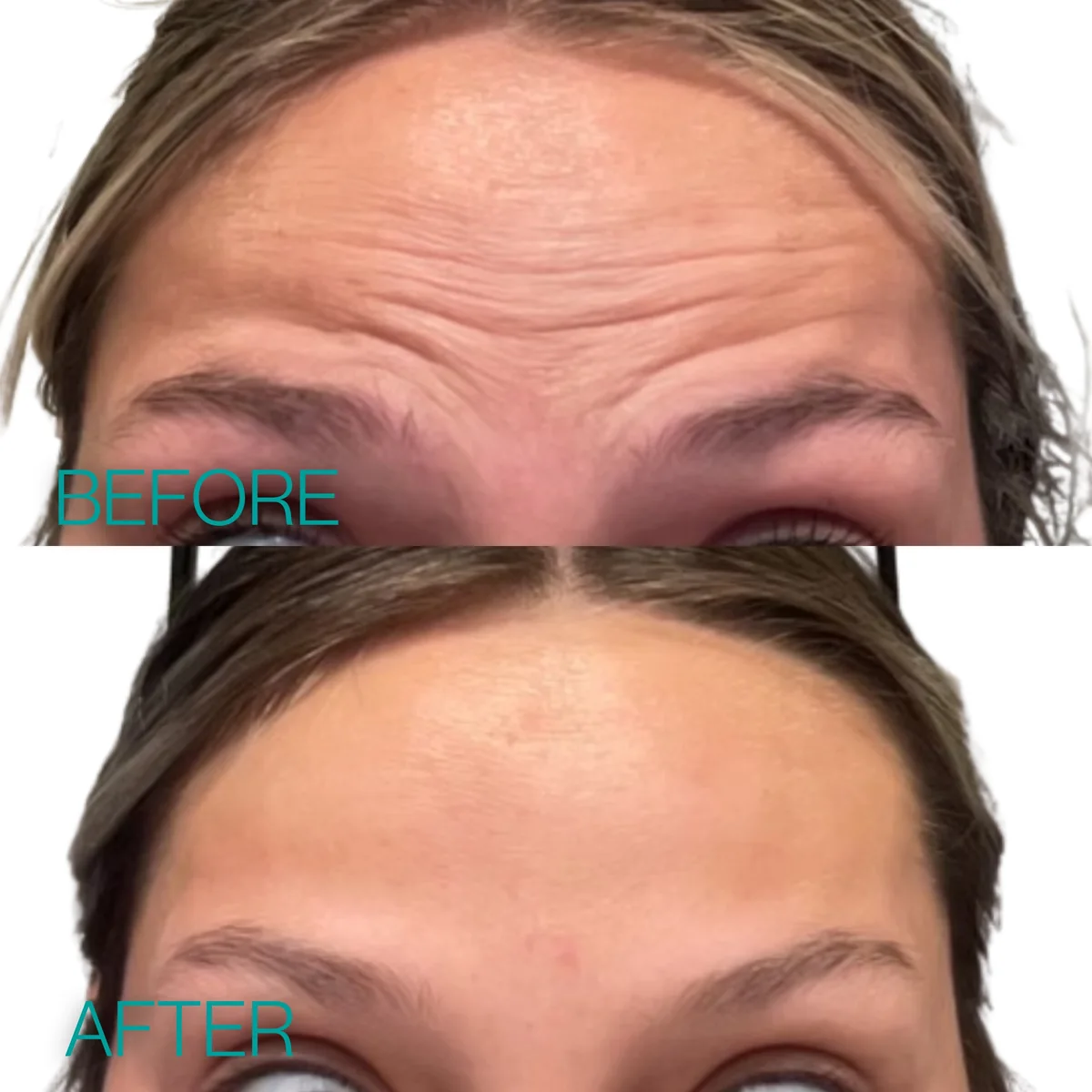
A Coastal patient's forehead lines before and after Botox. Results vary. See more forehead line Botox results.
SkinPen Microneedling for Etched Lines and Texture
Lines that have stayed put at rest, crepey texture and the crosshatch on the cheeks need new collagen built under the surface. SkinPen microneedling in Jacksonville uses a precision device with sterile needles to create thousands of controlled micro-channels in the skin. Your body reads them as tiny injuries and sends fibroblasts to lay down fresh collagen and elastin over the following weeks, which is why microneedling is also called collagen induction therapy. A 2024 microneedling review reports consistent improvement in wrinkles, skin texture and acne scars across the published studies, with a good safety record across skin tones.
This is the treatment that does below the surface what exfoliation does on top, without the peeling and recovery of laser resurfacing, the more aggressive form of skin resurfacing. Expect minimal downtime, a day or two of pink skin, results that build gradually over a series, and a facial between sessions to keep the renewed surface in shape.
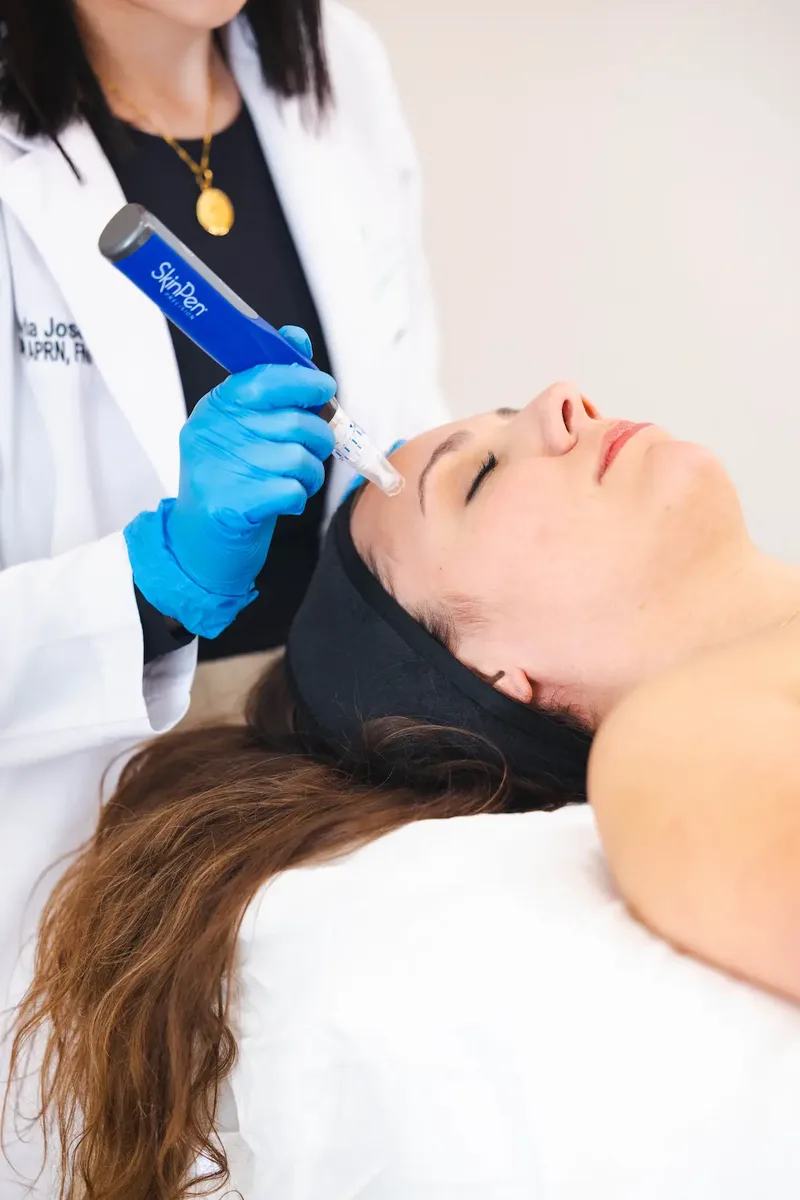
SkinPen building collagen below the surface at Coastal. See SkinPen microneedling results.
Sculptra and Dermal Fillers for Volume Loss
Hollowing, flattened cheeks and the folds that deepen as cheeks deflate call for volume, and Coastal offers two ways to restore it. Dermal fillers in Jacksonville use a hyaluronic acid gel, the same molecule your skin makes, to replace lost volume right away; you see the lift at the appointment and the final shape once minor swelling settles. Sculptra in Jacksonville takes the opposite route. It is a collagen biostimulator made of poly-L-lactic acid that signals your own fibroblasts to build new collagen where structure has thinned, so the result arrives gradually over months and looks like your own face. Sculptra is FDA-approved for facial wrinkles and folds and for cheek volume.
Which one, or whether both, is a decision Dr. Olivia makes with you at a consultation after looking at where the volume went. A facial between treatments keeps the surface smooth and hydrated; it never replaces what works underneath.
What Keeps Results Between Facials
Two habits hold a facial’s results longer than any add-on, and both are basic healthy skin care. The first is daily sunscreen. In a randomized sunscreen trial of 903 adults, the group assigned to broad-spectrum sunscreen every day showed 24 percent less visible skin aging over four and a half years than the group that used it when they felt like it, and the daily group showed no detectable increase in skin aging at all. In Jacksonville that is not optional. SPF goes on every morning, including the drive to work.
The second is a retinoid at night. Retinol and its prescription cousins are the best-studied topical for fine lines because they speed cell turnover and support collagen production, and our post on retinol benefits explains how to start one without the irritation. Add a moisturizer with hyaluronic acid to hold the hydration your facial built, and skip exfoliating acids for a couple of days before your next appointment so your skin arrives calm.
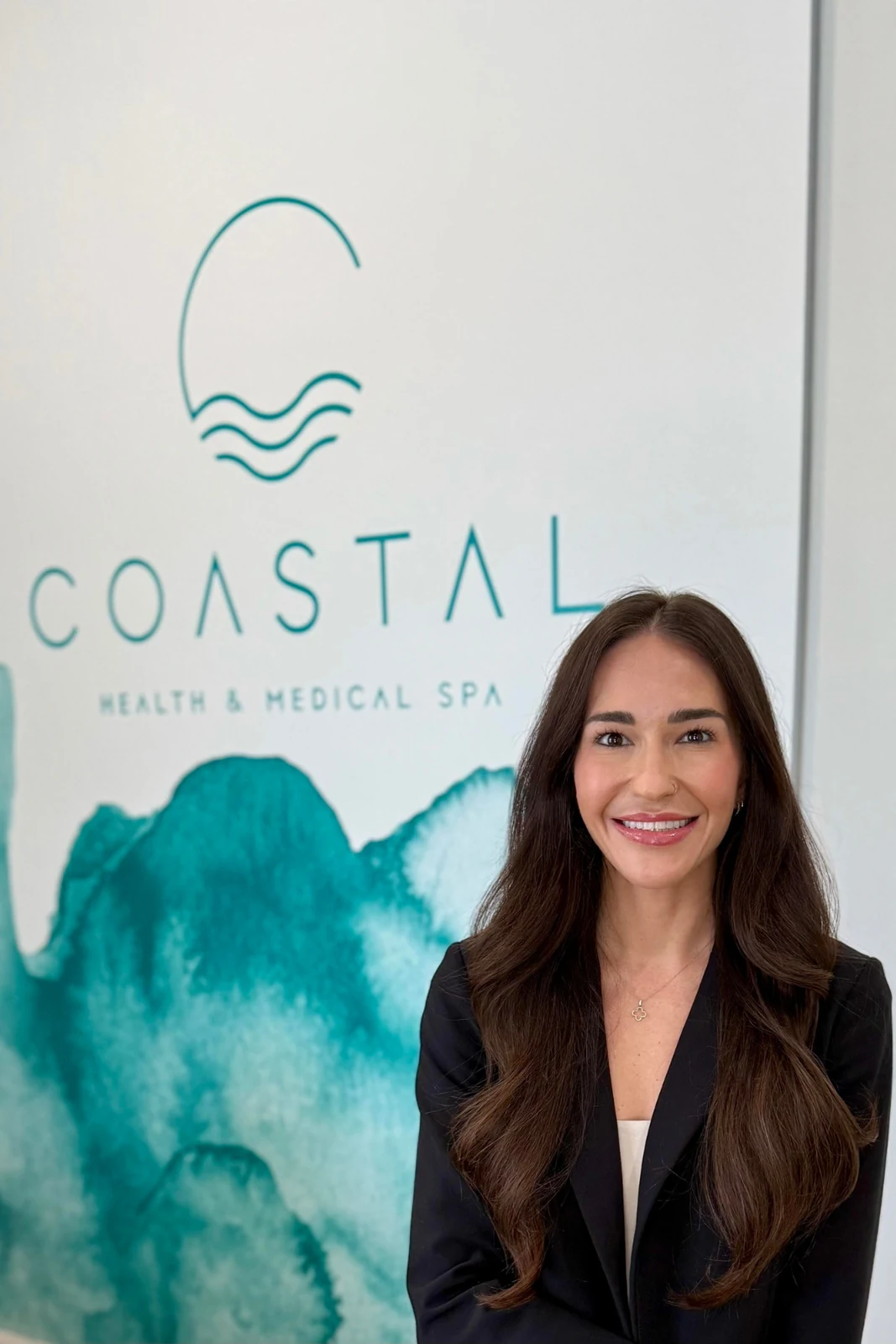
Danielle Hancock, Licensed Aesthetician, at Coastal. Book a free skin assessment to find out what your lines need.
Your Next Step: An Honest Skin Assessment in Jacksonville
If you are not sure whether your lines are surface, muscle or volume, that is exactly what a skin assessment at Coastal Health & Medical Spa is for. Danielle Hancock, Licensed Aesthetician, will look at your skin under magnification and tell you plainly what a facial treatment will do for it, and Dr. Olivia, DNP, APRN, is in the same office for the lines that need more. Book an anti-aging facial in Jacksonville, read about the Coastal team, or reach our Jacksonville office with a question first.
Frequently Asked Questions
What is the best facial for wrinkles?
One built around exfoliation, hydration and collagen-supporting actives, matched to your skin type after a skin analysis. For fine lines and texture, an anti-aging facial with a light chemical or enzyme exfoliation and a peptide and antioxidant infusion does the most. For lines that stay at rest or come from expression, the best “facial” is honestly a different treatment: SkinPen microneedling or Botox.
Can getting a facial make you look younger?
Yes, in a specific and temporary way. A facial is skin rejuvenation at the surface: it removes dull dead skin cells, restores hydration and evens skin tone, so skin looks brighter, smoother and more rested for a few weeks. That is a more youthful appearance, not a younger structure; expression lines, sagging and volume loss stay. Regular facials plus daily SPF and retinol keep that fresher look going.
Does facial massage reduce wrinkles?
Modestly, and mostly in the short term. Massage improves circulation and drainage, which reduces puffiness and makes skin look plumper the same day. Lab work on mechanically stimulated skin shows higher collagen precursor activity, and a small trial measured slightly improved wrinkles after eight weeks of daily device massage. Manual massage during a facial is gentler, so count it as support, not a treatment for deep wrinkles.
What facial treatments reduce wrinkles?
For fine lines, professional exfoliation, hydrating masks and peptide or antioxidant serums give visible wrinkle reduction for a few weeks; chemical peels and HydraFacial work on the same surface layer. For wrinkles that have etched in, SkinPen microneedling builds collagen from below, as do laser treatments. For expression lines, Botox relaxes the muscle. For folds caused by volume loss, dermal fillers and Sculptra restore structure.
Does Botox help with deep wrinkles?
It depends on what made them deep. Botox relaxes the muscle behind expression lines, so a deep frown line that still moves will soften, and treating it earlier keeps it from etching further. A line that has already set at rest usually needs collagen building, such as SkinPen microneedling, or filler to support it, sometimes alongside Botox. Dr. Olivia, DNP, APRN, assesses that at a consultation.
Which facial is best for dry and aging skin?
An anti-aging facial treatment with a gentle, enzyme-based exfoliation and a generous hydration step: hyaluronic acid serum, a firming or occlusive mask and a rich moisturizer with SPF to finish. Dry skin shows fine lines first because dehydrated surface cells crease, so hydration gives the quickest visible improvement. Coastal adjusts the exfoliation strength after a skin analysis so dry, sensitive skin gets smoother skin without irritation.
Is Hydrafacial anti-aging?
Partly. HydraFacial cleanses, exfoliates, extracts and infuses hydrating serums in one treatment, so it improves fine lines, dullness and texture the way an anti-aging facial does, with no downtime. It is a surface treatment, so it will not change expression lines, etched wrinkles or volume loss. Think of it as a maintenance facial that keeps the surface in good shape between corrective treatments.
