Can you get a facial while pregnant? For most people, yes. A facial built around hydration, gentle exfoliation, and a short ingredient list is generally considered safe in pregnancy. What waits, in facial treatments and skin care alike: retinoids, hydroquinone, strong acids, chemical peels, needles, and lasers. Say you’re pregnant when you book, and ask your OB before you do.
Pregnancy hands you new skin you didn’t ask for: breakouts along the jaw, a face that flushes at nothing, dry patches, maybe a shadow across the cheeks that wasn’t there in spring. These skin changes are normal, and they change which facial treatments make sense. You’d love an hour on a treatment bed. You’d also like to know exactly what’s going on your face.

Quick Answer: Can You Get a Facial While Pregnant?
Yes, you can get a facial while pregnant, with modifications, and it’s generally safe for most expectant mothers. Hydrating facials, manual dermaplaning, enzymes, and low-strength glycolic or lactic acid are generally considered low risk. Retinoids, hydroquinone, salicylic acid above 2%, deep peels, microneedling, lasers, and injectables wait until after delivery. After 20 weeks you’re treated on an incline. Your OB has the final say.
Key Points
- Most facials can be adapted for pregnancy; the ingredient list changes, not the appointment.
- Generally considered fine: hydration, manual dermaplaning, enzymes, low-strength lactic or glycolic exfoliation, mineral SPF.
- Wait until after delivery: retinoids, hydroquinone, strong salicylic acid, deep chemical peels, microneedling, lasers, Botox, dermal fillers.
- After 20 weeks, expect an inclined bed and pillows rather than lying flat.
- Coastal’s Mama Glow facial follows these rules; LED is included and can be skipped on request.
Why Pregnancy Changes Your Skin
Pregnancy hormones drive most of these skin changes. Rising estrogen and progesterone push oil glands harder, so people who haven’t broken out since high school get hormonal breakouts along the jaw, the pregnancy acne you’ve heard about. Blood volume and blood flow to the skin climb, which explains the flush, the new spider veins and varicose veins, and sometimes skin tags. The skin barrier turns reactive, so sensitive skin is the norm and products you’ve used for years start to sting.
Then there’s melasma, the brownish patches across the cheeks, nose, and forehead that OBs call the mask of pregnancy. Extra melanin plus sun exposure is the recipe, and it usually fades after birth. A facial won’t clear it; daily sunscreen and a wide-brimmed hat are the real defense against uneven skin tone. One caveat for any spot: anything changing in size, shape, or color needs prompt medical evaluation, because skin cancer doesn’t pause for pregnancy.
Dryness shows up too, and the famous pregnancy glow is real for some and absent for others. The short version? Your skin got a new rulebook, and of all the beauty treatments it complicates, the facial is the easiest to adapt.
Common Facial Treatments That Are Generally Considered Safe During Pregnancy
Gentle Cleansing and Hydrating Facials
The classic hydrating facial is the one most expectant clients end up with, because it suits sensitive pregnancy skin. Mild cleansing, a light manual exfoliation, a calming mask, a hydrating serum, moisturizer, mineral SPF (zinc oxide or titanium dioxide, a physical sunscreen rather than chemical sunscreens). Nothing in that sequence needs to get past the top layer of skin to do its job.
What changes is the shopping list: fragrance-free products with essential oils left out, no retinoids, no strong acids, no harsh chemicals, and no steam if you flush easily. The heavy lifters are hyaluronic acid, which holds water in the skin, and soothers like colloidal oatmeal.
That’s the skeleton of Coastal Health & Medical Spa’s pregnancy facial in Jacksonville, and the shape most reputable providers use. If anything on the product list is unfamiliar, ask before it goes on. Your OB or midwife can clear anything you’re unsure about.
Dermaplaning
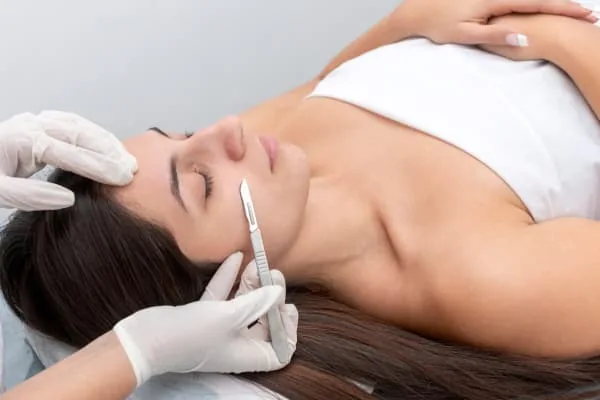
Dermaplaning is a sterile blade drawn lightly across the skin at an angle. It removes the outermost dead skin cells and the fine vellus hair (peach fuzz) with no chemicals and no heat. Nothing is absorbed because nothing is applied; it’s physical exfoliation, like a very precise shave.
That’s why it’s the exfoliation step in most pregnancy facials, including Mama Glow. It works on the stratum corneum, the very top layer, and stops there. You get glowing skin right away, and the serum that follows absorbs more evenly.
Who should skip it: anyone with active breakouts, open skin, or a recent peel. Read up on what dermaplaning is before you decide, and yes, run it past your OB like everything else on this list.
Enzyme and Low-Strength Acid Exfoliation
Enzyme exfoliants (usually papaya or pumpkin) digest dead surface cells without an acid. They rinse off, a common swap for a peel in a pregnancy facial.
Low-strength lactic acid and glycolic acid are the other option. Glycolic acid is one of four over-the-counter acne ingredients listed as usable in pregnancy in current OB guidance on skin conditions, alongside azelaic acid, topical salicylic acid, and benzoyl peroxide. A facial-strength glycolic peel is superficial, with negligible penetration below the epidermis, and the literature treats it as low risk.
Two cautions. A spa-grade peel is a different conversation from a low-strength serum; the peel section below covers that. Your barrier is more reactive now, so even a mild acid can cause skin irritation you don’t remember from before; a patch test behind the ear helps avoid skin irritation on the face. Tell your OB what you’re using.
LED Light Therapy
An LED panel is red or near-infrared light held over the face for a few minutes. It doesn’t tan, doesn’t heat the skin, and uses no UV.
Here’s the honest part: pregnancy-specific data on LED is limited. Nobody has run the study, so no primary source says it’s a problem and none says it isn’t. The concern OBs raise about heat, overheating in early pregnancy, doesn’t apply to a light that stays cool. That’s reassurance, not proof.
LED is included in the Mama Glow facial and can be skipped on request. Plenty of clients keep it; some leave it out until after delivery, and the facial loses nothing important either way. If you want a yes or a no, your OB or midwife gives it.

Is HydraFacial Safe During Pregnancy?
HydraFacial is the treatment pregnant women ask about most, since it does cleansing, exfoliation, extraction, and hydration in one pass. The sticking points are the salicylic-acid exfoliating step and the boosters, some of which carry strong actives.
Coastal’s HydraFacial in Jacksonville can be tailored for pregnancy by omitting the salicylic-acid step and leaving out the stronger boosters. What’s left is cleansing, gentle exfoliation, extraction, and hydration, none of which has been linked to a pregnancy risk.
Honestly? Most pregnant clients are steered to the Mama Glow facial instead. It was built for the job, skips the acid conversation entirely, and already includes the positioning after 20 weeks. If your heart is set on HydraFacial, ask at your consultation and run the modified version past your OB first.
Ingredients to Skip and Ingredients That Are Fine
The label matters more than the facial’s name, and that goes for over the counter products at home as much as what’s used in facial treatments. Current dermatologist pregnancy skin-care guidance puts retinoids and hydroquinone on the avoid list, with salicylic acid above 2% and benzoyl peroxide marked use sparingly. Hydroquinone stands out because a review of skin-care product absorption puts its systemic absorption at roughly 35 to 45 percent of what’s applied. The retinol benefits you’ve read about are real; they wait until after delivery and nursing.
| Ingredient | During pregnancy | Why |
|---|---|---|
| Retinoids, including retinol | Skip | Same family as isotretinoin, which causes birth defects; OB and dermatologist guidance say avoid |
| Hydroquinone | Skip | Roughly 35 to 45 percent is absorbed through the skin |
| Salicylic acid above 2% | Skip in a facial | Use sparingly at higher strengths; peels absorb more over large areas |
| Strong peel acids (TCA, Jessner’s) | Wait | Deeper penetration and a caution flag in the literature; Coastal’s peels wait |
| Benzoyl peroxide | Limit | On the OB over-the-counter list, but dermatologists say use sparingly |
| Hyaluronic acid | Fine | Water-binding molecule your skin already makes; not an exfoliating acid |
| Niacinamide | Fine | Vitamin B3; helps calm inflammation and redness; on the Mama Glow ingredient list |
| Vitamin C | Fine | Antioxidant dermatologists suggest in the morning for pigment changes |
| Azelaic acid | Fine | On the OB over-the-counter list; used to treat acne and dark spots |
| Lactic acid and low-strength glycolic | Fine, gently | Superficial, negligible dermal penetration; glycolic is on the OB list |
| Mineral SPF | Fine, daily | Zinc oxide or titanium dioxide; the sunscreen dermatologists recommend in pregnancy |
Treat the table as a starting point for the conversation with your OB, not a substitute for it.
Treatments That Wait Until After Delivery
Chemical Peels
Chemical peels are a spectrum. A review of cosmetic procedures in pregnancy rates superficial glycolic and lactic acid peels as low risk because they barely penetrate the dermis, flags salicylic acid and TCA peels for caution (small areas only, never under occlusion), and notes that Jessner’s solution inherits the salicylic concern. Deeper peels lack pregnancy-specific data.
Coastal’s chemical peels wait until after delivery and nursing; no version is worth the question mark. The light lactic exfoliation inside a pregnancy facial is the most acid you’ll get here until then.
If melasma is the reason you want a peel, it usually lightens on its own after birth, and pregnancy skin pigments more easily after irritation. Ask your OB first, then revisit the peel once you’ve delivered and weaned.
Microneedling, Lasers, and IPL
Microneedling creates thousands of controlled micro-injuries to trigger collagen. It lacks pregnancy-specific safety data, and the same review lists the platelet-rich plasma add-on some clinics pair with it as not indicated. The topical anesthetics applied before needling get a caution too. So SkinPen waits.
Cosmetic lasers and IPL are a cleaner no. In theory the light never gets past the deep dermis; in practice there’s no satisfactory safety data in pregnancy, so the review’s advice for pregnant patients is to postpone aesthetic lasers until after delivery, and laser hair removal with them, since hormones keep stimulating new hair anyway and IPL hair removal results won’t hold. At Coastal that means PixelPeel CO2 laser resurfacing waits.
There’s a second reason. Pregnancy skin pigments more easily after irritation, so the resurfacing you’d do for melasma now can leave you worse off. Postpone it, and ask your OB about the timeline once you’ve delivered.
Botox and Fillers
Cosmetic treatments like Botox and dermal fillers haven’t been studied in pregnancy in a way that lets anyone promise anything. The review notes that correctly injected botulinum toxin doesn’t reach meaningful levels in the bloodstream, then recommends avoiding it anyway until better data exist. Whether it passes into breast milk hasn’t been established, so the same holds for nursing.
Dermal fillers are listed as contraindicated. Hyaluronic acid itself is a molecule the body makes, but filler syringes typically carry lidocaine, injection sites can get inflamed, and pregnancy skin hyperpigments more easily.
Your face is changing shape anyway. Fluid retention alters cheeks and lips in the third trimester, so the result you’d plan now isn’t the one you’d want later. Ask your OB and your injector together once you’re ready.
Facials by Trimester
Timing changes the appointment more than most people expect, and the second and third trimesters each bring their own adjustments. Here’s how the three windows usually play out for facials in Jacksonville, with the caveat that your OB’s advice overrides any table.
| Trimester | What usually works | What to ask about |
|---|---|---|
| First (weeks 1 to 13) | Hydrating, acid-free facial if your OB agrees; many clients wait | Nausea, scent sensitivity, products used before you knew |
| Second (weeks 14 to 27) | The easiest window: the full Mama Glow, dermaplaning included | Melasma and sun habits; positioning past 20 weeks |
| Third (weeks 28 to 40) | Shorter sessions on an incline; focus on dryness and swelling | Position breaks; how late to keep booking |
Coastal treats first-trimester clients when their OB is fine with it; many choose to wait until the second trimester, once nausea has settled. Whatever the week, say how far along you are when you book.
Lying on Your Back: Positioning After 20 Weeks
A standard facial has you flat on your back for an hour. Past mid-pregnancy that’s the one thing to change, and it has nothing to do with skin. OB guidance on lying flat explains why: on your back, the uterus presses on a large vein that returns blood to the heart, and your blood pressure can dip for a short time.
The fix is simple. After about 20 weeks you’re treated at a comfortable incline, with pillows or cushions keeping you off your back. Side-lying works for the mask step, and you can ask to shift anytime.
Coastal positions Mama Glow clients this way as standard. If you have high blood pressure or a history of fainting, tell the aesthetician and ask your OB whether anything else needs adjusting.
What the Mama Glow Pregnancy Facial Includes
Mama Glow is Coastal’s pregnancy facial, performed by Danielle Hancock, Licensed Aesthetician. It runs about 45 to 60 minutes and follows the rules above: no harsh acids, no retinoids.

the Mama Glow pregnancy facial
It opens with a gentle double cleanse and skin analysis, then dermaplaning with a sterile, surgical-grade blade. Next comes a custom-blended mask without harsh acids; depending on your skin it may include calming colloidal oatmeal, plumping hyaluronic acid, or balancing vitamins. Chilled ice globes follow to reduce puffiness and flushing.
The finish is the LED panel (included, skipped if you’d rather), then serums, moisturizer, and a mineral-based SPF. Expect essentially no downtime; makeup goes on the next day. Most clients repeat it every 4 to 6 weeks, and the first visit starts with a free consultation.
What to Tell Your Provider Before You Book
Coastal doesn’t ask for a written note from your OB. The booking intake asks whether you’re pregnant or nursing, and most clients have already asked their OB by the time they arrive.
Then bring the details: how many weeks along you are, anything your OB has said about skin care or lying flat, every medication, prescription acne treatments and prescription skin care included, and a list or photos of your skincare routine at home, essential oils and all, since a retinol at home changes the exfoliation plan. Plus any history of cold sores, keloids, or melasma.
If you’re trying to conceive, say so; the avoid list starts the moment you might be pregnant. At your consultation, Dr. Olivia, DNP, APRN, or Danielle Hancock looks at your skin concerns and adjusts the treatment plan. Your OB or midwife still gets the last word.
After Delivery and While Breastfeeding
Delivery doesn’t flip the switch; pregnancy and breastfeeding share most of the same skin care rules. While you’re nursing, the question is what’s absorbed and whether it reaches milk. Most facial ingredients barely get past the skin, but breastfeeding studies are thinner than pregnancy ones, so the caution carries over. Breastfeeding clients at Coastal get the same Mama Glow protocol. Retinoids, hydroquinone, peels, microneedling, lasers, Botox, and fillers stay on the wait list until you’ve weaned, unless your OB and pediatrician say otherwise.
Skin often sorts itself out. Melasma usually fades over the months after birth, oil production drops, and the flush settles into a healthy glow as blood volume returns to normal.
Once you’ve weaned, the full menu reopens, and how often to get a facial depends on what you’re treating. Before anything stronger than Mama Glow, check with your OB or pediatrician.
Your Next Step: A Pregnancy-Safe Facial in Jacksonville
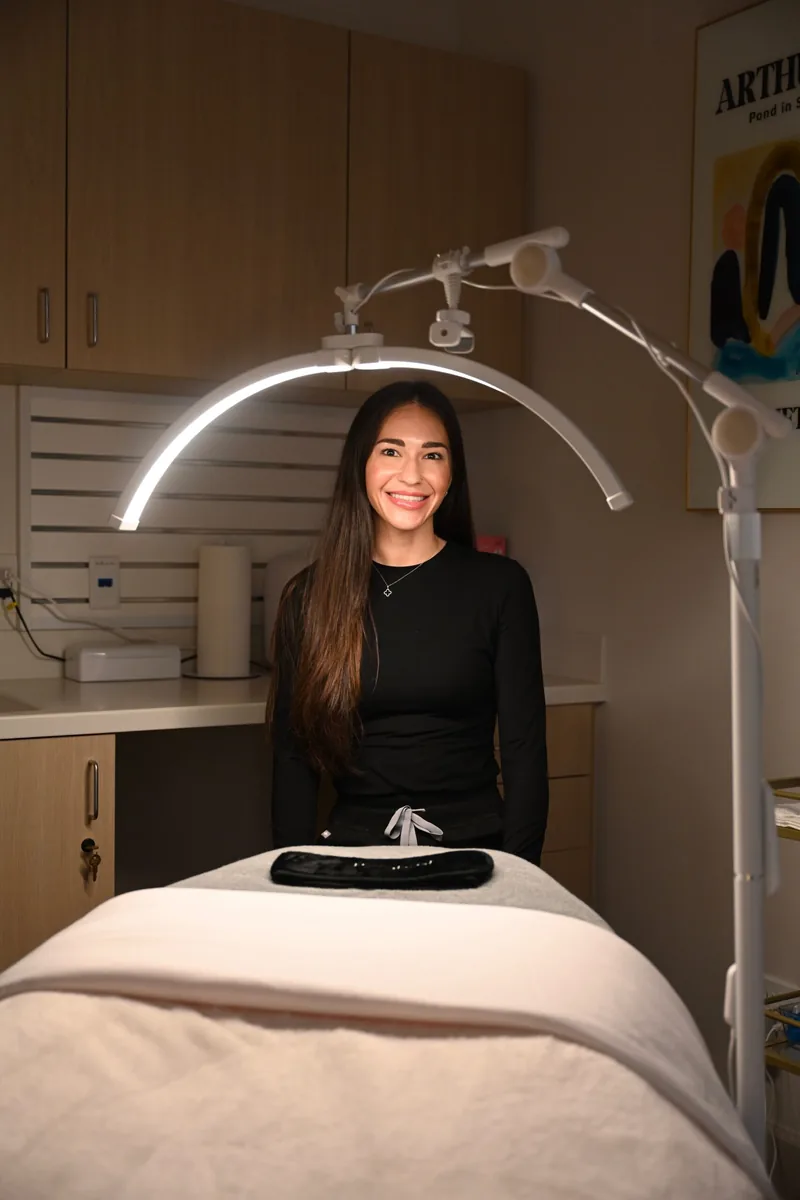
Pregnancy is the one time you shouldn’t have to guess about what’s going on your face. Book a free consultation, and Danielle Hancock, Licensed Aesthetician, and the Coastal team will walk you through the Mama Glow facial, what gets skipped, and what to ask your OB. Reach our Jacksonville office to set a time around your prenatal appointments.
Frequently Asked Questions
Are facials safe during pregnancy?
For most people, a modified facial is generally considered safe: hydration, manual dermaplaning, a calming mask, and mineral SPF. The risk sits in specific ingredients, not the facial itself. Retinoids, hydroquinone, strong salicylic acid, deep peels, needles, lasers, and injectables wait. Say you’re pregnant when you book, and clear it with your OB or midwife.
Which facial is best during pregnancy?
A hydrating facial with gentle physical exfoliation suits most pregnancies; it calms sensitivity and dryness without actives. At Coastal that’s the Mama Glow facial: double cleanse, dermaplaning, a custom mask (colloidal oatmeal, hyaluronic acid), ice globes, LED you can skip, and mineral SPF. If breakouts are the issue, ask about azelaic acid; OB guidance lists it as usable in pregnancy.
Is facial safe during pregnancy in the first trimester?
Nothing in the skin care guidance singles out the first trimester for a gentle facial without acids, but it’s when most people are cautious and when nausea and scent sensitivity make a treatment bed less appealing. Coastal treats first-trimester clients when their OB is fine with it; many wait until the second trimester. Ask at your first prenatal visit.
Can I use a LED face mask while pregnant?
Pregnancy-specific data on LED is limited, for home masks and in-office panels alike. LED uses no UV and doesn’t heat the skin, so many providers treat it as low risk, but nobody has studied it in pregnant users. If you want to keep using yours, ask your OB. In the Mama Glow facial, LED is included and can be skipped on request.
Is it safe to get a skin peel during pregnancy?
It depends on the peel. Superficial glycolic and lactic peels are considered low risk in the literature; salicylic acid and TCA peels carry a caution, and medium or deep peels lack pregnancy data. Coastal’s peels wait until after delivery and nursing; the light lactic acid exfoliation in a pregnancy facial covers the gap. Ask your OB before any peel, anywhere.
Is microdermabrasion safe to use during pregnancy?
The review of cosmetic procedures cited above rates microdermabrasion as a physical, non-invasive procedure that’s generally considered fine in pregnancy. The practical issue: pregnancy skin is more reactive, and crystal or diamond-tip abrasion can leave it red for days. Dermaplaning does the same job more gently, so Mama Glow uses it instead. Either way, check with your OB or midwife first.
